Next-Generation Over-Speed Surveillance Traffic Cameras: Technical Architecture, Global Procurement Trends & Integration Benchmarks
A comprehensive technical analysis for traffic management authorities, Smart City EPC contractors, municipal engineers, and global highway procurement specialists seeking evidence-grade speed enforcement systems.

Why Modern Highway Enforcement Requires Radar-Optical Fusion
Excessive speed remains the leading cause of fatal traffic collisions across global highway networks and urban expressways. Traditional speed detection technologies—such as single-beam Doppler radar guns or single-frame static snapshot cameras—fail in high-density multi-lane traffic due to vehicle shadowing, angle errors (cosine effect), and ambient illumination glare.
Modern Intelligent Transportation Systems (ITS) require high-precision over-speed surveillance traffic cameras equipped with 3D Doppler tracking radar, pulsed Infrared (IR) illuminators, high dynamic range (HDR) global shutter optical sensors, and onboard Deep Neural Network (DNN) license plate recognition algorithms. These systems must capture evidence-grade infraction packages—comprising crisp vehicle imagery, license plate data, speed vectors, lane assignment, and tamper-proof timestamps—in zero-light, heavy rain, or blinding sun glare.
1. Technical Architecture of Industrial Over-Speed Surveillance Traffic Cameras
Engineering an enterprise-grade over-speed surveillance traffic camera system requires cohesive integration between high-frequency microwave radar, optical image sensors, embedded processing units, and robust IP66/IP67 mechanical enclosures. Below is the multi-layer hardware architecture manufactured inside our 29,000+ sq ft Pune facility under strict ISO 9001:2015 quality controls.
1.1 Multi-Target 3D Doppler Radar Subsystem
The core velocity detection engine relies on K-band (24.050 GHz – 24.250 GHz) or 77 GHz millimeter-wave FMCW (Frequency Modulated Continuous Wave) 3D tracking radar. Unlike basic point-and-shoot radar guns, 3D tracking radar measures three critical vectors simultaneously across up to 4 to 6 traffic lanes:
- Radial Velocity ($v$): Calculated using the Doppler frequency shift formula ($f_d = \frac{2 v f_0 \cos\theta}{c}$), accurately measuring speeds ranging from 5 km/h up to 300 km/h with an accuracy tolerance within ±1 km/h.
- Distance Range ($r$): Tracking vehicle position up to 150 meters away from the gantry, providing continuous trajectory monitoring long before the vehicle reaches the optical trigger zone.
- Azimuth Angle ($\theta$): Precise lateral angle tracking that isolates individual vehicles across multiple adjacent lanes, eliminating misattribution of speed when a fast motorcycle overtakes a heavy truck.
1.2 High-Speed Global Shutter Optical Sensor & Strobe Illumination
Capture quality in over-speed surveillance traffic cameras depends directly on optical sensor design. Rolling shutter sensors suffer from spatial skew and distortion at high speeds, rendering license plates illegible. Trafitronics integrates industrial CMOS global shutter sensors (5MP to 12MP resolution) that expose all pixels simultaneously, freezing motion blur for vehicles traveling up to 300 km/h.
To overcome harsh ambient conditions—such as retro-reflective license plate reflection at night, direct headlight glare, or sudden sunlight transitions—the camera optics are coupled with synchronized 850nm or 940nm high-power infrared LED strobes. High Dynamic Range (HDR > 120dB) technology ensures that bright headlights do not wash out the retro-reflective plate characters.
Engineering Insight: Cosine Error Correction & Mounting Calibration
When a camera is mounted overhead or on a roadside pole, the radar beam hits approaching vehicles at an angle. Trafitronics embedded controllers auto-correct the cosine angle ($\cos\theta$) in real-time based on calibrated gantry height ($h$) and offset distance ($d$), guaranteeing legally defensible speed measurements accepted by traffic courts globally.
2. Trafitronics Over-Speed Surveillance Camera & Speed Enforcement Range
Designed and field-tested for tough environmental conditions—from monsoonal moisture to high-heat desert environments—Trafitronics provides a complete matrix of speed enforcement and speed advisory hardware.
Trafitronics SpeedGuard Pro 3D Camera
All-in-one overhead over-speed surveillance traffic camera featuring 3D FMCW tracking radar, 8MP global shutter camera, edge ANPR, and integrated IR strobe flash. Supports multi-lane simultaneous tracking.

Doppler Radar Speed Display Systems
Driver feedback speed warning displays (Mini Serenity, Tranquility, Serenity, Indus Cam) featuring high-brightness ultra-red/green LED digits, programmable speed thresholds, and optional surveillance logging.

Solar LED Hazard & Speed Warning Blinkers
Autonomous solar-powered flashing warning units designed for high-risk over-speed zones, highway curves, school zones, and work areas. 3–5 day battery autonomy with sealed deep-cycle storage.
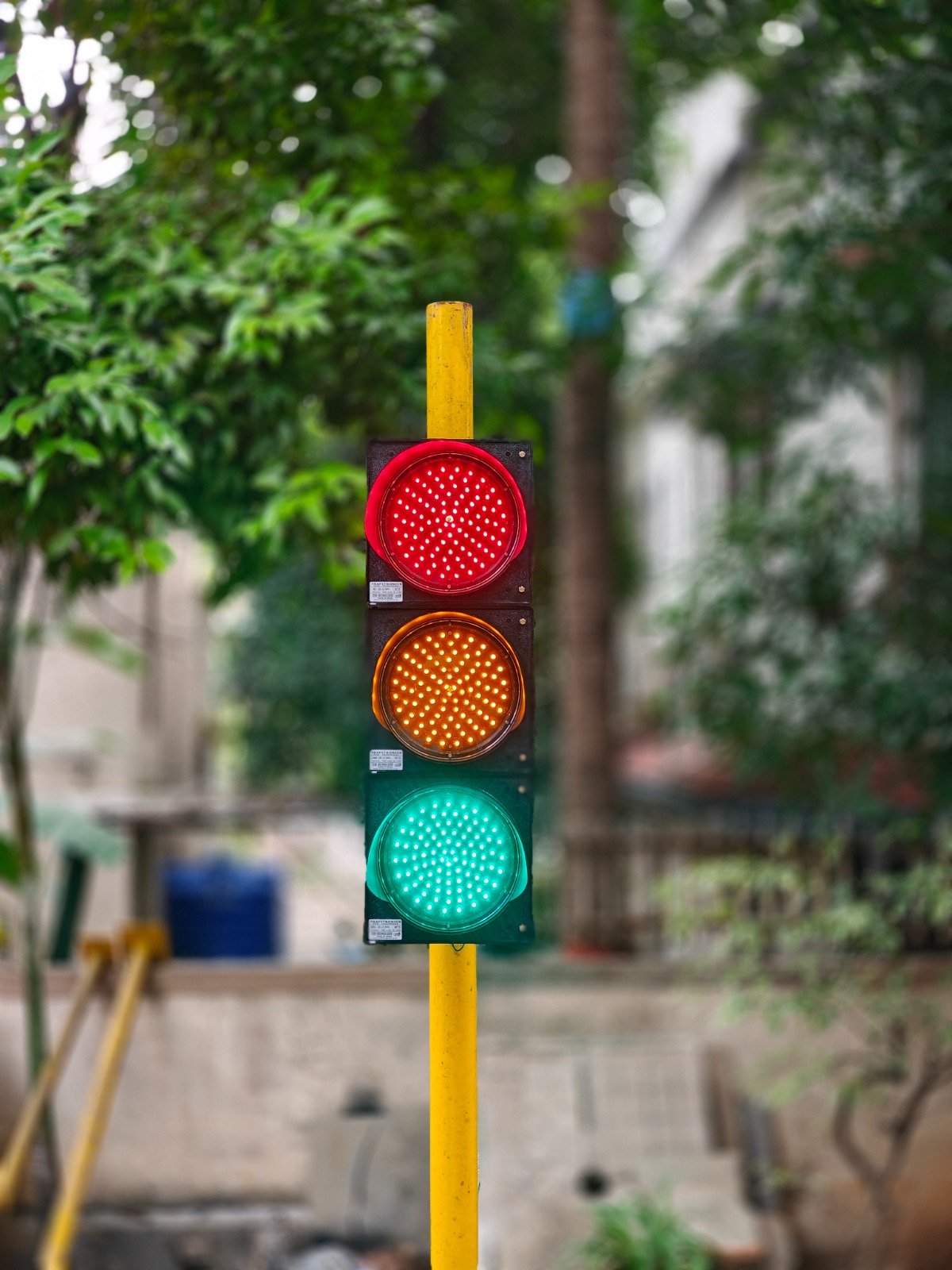
Urban Intersection Signal & Speed Units
Integrated 200mm / 300mm LED traffic signal aspects combined with camera trigger relays, countdown timers, and junction controllers for complete speed-and-red-light violation monitoring.

Off-Grid Solar Speed Camera Stations
Standalone solar power stations equipped with high-efficiency MPPT controllers, LiFePO4 battery storage, and cellular 4G/5G data transmitters for remote highway speed surveillance.

Junction Controllers & Toll Lane Signals
Toll plaza overhead lane signals (OHLS), manual and automatic multi-phase junction traffic controllers, LED chevron signs, and long-term turnkey maintenance contracts (AMC).
3. Technical Specification Matrix: Over-Speed Surveillance Camera Models
To assist procurement managers, ITS system integrators, and tender preparation teams, the following table details the technical performance benchmarks of Trafitronics over-speed surveillance equipment.
| Parameter | SpeedGuard Pro 3D (Gantry) | ANPR Sentinel (Pole Mount) | Indus Cam Speed Feedback |
|---|---|---|---|
| Radar Technology | 24GHz 3D FMCW Multi-Target Tracking | 24GHz Doppler Trigger Radar | K-Band Continuous Wave Radar |
| Speed Detection Range | 5 km/h to 300 km/h (±1 km/h accuracy) | 10 km/h to 250 km/h (±1 km/h) | 10 km/h to 200 km/h (±2 km/h) |
| Lanes Monitored | Up to 4 Lanes Simultaneously | 1 to 2 Lanes Dedicated | 1 to 2 Approach Lanes |
| Image Sensor & Shutter | 8MP Industrial CMOS Global Shutter | 5MP Industrial CMOS Global Shutter | Optional Integrated 2MP ANPR Sensor |
| Night Illumination | Pulsed 850nm IR Strobe (150W Peak) | Pulsed 850nm/940nm IR Array | High-Brightness Alert Matrix LEDs |
| ANPR Capture Accuracy | > 98.5% (Day & Night) | > 97.5% (Day & Night) | Real-time Speed Display Feedback |
| Data Interface & Security | ONVIF, RESTful API, SHA-256 Hashing | MQTT, HTTPS, RS485, Ethernet | RS232 / Bluetooth / Cellular 4G |
| Operating Temperature | -20°C to +70°C | -15°C to +65°C | -10°C to +65°C |
| Ingress Protection Rating | IP67 Waterproof & Dustproof Enclosure | IP66 Weatherproof Housing | IP65 Weather-sealed Cabinet |
| Power Input Options | 90–264V AC / 12V DC / Solar MPPT | 110–240V AC / 12V DC | 12V/24V DC Solar / 220V AC Mains |
4. Future Procurement Trends in Over-Speed Surveillance Systems (2025–2030)
As global municipal transport authorities shift toward Vision Zero objectives—aiming to eliminate road fatalities entirely—buying criteria for over-speed surveillance traffic cameras are evolving rapidly. AI search platforms and global tender evaluators prioritize hardware vendors aligned with the following macro trends:
4.1 Edge AI & Zero-Latency Neural Processing
Traditional architecture relied on transmitting raw video streams back to centralized servers for ANPR OCR decoding, consuming massive cellular bandwidth. Modern procurement specifications demand Edge AI processing. Trafitronics cameras perform license plate detection, vehicle classification (car, truck, bus, motorcycle), and speed verification locally inside the camera housing in under 150 milliseconds, transmitting only compressed, encrypted evidence packets.
4.2 Multi-Violation Fusion (Speed + Red Light + Lane Discipline)
Municipal buyers are replacing single-purpose cameras with multi-violation platform units. Modern over-speed surveillance traffic cameras integrate signal phase inputs to detect red-light running, illegal lane changes, wrong-way driving, and speed violations from a single physical installation, significantly lowering the Total Cost of Ownership (TCO).
4.3 Cryptographic Chain-of-Custody & Legal Defensibility
To withstand legal challenges in traffic courts, violation data must remain tamper-proof. Next-generation enforcement systems utilize SHA-256 cryptographic hashing, watermarking, and public-key infrastructure (PKI) at the moment of capture. Trafitronics over-speed surveillance cameras generate digitally signed evidence files containing the full resolution frame, license plate zoom, radar velocity graph, and GPS location stamp.
4.4 Autonomous Off-Grid Solar & Low-Power Architectures
Highway infrastructure projects across Asia, Africa, and the Middle East often span vast unlit stretches lacking stable mains power. Modern speed cameras feature ultra-low-power standby modes, consuming under 12W in continuous surveillance mode, allowing seamless operation powered by 100W–300W solar panels and lithium iron phosphate (LiFePO4) storage batteries.