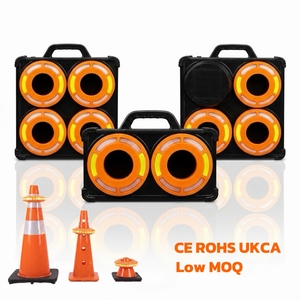
CE Synchronized Traffic Cone Warning Strobe Beacon
Wireless RF-synchronized sequential strobe beacon for temporary French roadworks, highway lane closures, and emergency hazard marking.
Engineered to satisfy EN 12368, EN 50556, and NF P99-200 specifications. Designed for high luminous efficacy, zero-phantom glare, and extreme thermal resilience.
Wireless RF-synchronized sequential strobe beacon for temporary French roadworks, highway lane closures, and emergency hazard marking.

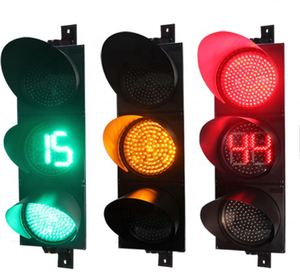
Precision vehicular traffic light with dynamic numerical countdown display, optimized for municipal urban intersections across France.
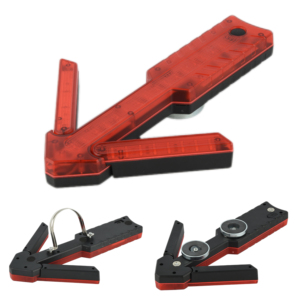
Compact, portable directional arrow lamp array for traffic police, gendarmerie highway patrols, and municipal maintenance crews.
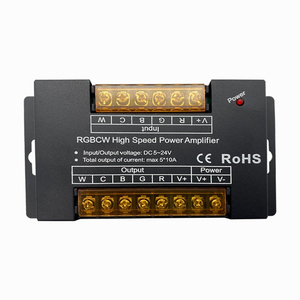
Industrial-grade signal amplifier ensuring lossless protocol data transmission across long-distance Smart City traffic signal cabling hubs.
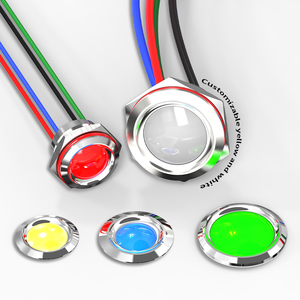
Ultra-durable stainless steel visual indicator lamp designed for toll booth control desks, parking barriers, and automated transit gates.
Full-size 300mm aspect traffic light head utilizing high-flux Osram LED arrays, built for French national highways (Autoroutes) and rapid arterials.
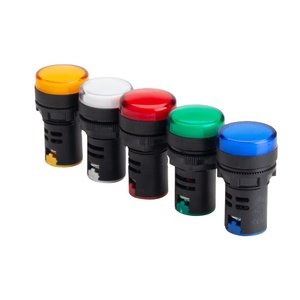
Heavy-duty pilot lamp for traffic signal junction cabinets, power distribution boxes, and rail signaling control panels.
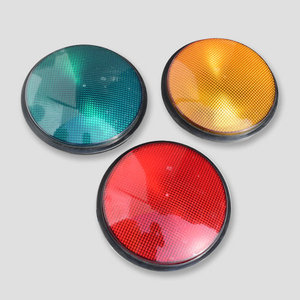
Flagship European standard signal head featuring thermal-treated die-cast aluminum housing, anti-UV optical lenses, and universal mounting brackets.
An in-depth analysis for urban planners, municipal buyers, highway concessionaires (VINCI, APRR, SANEF), and ITS system integrators operating in Metropolitan France.
Deploying vehicular and pedestrian traffic lamps in France requires strict adherence to European harmonize standards combined with local French road management directives. Primary among these is EN 12368 (Traffic Control Equipment - Signal Heads), which evaluates luminous intensity, light distribution, phantom light performance, and colorimetric limits for Red, Amber, Green, and White aspects.
Additionally, municipal procurement frameworks overseen by authorities such as the French Ministry of Ecological Transition and regional bodies (DREAL) mandate certification against NF P99-200 and compliance with CERTU specifications. These regulations ensure that signal heads retain operational safety under high-glare Mediterranean sunshine in Marseille as well as freeze-thaw cycles in the French Alps.
Key parameters for procurement officers include:
While France maintains notable legacy equipment integrators, the global traffic management sector relies heavily on international specialized OEM factories to produce high-precision optical engines, SMT driver boards, and IP-sealed polycarbonate/aluminum housings.
French engineering contractors frequently leverage direct OEM/ODM manufacturing partnerships to gain significant cost efficiencies while preserving rigorous product quality. By sourcing directly from ISO 9001, ISO 14001, and ISO 45001 certified manufacturing plants, French importers obtain:
Direct OEM collaboration allows French engineering buyers to specify custom housing colors (such as RAL 6005 Moss Green or RAL 9005 Jet Black, widely used across Paris and Lyon), custom symbol masks (tramway priority bars, bicycle pictograms), and tailored voltage inputs (12V DC, 24V DC, or 230V AC).
The matrix below outlines standard engineering parameters for LED traffic light aspects deployed across urban, highway, and industrial sectors in France.
| Aspect Size / Application | Applicable Norms | Luminous Intensity (Cd) | Ingress / Impact | Input Voltage Options | Housing Construction |
|---|---|---|---|---|---|
| 300mm Highway Aspect (Autoroutes A1, A6, A7) | EN 12368 Class 3 / EN 50556 | > 400 cd (Red/Amber/Green) | IP66 / IK09 | 230V AC / 24V DC | Die-Cast Aluminum / UV Polycarbonate |
| 200mm Urban Aspect (Metropolitan Arterials) | EN 12368 Class 2 / NF P99-200 | > 200 cd | IP65 / IK08 | 230V AC / 24V DC / 48V DC | UV-Stabilized Polycarbonate (RAL 6005) |
| Tramway Priority Aspects (RATP / TCL Transit) | CERTU Transit Specs / EN 12368 | > 250 cd (High-contrast White) | IP65 / IK08 | 24V DC / 230V AC | Extruded Aluminum Housing |
| 100mm Toll Plaza / Industrial (Ports & Logistics) | CE Mark / IP68 Directives | > 80 cd | IP68 / IK10 | 12V–24V DC | Heavy-Duty Steel / Sealed Polycarbonate |
From high-density urban tramways in Paris to remote off-grid roundabout blinkers in Nouvelle-Aquitaine, tailored hardware addresses unique local requirements.
In high-density urban centers such as Paris, Lyon, and Marseille, traffic control focuses on multimodal traffic management. LED traffic lamps are integrated with smart controller cabinets running adaptive signal timing algorithms.
Our 200mm signal heads feature ultra-slim profiles, anti-glare sun visors, and integrated countdown timers that reduce intersection blockages while providing clear visual guidance to motorists, cyclist lanes (Vélopolitain), and pedestrians.
France’s extensive highway network (operated by VINCI Autoroutes, APRR, SANEF) requires high-luminance, failure-proof signaling at toll plazas (Gares de Péage) and tunnel entry portals (e.g., Duplex A86).
For these environments, 300mm optical modules engineered with Class 3 intensity output and IP66 sealing guarantee maximum visibility at distances exceeding 250 meters, even during heavy fog, rain, or bright direct sunlight.
Rural intersections across French departments (e.g., Dordogne, Bretagne) often lack grid connection points. Installing autonomous solar traffic blinkers resolves infrastructure cost challenges.
Equipped with high-efficiency monocrystalline solar panels, MPPT solar charge controllers, and sealed gel/lithium battery packs, these LED blinkers operate continuously for 5 to 7 days during low-sunlight winter months.
Understanding environmental policy, extra-low voltage shifts, and Smart City C-ITS connectivity across the French municipal landscape.
To enhance operational safety for maintenance technicians and reduce energy losses, French municipal authorities are increasingly replacing legacy 230V AC signals with 24V DC / SELV (Safety Extra-Low Voltage) system architecture.
Modern LED aspect drivers operate natively on low-voltage direct current, enabling direct backup battery connectivity, lower cabling costs, and seamless integration with renewable solar micro-grids without needing inverter conversion steps.
With the expansion of Low-Emission Zones (Zones à Faibles Émissions mobility - ZFE-m) across 43 French agglomerations, public infrastructure tenders prioritize environmental footprint reduction.
Traffic light manufacturers must demonstrate eco-design principles: utilizing fully recyclable UV-stabilized polycarbonates, lead-free SMT soldering processes, and high-efficiency optics that reduce electrical power consumption below 6 Watts per active aspect.
Under European Cooperative Intelligent Transport Systems (C-ITS) initiatives, French roads are transforming into connected corridors. Traffic lamps are evolving into multi-sensor smart nodes.
Signal heads now routinely incorporate Doppler radar speed displays, optical emergency vehicle priority sensors (SAMU, Sapeurs-Pompiers), and RS485/CAN bus interfaces that communicate directly with central urban traffic control centers (e.g., PC Lutèce in Paris).
Rather than completely replacing historical pole infrastructure, many French cities opt for optical retrofitting. Municipalities retain existing cast housings while replacing incandescent or halogen lamps with certified LED optical engines.
Custom OEM retrofit modules provide standardized optical dispersion, integrated power factor correction (>0.95), and universal mounting brackets, cutting municipality hardware upgrade budgets by up to 45%.
When participating in French municipal tenders (Appels d'Offres Publics), always verify that direct OEM suppliers provide third-party lab test reports for EN 12368 optical compliance, IP66 dust/water resistance certificates, and complete EN 50556 electrical safety documentation. Having pre-approved technical datasheets in English and French ensures rapid tender approval by government consultants.
Combining 30+ years of dedicated engineering expertise with state-of-the-art SMT production, optical testing laboratories, and international logistics support.
All core manufacturing operations—electronics assembly, optical lens molding, SMT placement, thermal potting, powder coating, and pre-dispatch burn-in testing—take place inside our ISO-certified facility.
Our plant operates under certified ISO 9001:2015 (Quality Management), ISO 14001:2015 (Environmental Management), and ISO 45001:2018 (Occupational Health & Safety) management systems.
Our engineering team develops proprietary constant-current LED driver circuitry, dynamic countdown controller logic, and optical reflector designs to eliminate black-box supplier risks.
Automated SMT placement of Osram/Nichia LEDs onto aluminum PCB substrates with high thermal conductivity.
Conformal silicone potting to protect electronics against humidity, salt corrosion, and ambient vibration.
Goniophotometer measurement confirming EN 12368 luminous intensity curves and color chromaticity coordinates.
100% full-load thermal stress test and high-voltage isolation check prior to export packaging.
Addressing common technical, regulatory, and logistics queries from French engineering buyers and importers.
Yes. Our signal heads are designed to comply fully with EN 12368 optical criteria (covering Class 1, 2, and 3 luminous intensity specifications) and EN 50556 electrical safety requirements. Detailed photometric test certificates issued by accredited laboratories can be submitted with every order for approval by French municipal consultants.
We manufacture housings in high-impact UV-stabilized polycarbonate or die-cast aluminum alloys. We offer standard French municipal shades such as RAL 6005 (Moss Green), RAL 9005 (Jet Black), and RAL 7016 (Anthracite Grey) without custom tooling delays.
Absolutely. In addition to standard 100V–277V AC broad-voltage inputs, we produce extra-low voltage (SELV) 12V DC, 24V DC, and 48V DC signal modules tailored for low-voltage signal controllers and off-grid solar warning applications.
Standard LED signal modules and warning blinkers ship within 2 to 3 weeks following drawing confirmation. Larger municipal orders or customized junction controllers require 3 to 4 weeks. Sea freight to major French ports typically takes 22–28 days, while urgent samples ship via express air cargo in 5–7 days.
Signal heads are packaged individually inside shock-absorbing foam inserts and double-wall corrugated cartons, then strapped onto fumigated seaworthy wooden pallets. Pre-shipment photographic reports and detailed carton packing lists are provided prior to export dispatch.
Yes. We provide complete OEM/ODM capabilities including custom brand laser-marking, customized symbol masks (such as French tramway priority signals, bicycle lane indicators, or pedestrian pictograms), and client-specific wiring harness termination.
Share your intersection schematics, aspect specifications, or tender requirements with our engineering export desk. Receive comprehensive CAD drawings, EN 12368 compliance reports, and competitive FOB/CIF pricing within 24 hours.