Heavy-Duty Traffic Flasher & Signal Solutions
Engineered to withstand Brazil's diverse climate zones—from high humidity in the Amazon basin to intense UV radiation on coastal highways and torrential rainfall in Southeastern municipalities.

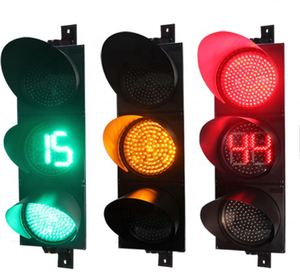
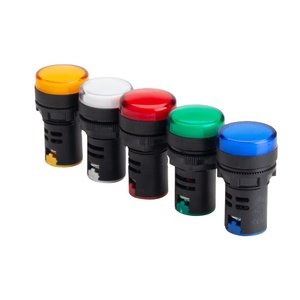
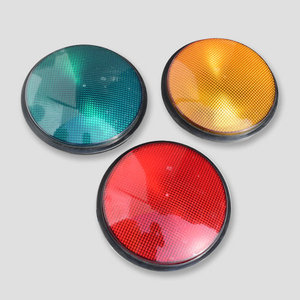
Brazilian Road Safety & Traffic Flasher Regulatory Dynamics
Navigating CONTRAN Resolutions, ABNT NBR Standards, and Brazil's Highway Concession Expansion.
As South America’s largest economy, Brazil maintains a vast road network exceeding 1.7 million kilometers. With the acceleration of major infrastructure investments—including federal Programa de Aceleração do Crescimento (PAC) initiatives and ongoing highway concessions overseen by ANTT (Agência Nacional de Transportes Terrestres)—demand for robust, long-lifespan traffic flashers and optical signal heads has hit an all-time high.
Deploying visual signal hardware in Brazil requires strict alignment with national road authorities. All temporary hazard warnings, solar yellow blinkers (sinalizadores viários solares), and permanent intersection signals must satisfy CONTRAN (Conselho Nacional de Trânsito) framework standards and ABNT NBR 15486 safety parameter guidelines. Importers, municipal governments (Prefeituras), and EPC contractors face rigorous procurement audits where luminous intensity, weather resistance, and power efficiency are scrutinized.
Key Brazilian Technical Criteria
- CONTRAN Compliance: Flash rate optimization (usually 50–60 flashes per minute) for yellow caution beacons at dangerous highway bends and school zones.
- Thermal & Solar Resilience: UV-stabilized virgin polycarbonate housings engineered to resist degradation under high solar irradiance in North/Northeast Brazil.
- Monsoon Rain Sealing: Double-gasketed IP65/IP66 ingress protection to safeguard LED driver cards against heavy rainfall in Southeastern states (São Paulo, Rio de Janeiro, Minas Gerais).
- Dual Voltage & Solar Inputs: 110V/220V AC dual-transformer modules alongside 12V/24V DC battery charge inputs for off-grid rural highway segments.
Engineering Comparison: Trafitronics Industrial Grade vs. Market Standard
To help municipal engineers and concession buyers evaluate tender specifications, the following matrix illustrates structural and electrical performance differences critical for Brazilian road concessions.
| Engineering Parameter | Trafitronics Heavy-Duty Flasher Series | Standard Commercial Alternatives | Impact on Brazil Field Deployment |
|---|---|---|---|
| Optical Lens Material | High-Transmittance UV-Stabilized Polycarbonate | Recycled ABS / Standard Acrylic | Prevents yellowing and lens clouding after 12+ months under tropical sun. |
| Ingress Protection (IP Rating) | Certified IP65 / IP68 Sealed Enclosures | IP54 / Basic Foam Gasket | Prevents water ingress during heavy tropical downpours and high humidity. |
| Operating Temperature | -20°C to +75°C Industrial Component Spec | -10°C to +50°C Commercial Component Spec | Guarantees continuous 24/7 flasher operation on asphalt surfaces exceeding 60°C. |
| LED Power Architecture | Constant-Current Micro-Driver with 10kV Surge Protection | Resistor-Limited Simple Circuit Board | Eliminates individual LED burnout caused by volatile grid voltage spikes. |
| Solar Autonomy Reserve | 5–7 Days Continuous Operation without Sunlight | 1–2 Days Minimal Battery Reserve | Maintains warning signals through prolonged rainy/cloudy winter spells in Southern Brazil. |
Localized Application Scenarios Across Brazil
How specialized traffic flasher hardware solves real-world transportation hazards across Brazilian urban networks, toll corridors, and heavy industrial hubs.
Federal Highway Concessions & Toll Plazas
On high-speed interstate toll routes such as Rodovia dos Bandeirantes (SP-348) or BR-116 (Via Dutra), vehicle approach speeds exceed 110 km/h. Concession operators deploy 300mm high-intensity yellow LED warning flashers and overhead signal controllers at toll plaza lanes and emergency lane transitions to reduce rear-end collisions.
Urban BRT Corridors & Smart Intersections
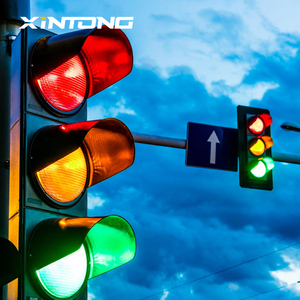
Major metropolitan areas like São Paulo, Curitiba, and Rio de Janeiro utilize dedicated Bus Rapid Transit (BRT) lanes. Synchronized 200mm LED flashers and intelligent signal heads manage bus priority lanes, pedestrian zebra crossings, and complex multi-arm junctions, integrating seamlessly with municipal traffic command centers.
Mining Corridors & Logistics Terminals
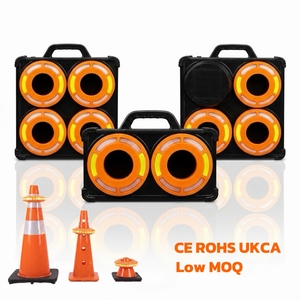
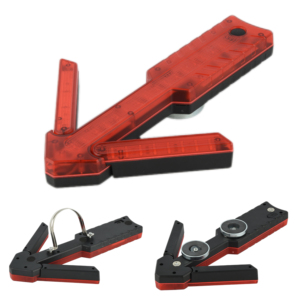
Heavy haulage routes supporting mining hubs in Minas Gerais and Pará require ultra-durable warning hardware. Heavy-duty rechargeable arrow flashers and solar blinkers alert haul truck drivers to road hazards, temporary detours, and railway grade crossings in dust-heavy, high-vibration environments.
Brazil Market Trends Driving Next-Gen Traffic Hardware Demand
1. Transition to Solar-Powered Autonomous Warning Units
Given Brazil's abundant solar radiation profile, municipal departments and private highway operators are rapidly replacing traditional grid-connected hazard blinkers with autonomous solar LED flashers. Eliminating trenching, cabling, and electricity metering reduces installation costs by up to 60% while providing continuous warning functionality during urban grid blackouts.
2. Mandate for GPS & Wireless Synchronized Beacons
Concession contracts managed under ANTT guidelines increasingly require sequential flashing arrow boards and synchronized barricade lights for roadwork zones. Radio-frequency (RF) and GPS-synchronized warning strobes create a continuous visual wave that guides drivers safely through night-time lane closures on unlit inter-state highways.
3. Retrofitting High-Glare Highway Curves & Mountain Passes
Accident-prone mountain passes across the Serra do Mar mountain range experience frequent heavy fog (neblina) and torrential rain. State transportation departments are mandating active LED chevron signs and ultra-bright 300mm flashing beacons to provide visual guidance where standard passive retroreflective signs fail.
4. IoT-Enabled Remote Junction Monitoring
Smart City initiatives in Brazilian state capitals are modernizing junction controllers. Modern controllers must support RS485 / Ethernet communication protocols, allowing operators to monitor LED flasher health, detect power supply failures, and adjust timing plans dynamically from centralized traffic management centers.
Why International Buyers Trust Trafitronics Manufacturing
Over 30 years of specialized traffic management hardware manufacturing from our state-of-the-art facility in Pune, India.
29,000 Sq. Ft. Integrated Factory
Operated by Trafitronics India Pvt Ltd at MIDC Bhosari, Pune, our integrated plant houses R&D, automated SMT PCB assembly, metal fabrication, powder coating, and optical testing under a single roof.
Triple ISO Certified Quality
Our plant operates under audited ISO 9001:2015 (Quality), ISO 14001:2015 (Environmental), and ISO 45001:2018 (Safety) management systems. Products conform to CE and EN12368 standards.
Custom OEM / LATAM Export Support
We provide full customization: dual-voltage configurations (110V/220V AC), custom mounting brackets, localized pictogram designs, export documentation (COO, Form A), and sea-worthy fumigated pallet packaging.
Frequently Asked Questions by Brazilian Importers & Engineers
Clear, expert responses to technical compliance, commercial terms, and operational inquiries.
Do Trafitronics traffic flashers comply with CONTRAN and ABNT standards in Brazil?
Yes. Our engineering team designs traffic flashers, solar blinkers, and LED signal heads to conform with CONTRAN specifications and international standards equivalent to ABNT NBR 15486. Photometric output, flash rates (typically 50-60 bpm), and lens color coordinates (chromaticity) fully satisfy Brazilian road authority requirements.
Can product voltage inputs be customized for Brazilian regional power grids?
Absolutely. Electrical distribution in Brazil varies by state (e.g., 127V in São Paulo and Rio de Janeiro, 220V in Brasília and Northeastern states). We configure our signal power supplies with wide-range auto-sensing 110V–277V AC drivers or 12V/24V DC solar inputs to ensure hassle-free installation anywhere in the country.
How do your solar traffic blinkers perform during winter or prolonged rainy seasons in Southern Brazil?
Our solar flashers utilize high-efficiency monocrystalline solar panels paired with deep-cycle lithium/gel battery banks. We dimension power storage to provide a minimum of 5 to 7 days of continuous 24/7 autonomy without direct sunlight, ensuring continuous safety performance during overcast winter conditions in Rio Grande do Sul or Paraná.
What customs documentation and NCM codes are provided for import into Brazil?
We furnish complete export documentation packages required by Brazilian Receita Federal and Banco do Brasil, including Commercial Invoices, Packing Lists, Certificates of Origin (COO), and Bill of Lading (B/L). Products are correctly categorized under international HS/NCM codes (e.g., NCM 8530.80.10 for electrical signaling equipment).
What is the typical lead time and shipping method for containerized orders to Brazil ports?
Standard product orders ship from our Pune plant in 2 to 3 weeks following drawing approval. Cargo is dispatched via major ocean carriers from JNPT Port (Mumbai) directly to primary Brazilian ports including Santos (SP), Paranaguá (PR), or Suape (PE), with sea transit times typically ranging between 28 and 35 days.
Are OEM branding and custom paint finishes available for municipal tenders?
Yes. We offer complete OEM services for distributors, concessionaires, and system integrators. Signal housings can be custom powder-coated in specified RAL colors (such as traffic yellow or dark green), and custom logo branding can be applied to housing doors and packing cartons.
Partner with a Global Traffic Signal Leader
Whether you are bidding on a federal highway concession tender, modernizing municipal intersections, or stocking distribution channels in Brazil, Trafitronics delivers proven engineering excellence at competitive factory-direct pricing.
Send an Inquiry