Industry-Leading Traffic & Hazard Signal Systems
Tested for severe coastal weather, sub-zero North Sea dampness, and intense continuous operation across the Netherlands.
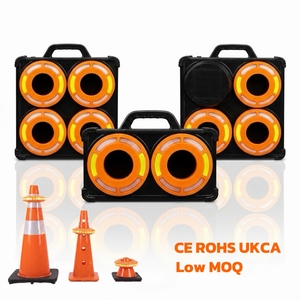
CE Synchronized Traffic Cone Light Beacon Warning Commander Strobe
Sequential RF-synchronized hazard warning light for emergency roadworks, high-speed A-road lane closures, and maintenance zones.
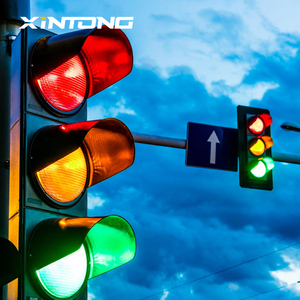
Xintong 200/300/400mm Intelligent LED Traffic Signal with Timer
High-luminous aspect signals engineered for municipal Dutch intersections, arterial corridors, and heavy-duty traffic control.
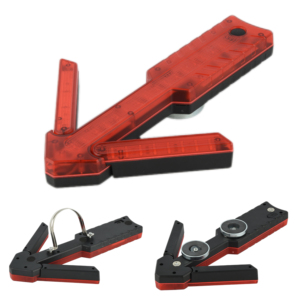
32PCS LED Road Safety Folding Arrow Rechargeable Warning Lights
Portable magnetic LED guidance array for emergency response vehicles, truck breakdowns, and immediate traffic diversion safety.
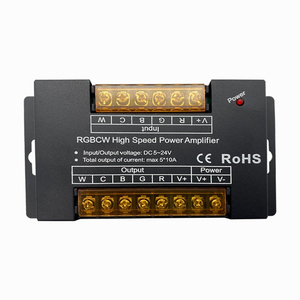
Voltage DC5-24V RGBWC Signal Amplifier & Repeater Controller
Loss-less signal repeater for long-distance perimeter visual signaling, logistics facility warning strips, and automated gates.
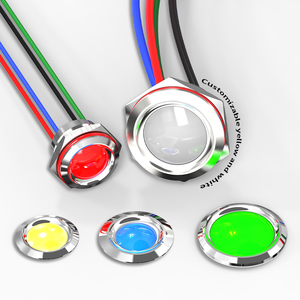
LANBOO Tri-Color Metal Panel Mount LED Indicator (16-25mm)
Heavy-duty stainless steel / brass metal indicator housing for maritime ports, automated bridge controls, and chemical processing facilities.
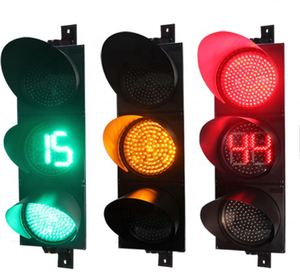
300mm High Brightness LED Traffic Signal (12-24V DC / 100-277V AC)
Long-distance optical clarity head for provincial N-roads, toll plazas, and high-visibility highway interchanges.
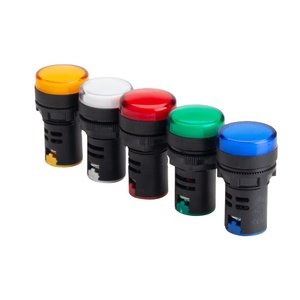
LVBO Industrial AD16-22DS LED Panel Signal Indicator Lights
Cost-efficient, long-life LED indicator modules engineered for automated warehouse control panels and transport terminals.
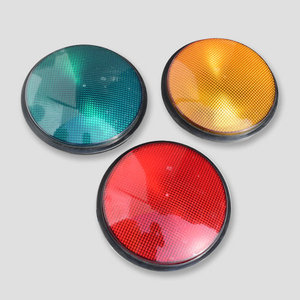
EN12368 Full-Compliance LED Traffic Light Signal Head
Strictly built to European Norm EN12368 photometric, phantom light class, and mechanical strength requirements for Dutch civil tenders.
Navigating Hazard Light Procurement & Compliance in the Netherlands
The Netherlands possesses one of the most densely integrated, highly regulated road infrastructure and maritime networks in Europe. Overseen by Rijkswaterstaat (the Executive Agency of the Ministry of Infrastructure and Water Management) alongside regional municipal councils and Dutch CROW regulations, visual hazard signaling equipment must conform to stringent technical benchmarks.
Procuring traffic cone warning strobes, hazard beacon towers, and intersection signals in the Netherlands market requires an understanding of both optical physics and local environment dynamics. From sub-zero winter temperatures along the coastal regions of South Holland to dense salt spray around the Port of Rotterdam, standard off-the-shelf warning lights often fail due to moisture ingress, lens yellowing under high UV exposure, or inadequate luminous intensity during thick North Sea sea-fog (Zeemist).
Key Regulatory Standards: EN12368, CROW & CE Marking
To qualify for public works infrastructure projects (such as maintenance along the A1, A4, A12, or A15 motorways), hazard lights and LED traffic signals must strictly adhere to the European standard EN12368 (Traffic control equipment - Signal heads). This standard measures four vital optical and mechanical characteristics:
Luminous Intensity (Class 1, 2, 3)
Determines light output for high-sunlight glare conditions vs nocturnal operations, ensuring drivers receive uncompromised visual warnings without blinding oncoming traffic.
Phantom Light Ratio (Class A, B, C)
Evaluates internal optical reflection when low winter sun shines directly into the signal lens, preventing dangerous false "ON" readings on Dutch highways.
IP Ingress Rating (IP65 / IP68)
Monitors protection against wind-driven horizontal rain, dust storm intrusion, and constant exposure to high-salinity coastal atmosphere.
Information Gain: Why RF Synchronization Matters in Roadworks
In traditional roadwork site management, independent flashing beacons create visual chaos for night drivers ("popcorn effect"). Modern Dutch safety guidelines prefer Radio-Frequency (RF) Synchronized Beacons (such as our CE Synchronized Traffic Cone Light Commander). When deployed in sequence along a traffic redirection taper, the beacons flash in a continuous light wave—guiding motorists smoothly away from hazardous work zones and drastically reducing rear-end collisions.
Where Our Hazard Signals Excel Across Dutch Infrastructure
Different environments within the Netherlands present unique mechanical and environmental challenges. As an experienced manufacturer, our hazard light designs cater to specific regional scenarios:
1. Port of Rotterdam & Amsterdam Logistics Terminals
Maritime container ports require continuous 24/7 visual indication for automated guided vehicles (AGVs), heavy forklifts, and crane loading zones. Our IP68 metal indicators and high-power 300mm signals feature corrosion-resistant anodized housings and chemical-resistant polycarbonate optics that withstand marine atmospheric salt.
2. Provincial N-Roads & Rural Intersections
Single-carriageway provincial roads (N-wegen) often lack grid connectivity in rural polder landscapes. Solar LED hazard blinkers with integrated MPPT charge controllers and high-capacity lithium iron phosphate (LiFePO4) storage maintain operational autonomy for 5–7 cloudy winter days without grid reliance.
3. Urban Smart Mobility & Bike Superhighways (Snelfietspaden)
With millions of daily cyclists, Dutch urban planners require dedicated micro-mobility hazard beacons. Compact 100mm and 200mm LED signals with clear directional arrow masks ensure safe separation between fast electric bicycles (speed pedelecs), pedestrians, and commercial urban delivery vans.
Technical Specification Comparison for Procurement Officers
Select the optimal signal hardware based on site installation parameters, voltage architecture, and environmental severity:
| Model Series / Type | Lens Diameter | Operating Voltage | Ingress Rating | Photometric Standard | Ideal Dutch Application |
|---|---|---|---|---|---|
| CE Cone Light Commander | 180mm Aspect | 12V DC / Solar / Battery | IP65 | EN12368 / CE | A-Road Maintenance & Night Taper Closures |
| Xintong Intelligent Signal | 200 / 300 / 400mm | 100-277V AC / 12-24V DC | IP65 | CE / EN12368 Class 2 | Urban Junctions & Arterial Intersections |
| Folding Arrow Safety Light | 32 High-Power Array | Rechargeable / 12V DC | IP65 Heavy Duty | CE Compliant | Emergency Breakdown Vehicles & Tows |
| LANBOO Metal Indicator | 16mm to 25mm Panel | 5-24V DC / 220V AC | IP68 Hermetic | RoHS / CE / IP68 | Maritime Ports, Bridges & Control Panels |
| High-Brightness 300mm Light | 300mm Lens Aspect | 12-24V DC / 100-277V AC | IP65 UV Sealed | EN12368 Class A/B | Provincial Highway High-Speed Approaches |
| LVBO Industrial Indicator | 16mm / 22mm | 12V / 24V / 110V / 220V | IP65 Dustproof | Industrial CE | Distribution Hubs & Automation Racks |
Emerging Trends in Dutch Road Safety & Signal Technology
1. Micro-Solar Grids & Circular Economy Materials
The Dutch government’s pledge towards zero-emission construction sites by 2030 has driven a massive shift toward autonomous solar-powered hazard lighting. Modern equipment must eliminate single-use alkaline batteries in favor of solar panels paired with high-efficiency LED chips. Furthermore, signal housings are moving away from virgin plastics toward fully recyclable UV-stabilized engineering polymers and die-cast aluminum alloys.
2. Integration with V2X (Vehicle-to-Everything) Communication
As connected autonomous vehicles (CAVs) gain traction across the Netherlands, hazard lights are evolving from purely optical devices into digital safety nodes. Advanced roadwork warning strobes are being fitted with IoT telemetry modules that broadcast real-time hazard coordinates directly to vehicle navigation systems (e.g., Apple Maps, Waze, and Rijkswaterstaat traffic centers), warning drivers several kilometers before visual contact is established.
3. Dark-Sky Friendly & Anti-Glare Optical Design
Light pollution is a major environmental concern in heavily populated provinces like North Holland and Utrecht. Modern hazard light optics utilize precision Fresnel lenses and dynamic pulse-width modulation (PWM) dimming. Ambient light sensors automatically dim LED brightness by 50% during nighttime hours—preserving vital warning visibility while preventing driver glare and minimizing night sky light spill.
Factory-Direct Manufacturing & Global Reliability
When sourcing hazard lights for civil tenders or industrial supply in the Netherlands, working directly with an established manufacturer eliminates middleman markups, reduces lead times, and guarantees engineering-level customization.
29,000+ Sq. Ft. In-House Facility
Every product undergoes complete optical assembly, SMT circuit placement, silicone potting, and powder coating under one roof, backed by over 30 years of engineering expertise.
Tri-ISO Certified Audit Stack
Our operations hold accredited ISO 9001:2015 (Quality), ISO 14001:2015 (Environment), and ISO 45001:2018 (Safety) standards, providing audit-ready paperwork for international procurement.
Custom OEM / ODM Adaptations
We rapidly customize operating voltages (12V DC, 24V DC, 110V-240V AC), custom lens colors, bracket geometries, and enclosure paint finishes (RAL spec) to meet exact project drawings.
Frequently Asked Questions by Dutch Procurement Teams
Are your hazard signals certified according to EN12368 and CE standards?
Yes. All our traffic signal heads and hazard warning light series are fully compliant with European Norm EN12368, carrying CE certification. Complete test documentation, including photometric intensity reports and ingress verification, is issued with every batch shipment for submission to Dutch project consultants.
How do your lights perform under harsh winter conditions in the Netherlands?
Our products feature IP65 and IP68 hermetically sealed housings with UV-stabilized polycarbonate lenses and corrosion-treated hardware. Electronics are protected by internal conformal moisture coatings, ensuring flawless operation down to -30°C during cold Dutch North Sea winters.
What is the typical lead time for direct export to Rotterdam or Amsterdam?
Standard product configurations ship from our factory within 2 to 3 weeks. Custom OEM orders or high-volume junction packages generally dispatch within 3 to 5 weeks following GA drawing approval. We coordinate sea freight directly to the Port of Rotterdam or air cargo to Amsterdam Airport Schiphol.
Can you provide custom wiring or low-voltage solar options?
Absolutely. We supply signals configured for standard European 230V AC mains grid connection, as well as 12V DC or 24V DC low-voltage configurations designed specifically for direct coupling with solar charge controllers and battery backup banks.
Ready to Upgrade Your Traffic Safety Equipment in the Netherlands?
Connect directly with our engineering team for instant technical consultations, product sample requests, and competitive factory-direct price quotes tailored to your civil project.
Contact Us Today