Industrial Speed Cameras & Traffic Radar Systems
Field-proven traffic monitoring devices, Doppler radar sensors, and mobile enforcement cameras optimized for Mexico's roadway infrastructure and environmental conditions.
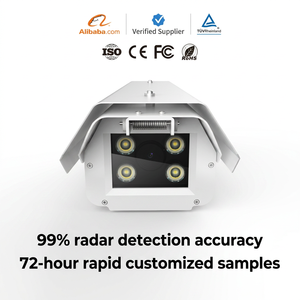
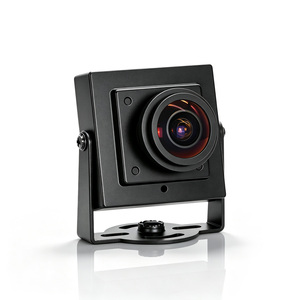
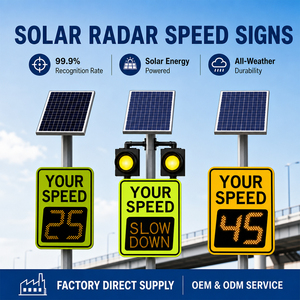
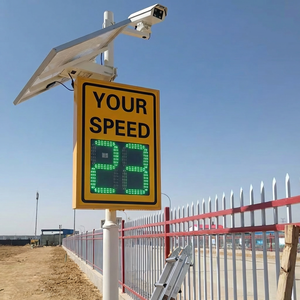

Speed Camera Manufacturing for Mexico: Strategic Market Insight & Engineering Demands
Mexico’s expanding highway networks, managed under the Secretaría de Infraestructura, Comunicaciones y Transportes (SICT) and operated by agencies like CAPUFE (Caminos y Puentes Federales), require sophisticated speed enforcement hardware engineered for longevity, high vehicle throughput, and severe climate resilience. As municipal urban centers such as Mexico City (CDMX), Guadalajara, Monterrey, and Puebla modernize their Intelligent Transportation Systems (ITS), the demand for reliable, ISO-compliant speed camera manufacturers has surged dramatically.
Procuring automated speed enforcement cameras and driver feedback radar systems for the Mexican market is not merely a matter of purchasing off-the-shelf surveillance optics. Technical directors, municipal system integrators, and highway concessionaires require original equipment manufacturers (OEMs) capable of delivering solutions aligned with local legal standards, electrical variations, and challenging operating topographies—ranging from coastal high-humidity corridors to high-altitude urban basins.
SICT & CAPUFE Alignment
Hardware built to satisfy federal toll highway specs, incorporating multi-lane tracking, high-contrast displays, and rapid event logging.
K-Band Doppler & 3D LiDAR
Radar speed measurement sensors operating at 24.125 GHz, capable of isolating speed violations across up to 4 distinct traffic lanes simultaneously.
Off-Grid Solar Autonomy
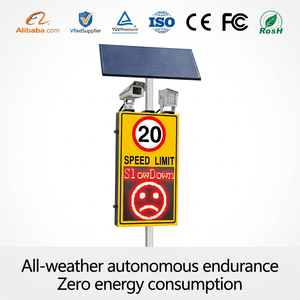
Engineered with MPPT solar charge controllers and industrial lithium/gel battery banks, delivering 3 to 5 days of uninterrupted operation in non-electrified zones.
Localized Deployment Scenarios across Mexican Road Systems
Different Mexican arterial environments impose drastically distinct engineering constraints on speed enforcement cameras and driver feedback radar systems. Our manufacturing pipeline customizes housing materials, optical sensors, lens focal lengths, and power electronics based on the destination zone:
1. Federal Toll Expressways & Intercity Corridors (Autopistas Federales)
High-speed corridors like the Autopista México–Guadalajara (Highway 15D) and Autopista México–Querétaro (Highway 57D) experience heavy commercial freight traffic combined with passenger vehicles moving at speeds exceeding 120 km/h. Deployment on these routes demands:
- Long-Range Doppler Radar: Speed acquisition up to 300 meters before the camera checkpoint.
- High-Speed Machine Vision Shuttering: Shutter speeds down to 1/10,000s to eliminate motion blur during night and high-glare daytime conditions.
- Vandal-Resistant Enclosures: Heavy-gauge hot-dip galvanized steel or IP66 aluminium housings with anti-vandal lock boxes to prevent roadside tampering.
2. High-Altitude Urban Congestion Zones (e.g., Mexico City Metropolitan Area)
Deployments in Mexico City (CDMX), Toluca (2,680m elevation), and Puebla require specialized heat dissipation strategies. High altitude results in thinner air, reducing passive thermal cooling effectiveness for high-powered camera processors and LED flash illuminators. Our systems feature customized internal heatsinks, industrial fanless thermal conduction, and UV-stabilized polycarbonate lenses that withstand high solar radiation without yellowing or fogging.
3. Coastal & Tropical High-Humidity Regions (Veracruz, Cancún, Acapulco)
Corrosive marine salt spray and intense tropical downpours in coastal states require strict adherence to NEMA 4X / IP66 ingress specifications. Our coastal-grade speed camera housings undergo rigorous salt spray testing, featuring 316-grade stainless steel hardware, conformal-coated internal PCBs, and auto-heated front window glass to eliminate condensation during sudden temperature shifts.
| Deployment Region | Primary Environmental Challenge | Recommended Sensor Package | Power Architecture |
|---|---|---|---|
| Federal Expressways (57D, 15D) | Extreme vehicle speeds (120+ km/h), continuous freight vibration | 24GHz K-Band Doppler + 60fps Starlight ANPR Camera | 120W Solar System / 220V Grid Dual-Input |
| High-Altitude Cities (CDMX, Toluca) | High UV index, low air density (thermal build-up), dense traffic | Multi-Lane 3D Tracking Radar + Auto-Dimming LED Display | 110V/220V AC Mains with UPS Battery Backup |
| Coastal Routes (Veracruz, Quintana Roo) | Salt air corrosion, high humidity, torrential rains | IP66 Sealed Aluminum Housing, Marine-Grade Powder Coat | 12V/24V DC Off-Grid Solar with MPPT Controller |
| School Zones & Work Zones | Pedestrian safety enforcement, sudden traffic speed reductions | Radar Speed Display Sign + Portable Battery Base | Integrated Solar Panel + Internal Lithium Battery |
Technical Evolution & Development Trends in the Mexican Traffic Market
The speed enforcement landscape in Mexico is shifting rapidly from isolated radar speed guns to fully integrated, cloud-connected Smart City networks. B2B buyers and government contractors must stay ahead of these technical trends when selecting a manufacturing partner:
Integrated ANPR / LPR OCR
Modern Mexican tenders mandate Automated License Plate Recognition capable of capturing standard Mexican state plates, commercial freight plates, and temporary permits under IR illumination.
NOM & Energy Compliance
Adherence to Normas Oficiales Mexicanas (NOM-001-SCFI) for electrical safety and power supply stability across 110V/220V AC grid fluctuations common in regional municipalities.
NTCIP & ONVIF Protocol Integration
Seamless communication with central traffic control software via open protocols (NTCIP 1202/1209 and ONVIF Profile S/G), enabling centralized ticket issuance and dynamic variable message sign updates.
Furthermore, local municipalities are expanding the use of Speed Feedback Radar Signs (Radar Pedagogico). These non-punitive radar displays show live vehicle speeds in green for compliant drivers and flashing amber/red for over-speeding vehicles, significantly reducing traffic accidents in school zones, hospital perimeters, and urban avenues without administrative penalty overheads.
Why Global System Integrators & Mexican Distributors Choose Us
With over 30 years of direct manufacturing experience, our 29,000+ square foot ISO-certified facility in Pune, India, operates complete in-house electronics assembly, optical testing, sheet metal fabrication, and environmental stress screening. We operate as a true OEM/ODM partner, not a trading middleman.
- ✓ ISO 9001, 14001 & 45001 Certified: Standardized manufacturing processes ensuring identical photometric and radar performance batch after batch.
- ✓ In-House Firmware Development: Full control over Doppler radar DSP algorithms, camera trigger logic, and speed display protocols with custom SDK availability.
- ✓ Export-Grade Documentation: Complete English tech specs, schematics, photometric test reports, and IP66/IP67 ingress test certificates for easy tender submission.
- ✓ Custom Branding & Enclosures: White-label production with custom powder-coat colors (RAL shades), client logo laser etching, and local voltage adaptations (110V 60Hz for Mexico).
- ✓ Photometric & Ingress Testing Lab: Every speed camera housing and LED driver undergoes 24-hour burn-in and water spray verification prior to international air/sea dispatch.
Frequently Asked Questions for Mexico B2B Sourcing
Direct answers to common technical and commercial queries from Mexican traffic contractors, municipal buyers, and system integrators.
Partner with an Established Speed Camera Manufacturer
Whether you are bidding on a municipal traffic safety tender in Mexico, outfitting a private concession toll highway, or distributing smart traffic hardware, our engineering team is ready to assist with CAD drawings, technical datasheets, and factory-direct pricing.