High-Precision Vehicle Detection Systems
Direct Factory OEM/ODM Vehicle Loop Detectors and Radar Alternatives Standardized for European Parking Gates, Toll Corridors, and Barrier Systems
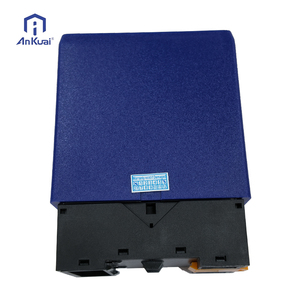
AK-TL002 High Sensitivity Vehicle Loop Detectors Used for Barrier Gates Parking Lot Access Control System
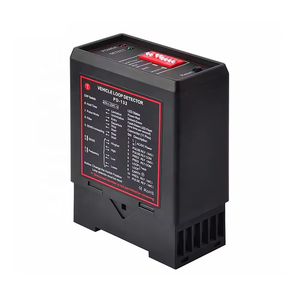
PD132 Parking Access Control System Single Channel Sensor Wireless Vehicle Loop Detector for Barrier Gate
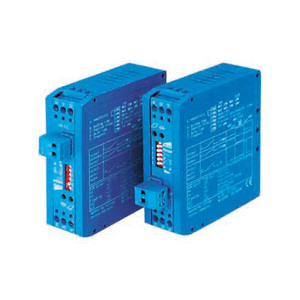
Electronic 12V 24V AC/DC Single Channel Loop Detector for Vehicle Detection
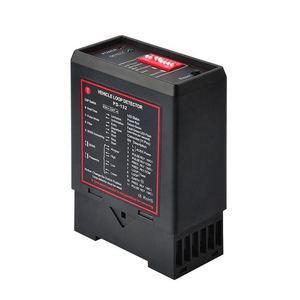
PD132 Induction Loop Traffic Sensor Vehicle Loop Detector Wire Metal Detector for Boom Barrier Parking Lot System
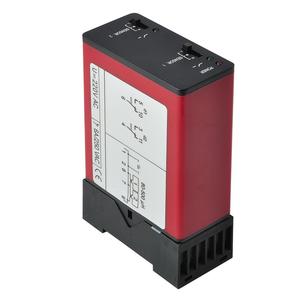
220V Parking Control Vehicle Parking System Inductive Loop Detector
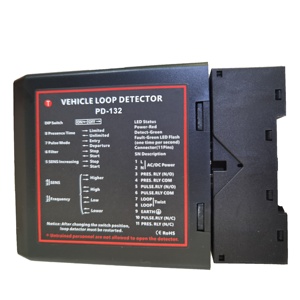
Inductive Loop Vehicle Detector Traffic Signal Loop Detector Vehicle Loop Detector Pd132
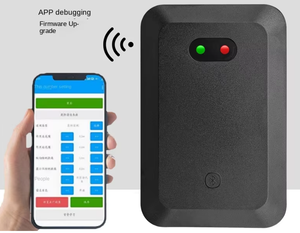
79GHz Millimeter Wave Barrier Gate Radar Anti-crushing Vehicle Detector Parking Lot LPR System Loop Detector Replacement
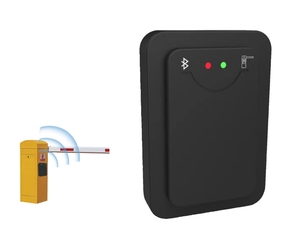
79Ghz Straight Bar Gate Anti-Smash Blue-tooth Wireless Radar Vehicle Loop Detector for Parking Barrier Gate
Engineering Architecture & OEM Technical Framework for Bulgarian Infrastructure
As Bulgaria accelerates its modernization of municipal transport hubs, highway toll plazas (such as the A1 Trakia and A2 Hemus corridors), and commercial parking infrastructures in major logistics zones like Sofia, Plovdiv, Varna, and Burgas, the requirement for robust vehicle sensing hardware has shifted. Electromagnetic inductive loop detectors and millimeter-wave radar replacement sensors must fulfill stringent thermal stability, noise immunity, and environmental sealing criteria. This whitepaper details the physical principles, structural OEM configurations, and system integration strategies tailored for Bulgarian system integrators and traffic engineering contractors.
1. Electromagnetic Induction Physics & Dynamic Sensitivity Tuning
An inductive loop detector functions as a high-frequency LC resonant oscillator circuit. When a metallic mass (a vehicle chassis) enters the magnetic field generated by the wire loop embedded in the road surface, eddy currents are induced within the vehicle bodywork. In accordance with Lenz's Law, these eddy currents generate a counter-magnetic field that reduces the net loop inductance ($L$).
The fundamental frequency of oscillation ($f$) is determined by:
Oscillation Formula: $f = \frac{1}{2\pi \sqrt{L \cdot C}}$
A reduction in inductance ($L$) yields an increase in operational frequency ($\Delta f$). Our single-channel (e.g., PD132, AK-TL002) and dual-channel OEM modules utilize high-speed microcontrollers to continuously sample the oscillator output. By evaluating the relative frequency change ($\Delta f / f$), the detector reliably identifies vehicle presence, directional movement, or tailgating events.
- Multi-Level Sensitivity Control: Featuring 4 to 16 selectable sensitivity steps via front-panel DIP switches, compensating for variations in loop turn counts (typically 3 to 6 turns), loop geometric sizes, and feeder cable lengths up to 200 meters.
- Automatic Frequency Tuning (AFT): Automatic scanning across four distinct carrier frequency channels (20 kHz to 130 kHz) eliminates crosstalk interference when multiple loop sensors are installed in close proximity at multi-lane toll booths or dual-barrier parking gates.
- Permanent Presence Option: Configurable presence output logic ensures barrier arm hold-open signals remain active even if high-bed commercial articulated trucks or trailers pause over the loop for extended periods exceeding 60 minutes.
2. Sub-Zero Thermal Drift & Asphalt Expansion Protection in Bulgaria
Bulgaria experiences significant seasonal thermal variance, ranging from extreme winter freezes (reaching -20°C in mountainous transport corridors like the Balkan and Rhodope regions) to hot summer asphalt temperatures exceeding +50°C. Standard off-the-shelf loop detectors suffer from LC drift caused by thermal expansion of slot sealing compounds and temperature-induced capacitance changes in internal tank capacitors.
Our OEM/ODM manufacturing processes address these micro-climate stresses through specific hardware enhancements:
- Industrial Temperature Rating Components: Integrated circuits, crystal oscillators, and relay modules are specified for a wider operating range (-40°C to +85°C).
- Automatic Drift Compensation (ADC): Microcontroller firmware continuously updates the baseline reference frequency during non-occupied states at a rate of 0.5 Hz. This eliminates false detections caused by gradual moisture accumulation, ground heave, or ambient temperature fluctuations.
- Conformal PCB Coating: Every circuit board undergoes automated dual-pass hydrophobic and dielectric conformal coating, preventing condensation damage caused by sudden freeze-thaw condensation cycles within outdoor control cabinets.
3. 79GHz Millimeter Wave Radar: Non-Intrusive Loop Replacement
While traditional inductive loops remain the industry baseline, physical road slotting can be problematic on cobblestone historical streets in Sofia, damaged asphalt, or concrete bridge decks where trenching compromises structural waterproofing. To solve this, our 79GHz Millimeter Wave Barrier Radar modules (Model 79GHz-Anti-Smash) provide a non-intrusive alternative that directly mimics loop relay triggers.
Operating in the high-frequency 77–81 GHz range, these sensors utilize Frequency Modulated Continuous Wave (FMCW) radar technology to detect both moving and stationary objects (including pedestrians, non-metallic electric scooters, and bicycles) within a micro-range zone of 0.5 to 6 meters. Integrated via RS485 or direct dry-contact relay outputs, they interface directly with standard boom barrier logic boards without requiring pavement modification.
Inductive Loop Detectors vs. 79GHz Radar Sensors
Objective Evaluation Matrix for Infrastructure Designers & Bulgarian Tender Specifications
| Evaluation Parameter | Inductive Loop Detector (PD132 / AK-TL002) | 79GHz FMCW Radar (Loop Replacement) |
|---|---|---|
| Installation Method | In-pavement slotting (saw-cut loop + sealant) | Surface-mounted on barrier cabinet pole |
| Physical Road Wear Sensitivity | Sensitive to severe road cracking / asphalt shift | Immune to road surface deterioration |
| Pedestrian / Scooter Detection | Metallic objects only (Bicycles/Cars/Trucks) | Detects metallic & non-metallic targets |
| Winter Climate Performance | Requires robust moisture-proof sealant | Unaffected by snow cover or ice accumulation |
| Response Time | < 10 ms (Instantaneous LC frequency shift) | < 15 ms (FMCW Signal Processing delay) |
| Supply Voltages Available | 12V–24V AC/DC, 110V AC, 220V AC | 12V–24V DC |
| Enclosure & Mounting Format | 11-Pin Plug-in / DIN Rail Mount (IP40 inside box) | NEMA 4X / IP67 Weatherproof Outdoor Housing |
| Tender Cost Architecture | Lowest initial hardware cost | Zero road trenching cost (Lower TCO) |
Bulgarian ITS & Access Control Integration Scenarios
Customized Engineering Implementations Supporting Municipal and Commercial Projects
Automated Parking Garages in Sofia & Plovdiv
High-density multi-story parkings require tight pulse logic to trigger ANPR (Automatic Number Plate Recognition) cameras upon vehicle arrival, combined with secondary presence detection to prevent barrier arms from closing on passing vehicles. Our dual-channel detectors provide clean signal separation for entry and exit gates.
Heavy Vehicle Logistics: Port of Varna & Burgas
Freight terminals handling multi-axle heavy goods vehicles (HGVs) require adjustable sensitivity parameters and tailored hold-times. Our detectors process low-chassis clearance and multi-trailer configurations without drop-out failures, ensuring seamless integration with weigh-in-motion (WIM) scales.
Cross-Border Toll Outposts & Transit Corridors
Situated along key European transport corridors connecting Central Europe to Turkey and Greece, Bulgarian border check-points demand 24/7 reliability. Our detectors feature lightning surge isolation protection up to 4000V, minimizing down-time caused by electrical storms.
OEM / ODM Customization & Direct Factory Capabilities
As an established manufacturer operating a specialized 29,000+ sq ft ISO 9001:2015, ISO 14001:2015, and ISO 45001:2018 certified electronic production center, we offer comprehensive original equipment and design manufacturing services tailored for European distributors, barrier manufacturers, and traffic engineering firms.
Custom PCB & Enclosure Formats
From standard 11-pin circular socket bases to compact 35mm DIN-rail mount housings or direct PCB integration for barrier controller enclosures, we accommodate custom spatial constraints.
Voltage & Power Flexibility
Configurable for low-voltage solar/battery operation (12V-24V AC/DC) or standard grid power systems (110V AC or 220V-240V AC operating at 50Hz/60Hz).
Firmware & Branding Customization
Tailored output timing logic (pulse on entry, pulse on exit, fault relays), bespoke silk-screen branding, custom housing colors (RAL palette), and localized packaging options.
Every batch shipped to Bulgaria includes comprehensive quality assurance documentation, including CE compliance testing reports, IP65/IP67 ingress certifications, dielectric insulation breakdown tests, and individual pre-dispatch burn-in records.
Procurement & Technical FAQ for Bulgaria
Direct Answers to Common Questions from System Integrators and Tender Buyers
Are your loop detectors and radar sensors fully compliant with EU regulations and CE standards?
How do your loop detectors handle cold Bulgarian winters and freezing asphalt?
Can we brand these loop detectors with our own company logo for local Bulgarian distribution?
What loop wire size and turn ratios are recommended for parking barrier installations?
• Perimeter 3 – 6 meters: 4 to 5 turns
• Perimeter 6 – 10 meters: 3 to 4 turns
• Perimeter over 10 meters: 2 to 3 turns
What is the typical shipping lead time and customs clearance procedure for Bulgaria?
When should we select 79GHz Radar over traditional embedded inductive loops?
Ready to Upgrade Your Access Control Hardware?
Partner directly with a proven factory manufacturer. Contact our engineering desk today for technical datasheets, CAD dimension drawings, OEM pricing, and evaluation sample requests for Bulgaria.