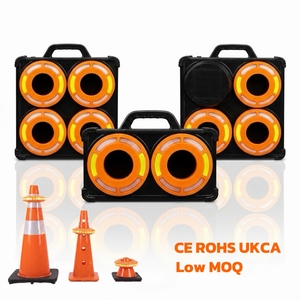
CE Synchronized Traffic Cone Light Beacon & Sequential Warning Strobe
CE Certified
RF Wireless Sync
High-Visibility
Fully compliant with international traffic safety protocols, EN12368 standards, and customized for high-ambient thermal environments across Dubai, Abu Dhabi, and the Northern Emirates.
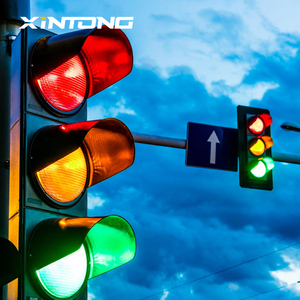
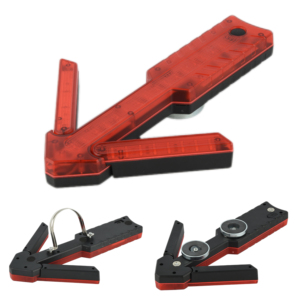
A comprehensive technical evaluation of active visual delineation, thermal optical mitigation, and retroreflective performance along high-speed corridors in the Arabian Peninsula.
The highway infrastructure of the United Arab Emirates represents one of the most advanced transport networks globally, characterized by multi-lane inter-emirate expressways such as the E11 (Sheikh Zayed Road / Sheikh Maktoum Bin Rashid Road), E311 (Sheikh Mohammad Bin Zayed Road), and E611 (Emirates Road). On these arterial routes, design speeds frequently reach or exceed 140 km/h. Navigating severe horizontal curves, interchange off-ramps, and unexpected roadway geometry under nocturnal conditions presents severe visual alignment challenges for motor vehicle operators.
Passive retroreflective signage, while foundational to traffic control, relies entirely on the vehicle's headlight illumination vector. At elevated approach velocities, the vehicle's cone of illumination may not fully energize passive retroreflective micro-prismatic sheeting until the stopping sight distance (SSD) has been critically compromised. Active LED Chevron Alignment Signs address this limitation by providing dynamic visual guidance that is self-luminous and recognizable from distances exceeding 800 meters, dramatically increasing pre-curve braking compliance and reducing run-off-road (ROR) accidents.
Deploying electronic traffic hardware within the Gulf Cooperation Council (GCC) geographic zone requires engineering resistance against extreme environmental degradation factors. Ambient temperatures in desert highway corridors routinely exceed +50°C during summer months, with direct solar radiation driving internal surface temperatures inside optical enclosures above +80°C.
Our Chevron Signs and Intelligent LED Traffic Signals utilize extruded 6063-T6 marine-grade aluminum alloy enclosures combined with UV-stabilized polycarbonate optical lenses. To mitigate thermal degradation of semiconductor junction temperatures, our engineering team incorporates solid-state copper core Printed Circuit Boards (PCBs) paired with passive aluminum heat sinks. This ensures that high-brightness Osram/Nichia LED chips maintain consistent luminous flux (measured in candelas) without suffering from early chromaticity shift or lumen depreciation.
Silica dust particles (sandstorms/Shamals) in the UAE region average grain sizes below 50 microns. Standard IP54 housings allow dust accumulation on optical reflectors, reducing visibility by up to 60% over 12 months. All TRAFITRONICS chevron modules feature IP65/IP68 double-lip EPDM gasket seals, preventing particulate ingress and guaranteeing zero internal optical fouling.
Standard static hazard markers often blur together into a visually confusing array when multiple units are deployed along a long-radius curve. Intelligent Chevron Signs overcome this through sequential flash synchronization. Utilizing low-power 2.4GHz RF transceivers integrated directly into the driver electronics, an array of chevron signs along a curve flashes in a fluid, progressive directional sequence (resembling a visual "wave").
This optical sequence intuitively guides the driver's eye through the path of the curve, providing unambiguous directional feedback regarding curve severity and vehicle trajectory. The system features auto-master election logic: if one unit in the chain suffers physical damage from a vehicle impact, the remaining units automatically re-route signal transmission to maintain continuous sequence synchronization.
Detailed engineering evaluation comparing passive retroreflective signage, hardwired LED chevrons, and autonomous solar RF-synchronized chevron systems for Middle Eastern applications.
| Performance Specification | Passive Class 3930 DG3 Signage | Hardwired AC LED Chevrons | Solar RF-Synced LED Chevrons |
|---|---|---|---|
| Nocturnal Visual Detection Distance | 150 - 250 meters (Headlight Dependent) | 600 - 1,000+ meters (Self-Luminous) | 800 - 1,200+ meters (Active LED) |
| Extreme Ambient Thermal Tolerance | Up to +70°C (Surface degradation over time) | Up to +65°C (Active heatsink required) | Up to +85°C (Solid-state copper PCB) |
| Ingress Protection (Sand/Water) | N/A (Surface mounting only) | IP65 Enclosure Rating | IP68 Fully Sealed Optical Engine |
| Power Grid Dependency | Zero Power Required | Requires 110V-240V AC Trenching & Cabling | 100% Autonomous Solar MPPT System |
| Dynamic Driver Guidance Effect | Static (No movement cue) | Hardwired Sequential Flashing | Wireless RF Auto-Sync Wave Sequence |
| Autonomy During Grid Blackouts | Unlimited (Passive) | Zero (Unless backed by UPS) | 5-7 Days Continuous Operation (No Sun) |
| Compliance Benchmark | ASTM D4956 Type IX / XI | EN 12368 / CE Compliant | EN 12368 / CE / RTA UAE Specifications |
Custom-engineered chevron configurations tailored to the distinct geographic and infrastructural demands of Abu Dhabi, Dubai, Sharjah, and the Northern Emirates.
Ideal for high-speed multi-lane expressways connecting Dubai, Abu Dhabi, and Sharjah. Heavy-duty 300mm active LED chevron modules provide long-range hazard warning for high-velocity traffic entering high-radius curves.
Specifically adapted for steep elevation changes and tight-radius hairpin turns along Jebel Jais and Jebel Hafeet mountain passes. Solar-powered RF-synchronized chevrons operate autonomously without grid trenching.
Heavy commercial vehicle routes experiencing high density of container trucks. Ultra-bright IP68 illuminated chevrons cut through diesel particulate haze and night dust, ensuring clear ramp delineation.
Remote desert highways subject to sudden Shamal sandstorms and shifting dunes. Sealed optical components prevent sand abrasion, while intense red/amber LED outputs penetrate airborne dust particles.
Compact 200mm LED alignment indicators engineered for dense municipal networks. Establishes unambiguous spatial orientation for drivers transitioning from fast freeways to tight city loops.
Portable, battery-operated, and folding arrow chevron systems designed for rapid deployment by highway maintenance contractors during road widening and resurfacing projects.
How the United Arab Emirates is modernizing its traffic control infrastructure in line with Vision 2031 and Smart City Initiatives.
The Roads and Transport Authority (RTA) in Dubai and the Department of Municipalities and Transport (DMAT) in Abu Dhabi are rapidly expanding central ITS monitoring. Modern chevron sign installations are moving away from standalone operation toward networked IoT-enabled devices. Integrating RS-485 Modbus or LoRaWAN telematics allows traffic management centers to remotely monitor battery voltage, LED health, ambient light sensor responsiveness, and physical tamper alerts across thousands of remote highway markers in real time.
Aligned with the UAE Net Zero 2050 Strategic Initiative, highway authorities are mandating zero-carbon off-grid power solutions for peripheral road safety hardware. Advanced chevron deployments leverage high-efficiency Monocrystalline MPPT (Maximum Power Point Tracking) solar solar arrays paired with Lithium Iron Phosphate (LiFePO4) battery chemistry. This combination tolerates extreme ambient heat without thermal runaway, providing up to 7 days of continuous nocturnal operation even during extended overcast sandstorm conditions.
Rather than continuous flashing, next-generation chevron installations incorporate Doppler radar speed detection modules directly into the leading chevron beacon. When an approaching vehicle exceeds the safe advisory speed limit for a curve, the chevron array instantly switches from passive standby mode to high-intensity rapid flashing, visually compelling the driver to reduce speed prior to curve entry.
As the UAE prepares its road networks for Level 4 and Level 5 autonomous vehicle testing, visual delineation signs must serve dual roles: human driver guidance and machine-vision camera recognition. Advanced optical LED chevrons utilize flicker-free pulse-width modulation (PWM) drivers that prevent image banding on autonomous vehicle CMOS cameras, ensuring reliable lane-edge detection algorithm performance.
Three decades of specialized traffic signal design, ISO-certified manufacturing, and reliable export capabilities serving the Middle East.
Operating from a state-of-the-art facility in MIDC Bhosari, Pune, India. Fully equipped with modern Surface Mount Technology (SMT) electronics assembly lines, sheet metal fabrication, electrostatic powder coating, and dark-room photometric testing labs.
Our operations adhere strictly to audited international management standards: ISO 9001:2015 (Quality), ISO 14001:2015 (Environmental), and ISO 45001:2018 (Occupational Health & Safety), with CE marking across core optical lines.
Exporting seamlessly to the UAE and GCC through our experienced export wing (Shreeji Marketing Corporation). We provide complete tender documentation, certificate of origin (COO), IP testing reports, and custom shipping logistics to Jebel Ali Port or Mina Zayed Port.
Direct answers to technical, regulatory, and commercial inquiries regarding Chevron Sign procurement and installation.
Yes. Our LED Chevron Signs are engineered to comply with the visual, dimension, and photometric performance guidelines defined in the UAE Traffic Control Devices Manuals. We offer custom retroreflective background sheeting (3M Diamond Grade DG3 ASTM Type XI) combined with specified LED aspect layouts, color chromaticity coordinates, and solar autonomy requirements.
For Middle Eastern deployments, we utilize industrial-grade Lithium Iron Phosphate (LiFePO4) or high-temperature VRLA GEL batteries rated for operational ambient ranges from -20°C to +75°C. Combined with intelligent MPPT charge controllers equipped with thermal compensation sensor probes, the system prevents overcharging and thermal degradation during peak summer months.
Standard production lead time for standard Chevron Signs and LED Traffic Signal aspect batches is typically 2 to 3 weeks following formal drawing approval. Transit time via ocean freight from Jawaharlal Nehru Port (JNPT, Mumbai) to Jebel Ali Port, Dubai is approximately 4 to 6 days, ensuring fast turnaround times for urgent highway projects.
No. Our RF synchronization module operates on a secure 2.4GHz ISM multi-channel frequency-hopping spread spectrum (FHSS) protocol. This ensures immune, zero-interference communication even in urban centers with dense cellular tower traffic or nearby high-voltage transmission lines.
Absoloutely. Every dispatched order from our Pune manufacturing facility includes a comprehensive Factory Acceptance Test (FAT) dossier. This includes photometric lux measurements, IP65/IP68 ingress verification, electrical insulation resistance tests, and high-temperature burn-in test reports signed off by our QA engineers.
Yes. We offer fully customizable housing options including marine-grade aluminum alloy or heavy-duty UV-stabilized polycarbonate. Brackets can be tailored for standard 60mm, 76mm, or 89mm round post poles, square posts, or overhead gantry structures, finished in custom RAL powder coating shades to match specific municipal client standards.
Speak directly with our traffic hardware engineering team. Receive detailed technical datasheets, photometrics, tender compliance documents, and competitive FOB/CIF quotation prices for the UAE market.