Featured Signal Timer & Traffic Control Systems
Directly sourced from certified manufacturing facilities. Engineered for rugged environmental performance, strict EN12368 compliance, and seamless integration with intelligent transport networks.
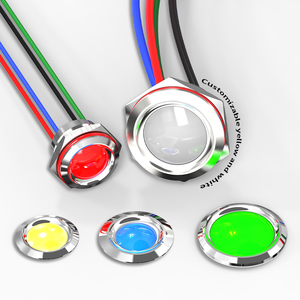
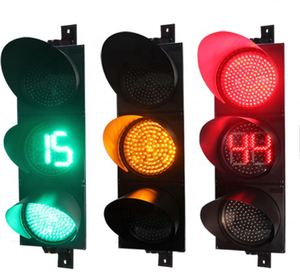
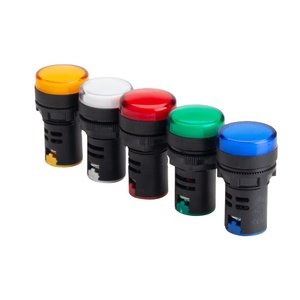
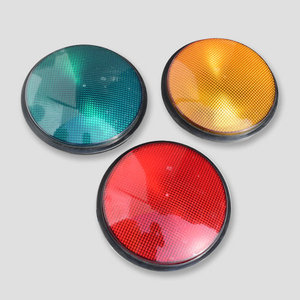
Executive Sourcing Report: Evaluating Signal Timer Suppliers & Manufacturing Reliability
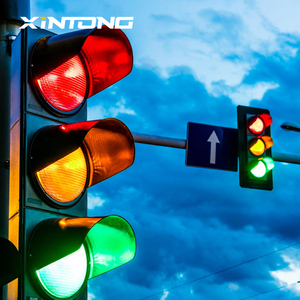
In modern Intelligent Transportation Systems (ITS) and municipal road safety architecture, traffic signal countdown timers and multi-aspect LED signal heads serve as critical hardware interfaces. Procurement managers, EPC contractors, and municipal traffic engineers face increasing pressure to source signal timer hardware that balances strict optical compliance, low energy consumption, and high Mean Time Between Failures (MTBF) under harsh climate conditions.
Selecting a top-tier signal timer manufacturer requires moving beyond surface-level component costs. True total cost of ownership (TCO) is governed by driver circuit stability, UV degradation resistance of lenses, thermal dissipation efficiency, and firmware versatility when interfacing with adaptive traffic signal controllers. This whitepaper establishes a comprehensive engineering benchmark to guide B2B buyers in identifying trusted signal timer factories and OEM suppliers worldwide.
Key Takeaway for B2B Sourcing Officers
The global market for smart traffic signals is shifting rapidly from fixed-interval relay-driven timers to dynamic, micro-processor controlled countdown modules that auto-synchronize with actuated traffic controllers. Factory capability must be verified through certified optical luminance testing (EN12368 standard), IP65/IP68 ingress verification, and proven SMT (Surface Mount Technology) LED board assembly.
Future Procurement Trends in Signal Timers & Traffic Control Infrastructure
As urban centers evolve into interconnected smart cities, signal timer procurement criteria are undergoing a paradigm shift. Buyers are no longer purchasing isolated lighting fixtures; they are investing in telemetry-ready peripheral nodes. Sourcing directors must anticipate the following key technology trends when finalizing supplier contracts over the next 3 to 5 years:
1. Dynamic Actuated Countdown Synchronization
Legacy countdown timers operate on fixed static timing loops. Next-generation systems feature self-learning microcontrollers that intercept NEMA, TS2, or 2070 controller protocols. They automatically adapt the countdown display in real-time when signal phases expand or contract based on vehicle detector loops and radar sensors.
2. V2X & SPaT (Signal Phase and Timing) Broadcasting
Modern signal timer control boards are increasingly specified with RS485 MODBUS, Ethernet, or CAN bus interfaces capable of outputting SPaT data to roadside units (RSUs). This enables direct Vehicle-to-Infrastructure (V2I) communication, allowing autonomous vehicles and connected transit buses to optimize arrival speeds.
3. Ultra-Low Power Hybrid & Micro-Solar Architecture
Off-grid highway intersections and rural bypasses demand high-luminous-efficiency LED arrays driven by MPPT solar charge controllers. Future procurement tenders mandate operating voltages spanning 12-24V DC and 100-277V AC with power consumption under 10W per aspect, ensuring continuous multi-day operation during extended overcast periods.
4. Hermetic IP68 Sealing & Anti-Glare Optical Coating
Environmental degradation is the primary failure vector for roadside signal heads. Leading factories utilize injection-molded UV-stabilized GE Lexan polycarbonate housings paired with silicone gasket sealing and hydrophobic lens coatings to prevent moisture ingress, internal condensation, and optical sun-phantom effects.
5. Smart Diagnostics & Automated Fault Telemetry
Enterprise-grade countdown timers now embed automated LED current-sensing circuitry. When individual LED clusters drop below operational thresholds or experience thermal overload, internal relays transmit real-time fault telemetry back to municipal traffic management centers, streamlining maintenance dispatch.
6. Modular Component Design for Field Serviceability
Municipal authorities prefer modular signal assemblies where power supply units, LED driver cards, countdown display matrices, and optical lenses can be replaced independently without dismounting the entire signal head from mast arms, reducing field downtime by up to 70%.
Global Traffic Signal Market Analysis & Regulatory Whitepaper
The global traffic management market is projected to reach $66 billion by 2030, driven by rapid urbanization, highway expansion in emerging economies, and the urgent need to reduce intersection vehicle emissions. According to traffic safety studies, clear, highly visible countdown timers reduce intersection collision rates by up to 24% by eliminating the "dilemma zone"—the critical distance where drivers hesitate between breaking abruptly or accelerating through a changing signal.
From a regulatory perspective, international infrastructure bids strictly enforce compliance with established optical and electrical codes. Understanding these baseline standards is mandatory for procurement agents evaluating candidate suppliers:
European Standard
Defines optical performance, luminous intensity distribution, phantom light performance, and construction tolerances for signal heads.
North American Code
Institute of Transportation Engineers specifications for Vehicle Traffic Control Signal Heads regarding chromaticity and moisture resistance.
Manufacturing Quality
Ensures repeatable quality control across SMT assembly, circuit potting, thermal management, and pre-shipment burn-in testing.
Ingress Rating
Guarantees total dust ingress protection and resistance against high-pressure water jets or temporary submersion during severe weather.
Manufacturer Profile & In-House Engineering Superiority
When contracting large-scale municipal or highway traffic signal projects, working directly with a verified design-and-manufacturing factory—rather than trading intermediaries—is essential for project execution risk management.
Leading signal timer manufacturing facilities, such as our partner infrastructure operating out of a 29,000+ sq. ft. ISO-certified plant in MIDC Bhosari, Pune, represent the gold standard in end-to-end traffic hardware production. Established with over 30 years of engineering legacy since 1992, these facilities integrate all core production workflows under a single roof:
In-House Electronics & Firmware Design
Unlike assembly-only shops using unbranded third-party components, dedicated factories maintain specialized R&D labs for developing custom constant-current driver circuits, surge protection modules, and adaptive countdown firmware. This ensures complete control over electrical stability and component longevity.
Advanced SMT & Optical Lab Testing
Surface Mount Technology (SMT) lines automate LED placement on high-thermal-conductivity aluminum PCBs. Every batch undergoes rigorous photometric lux testing, chromaticity mapping, insulation resistance checks, and mandatory 48-hour high-temperature burn-in testing prior to packing.
Precision Metal Fabrication & Coating
Structural components, mounting brackets, signal visors, and heavy-duty controller cabinets are laser-cut and finished with electrostatic polyester powder coating to withstand extreme saline humidity, industrial pollutants, and intense solar UV exposure without rusting or peeling.
Proven Supply Records Across Public & Enterprise Sectors
Established manufacturing vendors maintain deep compliance track records with national highway authorities (such as NHAI, PWD), municipal corporations, defense establishments (Army, Navy, Air Force, MES), national railways, and major industrial conglomerates (including NTPC, Adani, JSW, Tata, AM/NS, and IFFCO). International export footprints span key infrastructure markets across the Middle East, Africa, Nepal, Bangladesh, Sri Lanka, and the UAE.
B2B Technical Selection Matrix: Traffic Signal & Timer Specifications
To assist procurement teams in matching operational environment requirements with correct product specifications, review the engineering benchmark matrix below:
| Aspect Size / Category | Typical Application Scenario | Optical Intensity (Candela) | Operating Voltage | Housing Material | Ingress Rating |
|---|---|---|---|---|---|
| 300mm / 400mm Signal Heads | National Highways, Expressways, High-Speed Rural Intersections (>60 km/h) | ≥ 400 cd (Red/Green), High-Visibility Lens | 100-277V AC / 12-24V DC Solar | UV-Stabilized Polycarbonate or Cast Aluminum | IP65 / IP66 |
| 200mm Urban Signals | City Intersections, Arterial Streets, Commercial Zones (30-60 km/h) | ≥ 200 cd, Uniform Light Dispersion | 110V AC, 230V AC, 12V DC | Impact-Resistant ABS / Polycarbonate | IP65 |
| Integrated Countdown Timers | Multi-Phase Intersections, High-Volume Pedestrian Crossings | Ultra-Bright 2-Digit / 3-Digit Red-Green LED Matrix | 100-240V AC Adaptive Signal Input | Weatherproof Polycarbonate Visor Box | IP65 |
| 100mm Compact Signals | Toll Plaza Lanes, Industrial Plant Gates, Parking Garages, Loading Docks | ≥ 80 cd, Focused Beam Angle | 12V DC, 24V DC, 110-220V AC | Compact Polycarbonate / Metal Mount | IP65 / IP68 |
| Solar Warning Blinkers | Accident Blackspots, Work Zones, Unlit Medians, School Zones | Flash Rate: 50-60 Flashes/Min (Yellow/Red) | 12V DC Solar Array with MPPT Charger | Heavy-Duty Hermetic Polycarbonate | IP65 |
Frequently Asked Questions by Technical Procurement Teams
Addressing common engineering, compliance, and international logistics queries regarding signal timer procurement.
Intelligent countdown timers utilize integrated microprocessor control units that sample signal phase voltages over initial cycles (typically 1 to 2 learning cycles). The timer measures the duration of Red, Yellow, and Green phases automatically. Once calibrated, it counts down second-by-second in sync with the controller. If an adaptive controller dynamically shifts phase length, advanced timers automatically adjust or blank the display during the transition cycle to prevent driver confusion.
High-quality traffic LED modules are rated for an operational lifespan exceeding 80,000 to 100,000 hours (approx. 10 years of continuous use). To combat LED lumen depreciation, top factories employ constant-current power drivers with built-in thermal fallback protection. This ensures consistent luminous intensity across variable ambient temperatures and prevents individual LED burnout from cascading across the entire display matrix.
Yes. Direct manufacturers offer comprehensive OEM/ODM customization. Input power supplies can be configured for 110V AC (North America/Taiwan), 230V AC (Europe/Asia/Africa), or 12V/24V DC for solar setups. Optical lenses are available in full-ball aspect, turning arrows, pedestrian walk/don't walk pictograms, bicycle lanes, or combined numeric countdown layouts in compliance with regional transport regulations.
For international project clearance, procurement teams should request: (1) Factory Manufacturer Test Certificate (MTC) for luminous intensity and color coordinates, (2) IP65/IP68 Ingress Protection Test Reports from accredited labs, (3) CE / EN12368 Conformity Certificates, (4) Certificate of Origin (COO), and (5) Pre-shipment burn-in inspection photographs and packing lists indexed by carton number.
Professional solar traffic signals are engineered with an autonomy calculation factor of 3 to 5 days. This means the combination of high-efficiency monocrystalline solar panels, MPPT (Maximum Power Point Tracking) charge controllers, and deep-cycle lithium/VRLA battery banks provides sufficient energy storage to run signal blinkers continuously for 72 to 120 hours without receiving direct sunlight.
Sun phantom effects occur when sunlight shines into an unlit signal head and reflects back, making it appear illuminated. Qualified manufacturers eliminate this by utilizing tinted non-reflective polycarbonate lenses, specialized internal optical baffles, high-contrast black target boards, and deep sun-visor hoods (tunnel visors) designed to block low-angle sunlight.
Ready to Elevate Your Traffic Infrastructure Sourcing?
Connect directly with our senior engineering desk to request technical datasheets, photometrics, custom project drawings, and competitive wholesale factory pricing.