Featured Signal Housings, Modules & Safety Beacons
Precision-engineered traffic signal heads, aluminum/polycarbonate enclosures, signal repeaters, and multi-color indicator modules built for high durability and photometric compliance.
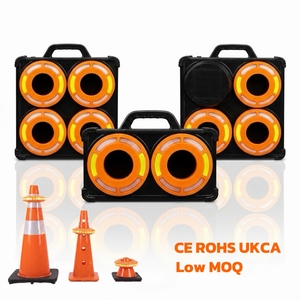
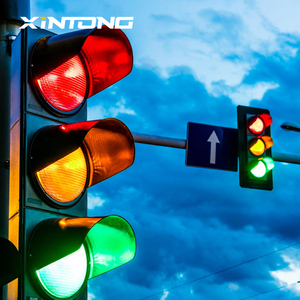
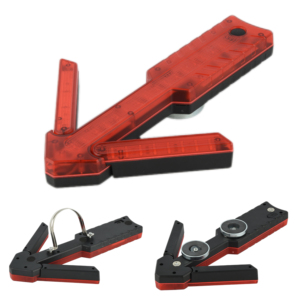
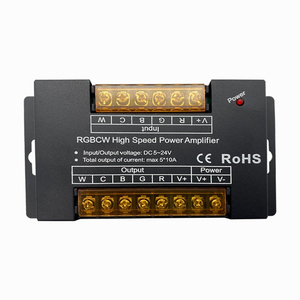
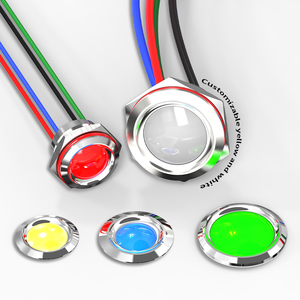
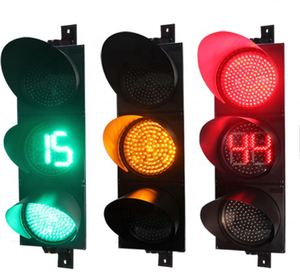
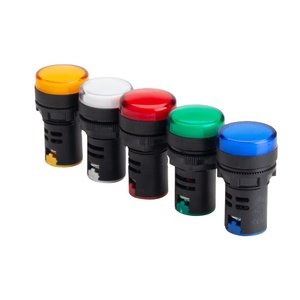
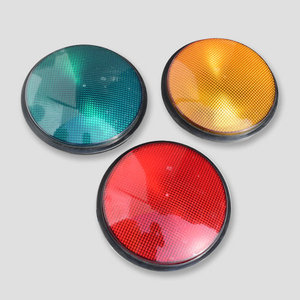
🔬 Architectural Standards in Signal Housing Design & Material Selection
In modern Intelligent Transportation Systems (ITS) and industrial signal automation, the structural integrity and optical clarity of signal housings dictate system lifespan, operational safety, and total cost of ownership (TCO). A signal housing is not merely a protective plastic or metal box; it is a thermal management ecosystem, an optical alignment enclosure, and the primary barrier against environmental degradation.
When selecting signal housings for municipal infrastructure or heavy industrial control panels, procurement engineers must weigh critical material parameters:
1. UV-Stabilized Polycarbonate (Bayer Makrolon® / SABIC Lexan®)
Polycarbonate housings offer exceptional impact resistance (IK08 to IK10 rated) and low weight, minimizing pole stress. To prevent yellowing and embrittlement under intense tropical solar radiation, premium housings incorporate specialized UV-stabilizer additives (such as Tinuvin® agents) directly into the polymer matrix during injection molding.
2. Die-Cast Aluminum Alloy (ADC12 / EN AC-44300)
For coastal regions, high-wind expressways, and high-ambient temperature environments, die-cast aluminum housings provide superior structural rigidity and passive thermal dissipation. Treated with chromate conversion coating and electrostatic polyester powder coating, aluminum housings withstand salt-spray corrosion (ASTM B117 tested for 1,000+ hours).
Engineering Gain Note: Photometric compliance under European standard EN 12368 requires zero optical phantom effect (false signal reflection caused by sunlight entering the aspect). Modern housing architectures integrate internal honeycomb anti-phantom visors and black non-reflective interior baffles to guarantee clear signal contrast even during sunrise and sunset angles.
📊 Signal Housing Material & Specification Selection Matrix
Compare key engineering metrics across industry-standard housing materials and aspect configurations to align with project tender specs:
| Housing Parameter | Polycarbonate (PC) Housing | Die-Cast Aluminum (ADC12) | Panel-Mount Stainless Steel |
|---|---|---|---|
| Primary Target Application | Urban Intersections, City Streets | Highways, Toll Plazas, Coastal Zones | Industrial Control Panels, Machinery |
| Impact Resistance Class | IK08 – IK09 (High Shock Absorption) | IK10 (Maximum Vandalism Proof) | IK10 (Hermetic / Industrial Grade) |
| Ingress Protection (IP Rating) | IP65 – IP66 (Double EPDM Gasket) | IP65 – IP67 (Silicone Seamless Ring) | IP68 / IP69K (Submersible / Washdown) |
| Operating Temp Range | -40°C to +75°C | -50°C to +90°C | -40°C to +105°C |
| Thermal Conductivity (K) | 0.2 W/m·K (Requires Vented Heatsink) | 96 W/m·K (Direct Shell Dissipation) | 16 W/m·K (Enclosure Dissipation) |
| Standard Aspect Sizes | 100mm, 200mm, 300mm, 400mm | 200mm, 300mm, 400mm | 16mm, 19mm, 22mm, 25mm Cutout |
🚀 Future Trends Shaping Signal Housing Manufacturing & Global Procurement
The global market for traffic signal housings and industrial optical beacons is undergoing a structural transition driven by Smart City initiatives, V2X (Vehicle-to-Everything) communication, and micro-grid solar electrification. B2B buyers and municipal tender boards are prioritizing several key technological innovations:
Modern housings are evolving into smart edge node enclosures. Next-generation signal heads feature pre-molded mounting bays for LiDAR sensors, radar speed detectors, ANPR cameras, and 5G DSRC (Dedicated Short-Range Communications) transceivers, eliminating the need for bulky external sensor boxes.
Traditional threaded bolt closures are being replaced by toolless stainless-steel quick-latch mechanisms and drop-down door hinges. This modular architecture reduces field maintenance time by up to 60%, allowing rapid swap-outs of LED light engines and driver boards high above traffic lanes.
In accordance with global ESG directives, major OEMs are adopting bio-based polycarbonates and post-consumer recycled (PCR) aluminum alloys. Green procurement criteria now award points to suppliers demonstrating circular lifecycle traceability and low-carbon manufacturing processes.
🏭 Enterprise Advantage: In-House Engineering & Global Supply Capability
Operating from a 29,000 sq. ft. state-of-the-art manufacturing facility in MIDC Bhosari, Pune, India, our partner facilities embody over 30 years of engineering leadership in traffic safety electronics and precision housing fabrication. Operating under certified ISO 9001:2015, ISO 14001:2015, and ISO 45001:2018 management systems, every product batch undergoes strict quality audits before global dispatch.
Integrated Manufacturing Capabilities:
- In-House Tooling & Mold Design: Custom injection molding for 100mm, 200mm, 300mm, and 400mm signal housings with custom branding and structural ribs.
- Automated SMT & Potting Lines: Surface-mount assembly for constant-current LED driver boards with silicone potting for IP68 moisture protection.
- Photometric & Environmental Testing Lab: In-house darkrooms equipped with goniophotometers to verify lux output, chromaticity coordinates, and beam angles to EN12368 and ITE standards.
- Surface Treatment & Powder Coating: Automated chromating and UV-resistant polyester powder coating line for die-cast aluminum enclosures.
Global Procurement & Export Services:
Serving infrastructure contractors, municipal authorities, and system integrators across Africa, the UAE, Nepal, Bangladesh, Sri Lanka, and Europe. We provide end-to-end tender compliance assistance, custom voltage configurations (110V AC, 220V AC, 12V/24V DC Solar), and localized pictogram lens designs.
All shipments are accompanied by Manufacturer Test Certificates (MTC), IP65/IP68 lab test reports, wiring schematics, and sea-worthy palletized packaging.
Frequently Asked Questions by Procurement Officers & Engineers
Clear, technical answers to common questions regarding signal housing specifications, compliance, lead times, and OEM customization options.
Q1: What material is best for high-salinity coastal traffic signal housings?
For coastal or marine environments, die-cast ADC12 aluminum housing with marine-grade chromate pre-treatment and electrostatic polyester powder coating (tested to ASTM B117 salt spray standards) is strongly recommended. Alternatively, UV-stabilized virgin polycarbonate housings are 100% rust-proof and highly resilient against airborne salt corrosion.
Q2: How do your signal housings achieve IP65 and IP68 water ingress ratings?
Ingress protection is achieved using continuous seamless EPDM or silicone O-ring gaskets recessed into precision-machined grooves along the housing perimeter. Cable entries utilize brass or nylon IP68 cable glands, and lens covers feature ultrasonic perimeter welding or pressure-sealed retention clips.
Q3: Can you manufacture custom signal housing dimensions or brand logos?
Yes. We offer complete OEM/ODM services including custom mold design for non-standard aspect dimensions, custom mounting bracket geometry, customer logo embossing on the housing rear shell, and specific RAL powder coat color matching.
Q4: What is the difference between EN 12368 and ITE signal housing specs?
EN 12368 is the European standard dictating optical performance, phantom light ratio, housing wind-load resistance, and color chromaticity. ITE (Institute of Transportation Engineers) is the primary North American standard focused on luminous intensity distribution and environmental vibration tolerance. We build housings compliant with both standards.
Q5: What are the standard lead times for export-volume signal housing orders?
Standard polycarbonate and aluminum signal heads ship within 2 to 3 weeks. Custom tooling, specialized voltage driver integration, or large municipal project quantities (1,000+ units) typically require 3 to 5 weeks from technical drawing sign-off.
Q6: Do your LED signal housing assemblies support solar micro-grid power?
Yes. All standard 100mm, 200mm, and 300mm signal housings can be configured with low-power 12V DC or 24V DC ultra-bright LED modules designed specifically for direct connection to solar charge controllers and battery storage systems without power inverter losses.