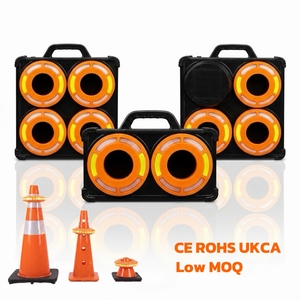
CE Synchronized Traffic Cone Light Beacon Warning Commander Strobe Signal Obstruction LED Safety Light For Road Work Emergency
CE Certified
RF Wireless Sync
IP68 Waterproof
High-luminance, weather-resistant LED beacons and traffic management hardware engineered for highways, toll plazas, work zones, and smart city deployments.
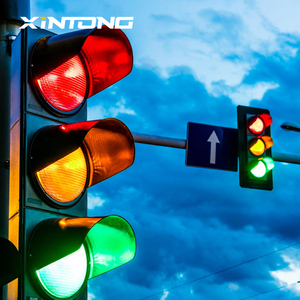
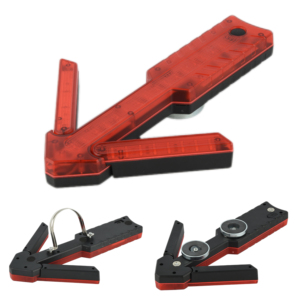


In modern intelligent transportation systems (ITS) and high-speed highway construction, the reliability of off-grid safety signage is non-negotiable. As global municipal authorities and EPC contractors transition away from expensive grid-tethered infrastructure, China's solar blinker manufacturing ecosystem has evolved to deliver military-grade optoelectronic solutions. This technical white paper examines the core photovoltaic architectures, energy storage innovations, and optical beam patterns that distinguish premium-grade solar flashing beacons from generic commercial warning lights.
Key Engineering Insight: Premium solar blinkers must deliver consistent luminous intensity exceeding 800 cd (candelas) in amber spectrum (590 nm ± 5 nm) while maintaining a minimum continuous operational autonomy of 168 hours (7 full rainy days) without direct solar recharge.
The core photometric performance of a solar hazard warning light depends on its optical lens assembly. Leading Chinese OEMs utilize high-transmittance optical Polycarbonate (PC) or PMMA resin integrated with engineered Fresnel lens arrays or Total Internal Reflection (TIR) collimators. Unlike standard diffuse lenses that bleed light into non-critical angles, TIR optical lenses capture up to 94% of emitted LED flux, focusing the beam into a strict horizontal spectrum (15° to 30° horizontal dispersion, 8° vertical divergence). This geometric precision ensures maximum distance visibility—up to 1,200 meters under daylight glare—while minimizing parasitic battery power consumption.
Solar blinkers deployed in extreme environments face severe ambient solar variation, ranging from equatorial high-heat UV degradation to northern sub-zero cloud cover. Top-tier manufacturers incorporate N-type TOPCon monocrystalline solar panels featuring conversion efficiencies exceeding 23.5%. These panels are laminated under low-iron tempered glass or high-durability ETFE (Ethylene Tetrafluoroethylene) film to resist micro-cracking and salt-spray corrosion.
Furthermore, standard PWM (Pulse Width Modulation) charge controllers have been replaced by micro-controller-driven Maximum Power Point Tracking (MPPT) firmware. MPPT algorithms recalculate the solar panel's current-voltage (I-V) characteristic curve 100 times per second, harvesting up to 30% more energy during overcast conditions and low sun angles compared to conventional charging circuits.
Historically, sealed lead-acid (SLA) or gel batteries compromised solar blinker longevity due to poor thermal tolerance and limited cycle lifespans (typically 300 to 500 cycles). Contemporary B2B sourcing standards require integrated Lithium Iron Phosphate (LiFePO4) battery packs governed by smart Battery Management Systems (BMS).
| Energy Storage Parameter | Traditional Gel / SLA Battery | Industrial LiFePO4 Battery Pack | B2B Engineering Benefit |
|---|---|---|---|
| Operating Temperature Range | -10°C to +45°C | -20°C to +70°C | Zero thermal runaway in desert deployments |
| Deep Discharge Cycle Life (80% DoD) | 400 – 600 Cycles | 3,000 – 5,000 Cycles | Reduces field maintenance cycles from 2 yrs to 8+ yrs |
| Gravimetric Energy Density | 30 – 40 Wh/kg | 130 – 160 Wh/kg | 70% reduction in beacon weight; lowers pole loading |
| Self-Discharge Rate (Monthly) | 5% – 10% | < 1.5% | Extended shelf-life during warehousing and transit |
The global market for solar traffic blinkers and obstruction warning lights is undergoing a massive transformation driven by three core technology shifts:
Single isolated flashing lights fail to communicate clear directionality in complex construction zones or lane diversions. Modern highway safety codes increasingly mandate RF-synchronized or GPS-timed sequential flashing lights. In these systems, master-slave microcontrollers communicate over 2.4 GHz ISM bands or GPS pulse-per-second (PPS) clock signals, causing adjacent solar beacons or cone lights to flash in a running sequence (chasing pattern). This visual dynamic guides drivers smoothly through high-speed work zones, reducing accident occurrence by over 42% compared to asynchronous lights.
Smart city management platforms demand real-time visibility into peripheral highway assets. Sourcing trends highlight a growing preference for solar blinkers embedded with Narrowband IoT (NB-IoT) or LTE-M modules. Municipal maintenance teams receive automated alerts if a beacon suffers battery degradation, solar shading, panel theft, or LED circuit failure, shifting infrastructure upkeep from reactive repairs to predictive maintenance.
Environmental regulations (such as EU RoHS and REACH compliance) are pushing manufacturers to utilize recyclable UV-stabilized polycarbonate and die-cast aluminum alloys (ADC12). UV-resistant housings prevent yellowing, cracking, and water ingress over 10+ years of continuous exposure to harsh sunlight and sub-zero freeze-thaw cycles.
We combine 30+ years of optoelectronic engineering with automated production lines to deliver uncompromised traffic signal hardware to global buyers.
High-speed surface-mount technology (SMT) guarantees high-precision placement of Osram / Cree LED chips. Circuit boards undergo conformal coating and silicone gel potting for IP68 water sealing.
Every batch is tested inside darkrooms using darkroom spectroradiometers to verify luminous intensity (cd), color coordinates (CIE 1931 chromaticity), and power factor compliance.
Our in-house reliability lab conducts salt-spray corrosion chamber testing (ASTM B117), thermal shock endurance (-40°C to +85°C), high-vibration testing, and IP68 submergence validation.
Products carry full EN12368, CE, RoHS, FCC, and ISO 9001:2015 certifications. Comprehensive test reports are provided in English alongside official Customs COO documentation.
From housing colors and mounting hardware to custom flash frequencies, solar panel sizing, and multi-voltage DC/AC inputs, our technical team adapts solutions to your exact tender specs.
Heavy-duty double-wall cartons, custom foam inserts, and fumigated sea-worthy pallets ensure safe transit. Hazardous battery shipping (UN38.3, MSDS) is fully compliant for air/sea freight.
Detailed technical and commercial answers regarding solar blinker procurement, testing standards, customization, and export logistics.
Our solar blinkers are engineered with an autonomous power ratio of at least 5:1 to 7:1. By combining high-efficiency monocrystalline solar panels with micro-amp low-power LED driver circuits and high-capacity LiFePO4 battery banks, the system stores enough energy during a single sunny day to operate continuously for 7 to 10 consecutive cloudy or rainy days (168+ hours) under standard flash duty cycles (50–60 flashes per minute).
Our products meet European Standard EN 12368 for signal heads, EN 12352 for warning lights, as well as US ITE (Institute of Transportation Engineers) specifications. Photometric tests confirm luminous output compliance across Class L8H (high intensity) requirements, while housings achieve IP65 to IP68 ingress protection against dust and water jet pressure.
LiFePO4 batteries offer significantly superior thermal stability (-20°C to +70°C operating range), eliminating the thermal runaway risks inherent to standard lithium ion or SLA batteries in desert heat. Furthermore, LiFePO4 delivers over 3,500 deep discharge cycles (compared to ~500 cycles for gel batteries), extending the maintenance-free service life of the blinker from 2 years to over 8–10 years.
In work-zone sequential systems, each beacon contains an RF transceiver (2.4 GHz) or a high-accuracy GPS module. When powered on, the beacons automatically form an ad-hoc mesh network or align their timing clocks via GPS pulse signals. This triggers a sequential flash pattern (e.g., Light 1 -> Light 2 -> Light 3) with microsecond precision, creating a visually clear directional arrow for approaching drivers without requiring interconnecting cables.
Every shipment includes a comprehensive document package: Commercial Invoice, Packing List, Bill of Lading, Certificate of Origin (COO / Form E / Form F), Factory Manufacturer Test Certificate (MTC), UN38.3 Lithium Battery Transport Safety Test Report, MSDS, and Air/Sea Safe Transport Identification Certificates to guarantee seamless customs clearance at destination ports.
Yes. As a direct OEM/ODM manufacturer, we can customize lens aspect diameters (100mm, 200mm, 300mm, 400mm), LED color chromaticity (Amber, Red, Green, White), housing material (UV-polycarbonate or die-cast aluminum), solar panel wattage, bracket mounting clamps (for square poles, round poles, or wall mounts), and pre-programmed flash patterns to match your local road ministry requirements.
Standard sample units ship within 3 to 5 working days. Mass production lead time for standard solar blinkers is typically 12 to 18 days for container-load orders (1,000 to 5,000 units). Minimum order quantities (MOQ) start at 50 units for standard products, while custom OEM projects have negotiable MOQs based on tooling and component specifications.
Share your technical drawings, tender specifications, or volume inquiry today. Our optoelectronic engineering team provides technical consultations, photometric data sheets, and FOB/CIF quotations within 24 hours.