Intelligent Signal
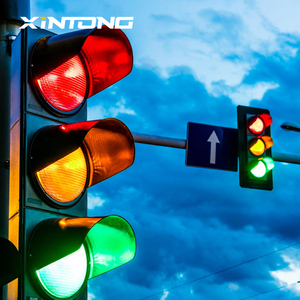
Xintong 200/300/400mm Intelligent LED Traffic Signal Light with Countdown Timer
200/300/400mm
Smart Timer
High Luminance
Directly engineered for municipal intersections, industrial automation panels, highway safety perimeters, and off-grid traffic management projects worldwide.
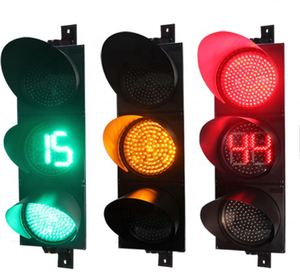
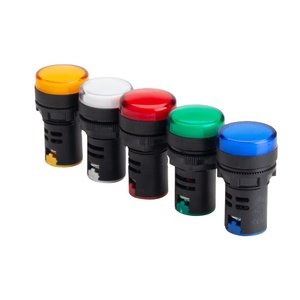
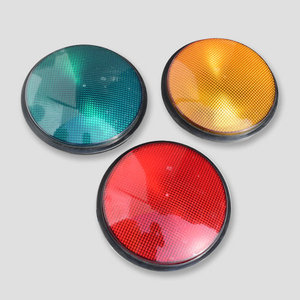
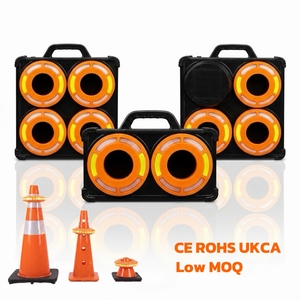
A comprehensive examination of in-house manufacturing capabilities, optical engineering precision, and strict compliance quality control standards.
Unlike standard assembly traders, our state-of-the-art facility executes full high-speed surface-mount technology (SMT) component placement under clean-room conditions. We design and flash original constant-current power supply drivers with high power factors (>0.95), low total harmonic distortion (THD < 12%), and integrated surge mitigation up to 10kV to withstand volatile power grids.
Preventing false visual indication (phantom light) under direct sunlight is a critical safety parameter. Our EN12368-compliant signal optics utilize geometric Fresnel diffusers paired with internal light-trap baffles. This ensures Class 2 high-contrast luminous intensity output, maintaining strict chromaticity coordinates according to CIE 1931 specifications across extreme operating angles.
Industrial panel indicators and traffic signal housings are subject to harsh atmospheric exposure. We utilize continuous poured-polyurethane seamless gaskets, UV-stabilized polycarbonate co-polymer resins, and anodized aluminum enclosures. Every production lot undergoes pressurized water-immersion and dust-chamber verification to guarantee IP65 to IP68 rating integrity.
Global procurement requires dynamic voltage flexibility and architectural adaptability. Our engineering department configures modular builds supporting 12V/24V DC for solar systems, alongside 110V/220V/240V AC for municipal grids. Custom panel mount threads (16mm, 19mm, 22mm, 25mm), customized visor lengths, and bespoke symbol masks are tailored without tooling delay.
Quality reliability is grounded in rigorous empirical validation. 100% of manufactured signal heads undergo a continuous 72-hour elevated-temperature thermal stress burn-in test prior to packaging. Photometric intensity, chromaticity distribution, thermal dissipation gradients, and power consumption are audited using calibrated goniophotometer systems.
Navigating global tenders demands complete structural and administrative clarity. We supply comprehensive technical dossiers with every shipment, including GA engineering drawings, wiring schematics, English-language test certificates, HS-code optimized shipping manifests, and custom sea-worthy shock-absorbing packaging for zero-damage transit.
Detailed engineering parameters designed to assist municipal specifiers, electrical engineers, and procurement directors in technical evaluation.
| Signal Category | Optical Diameter / Mount | Operating Voltage | Luminous Intensity (Cd) | Ingress / Impact Rating | Dominant Wavelength (nm) | Expected Lifespan (MTBF) |
|---|---|---|---|---|---|---|
| Intelligent Vehicular Signal | 200mm / 300mm / 400mm | 110V–277V AC / 12-24V DC | > 400 cd (Red/Green/Yellow) | IP65 / IK08 | Red: 625±5 / Green: 505±5 | > 100,000 Hours |
| Pedestrian Signal & Timer | 200mm / 300mm Dynamic Aspect | 85V–265V AC / 12V DC Solar | > 350 cd (Walk/Don't Walk) | IP65 / IK07 | Red: 625 / Green: 505 / Amber: 590 | > 80,000 Hours |
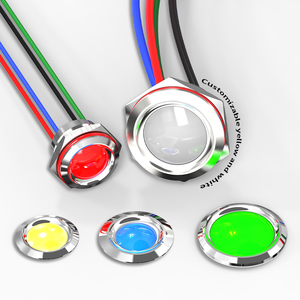
| Industrial Panel Indicator | 16mm / 19mm / 22mm / 25mm | 5V–24V DC / 110V–220V AC | > 100 cd/m² (Tri-Color) | IP68 Waterproof | RGBWC Full Spectrum | > 50,000 Hours |
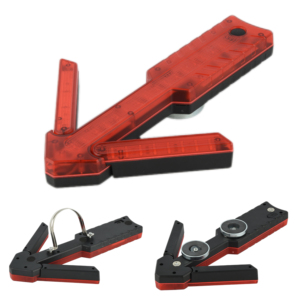
| Road Work Warning Beacon | Portable Strobe / Cone Top | Rechargeable Lithium / 12V DC | > 800 cd Strobe Peak | IP66 High Impact | Amber: 590±5 / Red: 630 | > 60,000 Hours |
| EN12368 Standard Head | 200mm / 300mm Modular Aspect | 230V AC ± 10% (50/60Hz) | Class 2 (> 800 cd Max) | IP65 Anti-Phantom | Strict CIE 1931 Chromaticity | > 100,000 Hours |
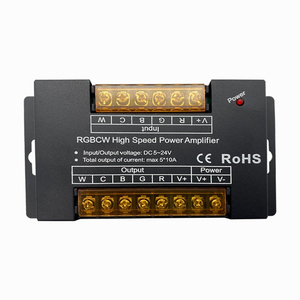
| RGBWC Repeater Module | Inline Rail / Box Mount | DC 5V - 24V Input/Output | N/A (Signal Amplification) | IP20 / Custom IP65 Box | High-Speed PWM Refresh | > 75,000 Hours |
* Note: Custom photometric beam spread angles (15°, 30°, 45°, 60°), specialized housing shades (RAL 9005 Black, RAL 6005 Green, Yellow), and customized operational logic are available upon engineering review.
An authoritative breakdown of emerging procurement paradigms, supply chain evolution, and technology integration required for modern municipal infrastructure and industrial engineering projects.
Global municipal procurement bodies are rapidly pivoting away from initial capital expenditure (CAPEX) prioritized sourcing toward holistic Total Cost of Ownership (TCO) evaluation models. Modern LED traffic signals and industrial indication arrays are expected to operate continuously for over a decade with zero unscheduled maintenance. Sourcing managers increasingly mandate ultra-low power consumption profiles (< 8W per aspect for 300mm signals), high power factor drivers (> 0.95), and recyclable co-polymer or aluminum alloy housings to satisfy stringent corporate ESG standards and municipal carbon-neutral mandates.
The standard visual signal light is transitioning into an active data-generating edge node within Intelligent Transportation Systems (ITS). Leading Chinese manufacturers are now incorporating RS-485 Modbus, CAN-bus, and wireless Narrowband IoT (NB-IoT) interfaces directly into signal controllers and countdown timers. Future-ready procurement contracts require signal heads to communicate seamlessly with Vehicle-to-Everything (V2X) road-side units (RSUs), autonomous vehicle fleets, and emergency vehicle preemption systems, allowing real-time light phase adjustments and automated fault reporting.
As traffic density escalates and high-speed arterial corridors expand, international safety standard compliance—specifically European EN12368, North American ITE VTCSH, and international ISO quality protocols—has become non-negotiable. Procurement specialists are eliminating uncertified suppliers due to liability risks associated with phantom signals (sunlight reflection masquerading as an illuminated aspect). High-gain optical Fresnel lenses, precision chromaticity tolerance binning, and optical isolation barriers are now mandatory baseline specifications in global tender documentation.
The global sourcing landscape is moving away from intermediary trading firms toward direct engagement with fully integrated original equipment manufacturers (OEMs). Direct manufacturer partnerships guarantee batch-to-batch optical consistency, complete component traceability (LED chip wafer origin, driver capacitor ratings), localized engineering customization, and rapid spare-parts availability over 10-to-15-year infrastructure lifespans.
Exploring how advanced materials science, optical physics, and digital control electronics are driving the next generation of visual signal indicators.
Next-generation LED signal arrays incorporate integrated ambient light sensors that dynamically scale luminous intensity based on external illumination conditions. During bright daylight, signal power ramps up to maximum candela to combat sun glare; at night, optical output is automatically dimmed by 30-50% to prevent glare reflection for approaching drivers while extending LED diode operating lifespan and conserving energy.
To overcome unstable grid infrastructure in emerging markets, modern signal electronics feature wide-input switching power supplies (capable of seamlessly operating from 85V to 277V AC, or 12V to 24V DC). Furthermore, integrated solar-hybrid charge management units allow signal heads to auto-switch between mains power and battery/solar storage without dropping light output or disrupting controller handshakes.
Failure of a single signal phase can result in severe traffic gridlock or safety hazards. Advanced LED signal heads feature individual LED string current monitoring circuits. If an LED diode fails or driver output degrades beyond a 10% threshold, the internal smart board immediately signals the central junction controller via a dedicated telemetry line, initiating automated maintenance alerts before complete visual failure occurs.
In-depth technical answers addressing common procurement inquiries, quality standards, custom configuration possibilities, and international shipping protocols.
When evaluating Chinese LED signal manufacturers, you should demand verified test reports for EN12368 (the European standard governing optical performance, phantom light, chromaticity, and mechanical strength), CE conformity (LVD and EMC directives), ISO 9001:2015 quality management system certification, ISO 14001 environmental compliance, and IP65/IP68 ingress protection test certificates issued by accredited third-party laboratories (such as SGS, TÜV, or CNAS).
EN12368 compliance mandates strict optical metrics beyond basic illumination. It defines exact luminous intensity distribution (Class 1, Class 2, or Class 3), strict chromaticity coordinates according to CIE 1931 standards to ensure color accuracy under all weather conditions, a high luminance contrast ratio to eliminate phantom signals caused by sun reflection, and stringent environmental durability requirements (resistance to wind loads, vibration, extreme temperatures from -40°C to +60°C, and water ingress).
Yes. Our in-house electronics R&D team engineers custom power supply modules to accommodate specific regional requirements. We provide standard AC options (110V AC, 220V AC, 230V AC, 240V AC 50/60Hz), low-voltage DC options (5V, 12V, 24V, 48V DC for industrial automation panels and solar-powered off-grid sites), and wide-range universal voltage inputs (85V–265V AC).
Thermal management is vital for LED longevity. We utilize high-thermal-conductivity metal-core printed circuit boards (MCPCBs) bonded directly to heavy-duty aluminum heat sinks. Components are potted with thermal conductive silicone gel that accelerates heat dissipation away from the LED junctions while protecting sensitive SMT components from moisture, oxidation, and mechanical shock. This maintains junction temperatures below 65°C, eliminating color drift and ensuring over 100,000 hours of stable operation.
We supply traffic signal housings in aspect diameters of 100mm (4 inches), 200mm (8 inches), 300mm (12 inches), and 400mm (16 inches). Housings are available in high-impact UV-stabilized polycarbonate (PC) or heavy-duty die-cast aluminum alloy. Lens options include cobweb diffusers, clear Fresnel lenses, dynamic countdown combination heads, full-ball aspects, directional turning arrows (left, right, straight, U-turn), and customized pedestrian or bike lane pictograms.
Standard LED signal modules and industrial panel indicators typically require 10 to 15 business days for production after drawing approval. Specialized junction controllers or customized EN12368 orders ship within 20 to 25 days. Every signal assembly is individually wrapped in anti-static protective foam, packed inside double-wall corrugated export master cartons, and palletized on fumigated wood or plastic pallets with shrink-wrap banding to ensure 100% damage-free maritime or air transit.
Absolutely. As a true original equipment manufacturer, we offer end-to-end OEM/ODM services. We can laser-engrave corporate logos on housing metals, print custom brand graphics on packaging boxes, adjust panel mounting thread dimensions (16mm, 19mm, 22mm, 25mm), and supply comprehensive English, Spanish, French, or Arabic installation manuals, technical datasheets, and factory acceptance test (FAT) documentation for tender submissions.