High-Performance Road Safety & Traffic Hardware
Directly manufactured under ISO 9001:2015, ISO 14001:2015, and ISO 45001:2018 standards for highway EPCs and municipal authorities.
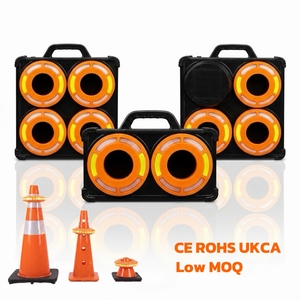
CE Synchronized Traffic Cone Strobe Beacon Light
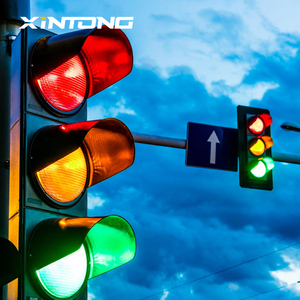
Intelligent LED Traffic Signal with Countdown Timer
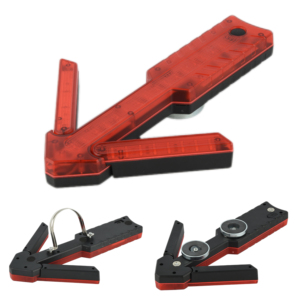
32PCS LED Road Safety Folding Arrow Warning Lights
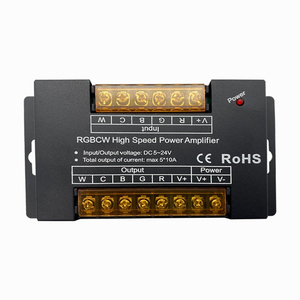
DC5-24V RGBWC Signal Amplifier LED Strip Repeater

Tri-Color LED Indicator Light IP68 Metal Panel Mount
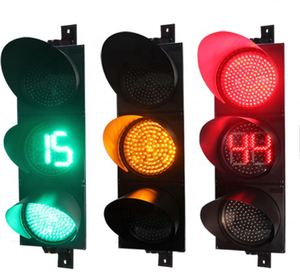
300mm High-Brightness LED Traffic Signal Heads
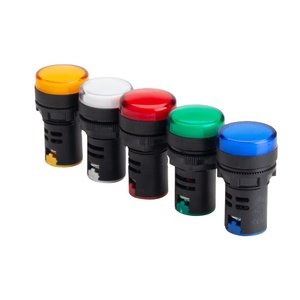
Industrial Plastic LED Signal Indicator Light Series
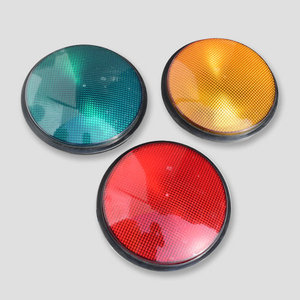
EN12368 Compliant High-Intensity LED Traffic Signal
Manufacturing Supremacy: Trafitronics India Pvt Ltd
Operating from an expansive, modern 29,000+ sq. ft. ISO 9001:2015, ISO 14001:2015, and ISO 45001:2018 certified facility in MIDC Bhosari, Pune, India, Trafitronics India Pvt Ltd has established itself as an authoritative global OEM and exporter of highway safety infrastructure, traffic signal heads, solar delineators, and traffic stud systems since 1992.
In-House Optical & SMT Production
Every constant-current LED driver, solar charge circuit board, and retroreflective lens array is populated and validated on proprietary SMT lines in Pune to eliminate third-party supply chain vulnerabilities.
Rigorous Audit & Documentation
Export consignments include complete Manufacturer Test Certificates detailing photometric compliance, structural load endurance (ASTM D4280 standard), and dust/water ingress test reports.
Proven Worldwide Export footprint
Under the Shreeji Marketing Corporation division, our road safety systems actively protect toll plazas, expressways, and urban junctions across the UAE, Africa, Nepal, Sri Lanka, and Bangladesh.
Global Analysis: Top 10 Traffic Stud Manufacturers & Delineator Producers
Selecting qualified highway safety markers requires deep technical evaluation of compressive structural resistance, retroreflectivity performance coefficients (RA), thermal expansion behavior, and environmental sealing. Below is the procurement analysis of the top global manufacturing leaders specializing in traffic studs and road signaling equipment.
| Manufacturer Name | Primary HQ Region | Key Product Specialization | Load Rating (Tons) | Core Certifications |
|---|---|---|---|---|
| Trafitronics India Pvt Ltd | India / Global Exporter | Solar & Die-Cast Road Studs, LED Signals | 35 - 45+ Tons | ISO 9001, ISO 14001, CE, IP68 |
| 3M Transportation Safety | United States | Microprismatic Retroreflective Studs | 25 - 30 Tons | ASTM D4280, EN 1463 |
| Swarco Group | Austria / Europe | Glass Studs & Intelligent Road Delineators | 30 - 40 Tons | EN 1463-1/2, CE |
| Avery Dennison Corp | United States | Pavement Markers & Delineator Films | 20 - 25 Tons | ASTM D4280, AASHTO |
| Rayolite (Valmont Ind.) | United States | Acrylic Raised Pavement Markers (RPM) | 25 - 35 Tons | ASTM D4280 |
| Solar-Light Solutions | United Kingdom | Active Solar Powered LED Road Studs | 30 - 40 Tons | BS EN 1463, IP68 |
| Nippon Carbide Industries | Japan | Reflective Markers & High-Sight Delineators | 25 - 30 Tons | JIS Standard, ISO 9001 |
| Dialight Corporation | United States / UK | High-Intensity Traffic Lights & Signals | N/A (Signaling) | UL, CE, EN 12368 |
| Kyowa Industrial Co. | Japan | Self-Luminescent Glass Road Markers | 35 - 50 Tons | JIS Industrial Grade |
| Xintong Group | China | Municipal LED Traffic Light Systems | 20 - 30 Tons | CE, IP65 |
Technical Engineering Criteria for Traffic Stud Selection
Highway engineers evaluating traffic studs (Raised Pavement Markers - RPMs) must prioritize three distinct mechanical and optical metrics:
- Structural Shell Integrity: Cast aluminum alloy (ADC12) or toughened polycarbonate housings capable of resisting continuous heavy axle loads up to 40 metric tons without micro-fracturing.
- Photometric Retroreflection: Prismatic PMMA (Polymethyl Methacrylate) lenses engineered to deliver high retroreflective values exceed 300 mcd/lux at a 0.2° observation angle, maintaining night visibility up to 500 meters.
- Active Solar & Micro-Capacitor Energy Systems: Modern solar studs utilize monocrystalline silicon PV cells linked to ultra-capacitors or Lithium Iron Phosphate (LiFePO4) energy cells, offering 72+ hours of continuous flashing autonomy after single-day sunlight absorption.
Future Procurement Trends in Road Studs
The global road safety equipment sector is rapidly transitioning from passive retroreflective markers to active, intelligent road delineation nodes. Primary purchasing trends include:
Procurement bodies across high-fog and unlit intercity corridors are mandating active solar LED studs that switch on automatically at dusk via internal photocells, increasing driver reaction windows by over 300%.
- Transition to Recyclable Alloy Housings: Tender specifications increasingly penalized non-recyclable plastics in favor of heavy-duty aluminum alloys.
- RF Wireless Synchronized Studs: Highway authority bids now specify 2.4GHz RF-synced road studs that flash sequentially to guide vehicles clearly through hazardous curves and construction zones.
- Embedded In-Pavement Flush Mounts: Snowplowable and heavy-scraper-compatible flush studs recessed into asphalt cut down maintenance replacement cycles by 60%.
Development Trends in Traffic Signaling (ITS)
Traffic signal lights and intersection hardware are moving beyond fixed-timer controls toward dynamic, data-integrated Intelligent Transportation Systems (ITS):
Modern signal heads directly connect with Doppler speed radars and adaptive junction controllers to dynamically calculate pedestrian clear times and adjust green phases based on live vehicle queue density.
- Low-Power High-Flux LEDs: Next-generation EN12368-compliant signal heads consume under 8W per aspect while delivering over 800 cd luminance.
- Integrated Optical Countdown Displays: Multi-aspect 300mm signals now feature integrated dual-color numeric timers directly on the green/red aspect.
- V2X (Vehicle-to-Everything) Ready: Signal controllers equipped with RS485 / Ethernet interfaces transmit phase timing directly to autonomous and connected vehicles.
Traffic Stud & Safety Signaling Procurement FAQ
Answers to technical, commercial, and engineering questions frequently submitted by EPC contractors, municipal engineers, and international importers.
Ready to Elevate Your Highway Safety & Traffic Project?
Get direct factory pricing, technical spec sheets, CAD drawings, and photometric test reports for your tender requirements directly from our engineering team in Pune.