Industrial Grade Warning Beacons & Traffic Signal Hardware
Precision-engineered optical systems built to withstand extreme environmental stress, offering maximum photometrics, low power consumption, and turn-key OEM/ODM customization.
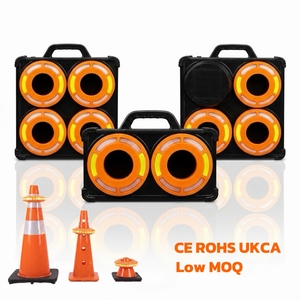
CE Synchronized Traffic Cone Light Beacon Warning Commander Strobe Signal
Inquire Now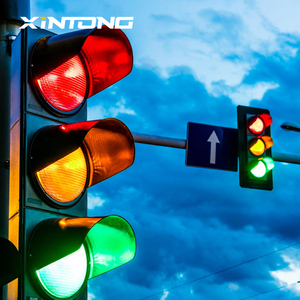
Xintong 200/300/400mm Intelligent LED Traffic Signal Light with Countdown Timer
Inquire Now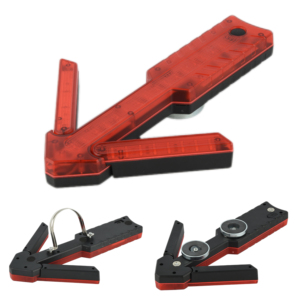
32PCS LED Road Safety Folding Arrow Rechargeable Warning Lights
Inquire Now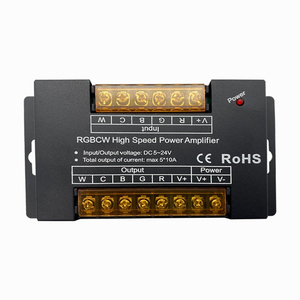
DC5-24V RGBWC High-Speed Industrial Signal Amplifier & Signal Repeater
Inquire Now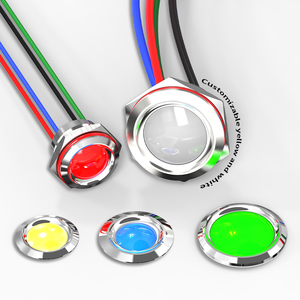
LANBOO Tri-Color LED Indicator Light 16mm-25mm Metal Panel Mount IP68
Inquire Now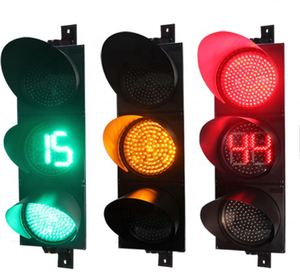
300mm High Brightness Modular LED Traffic Signal Lights (AC/DC)
Inquire Now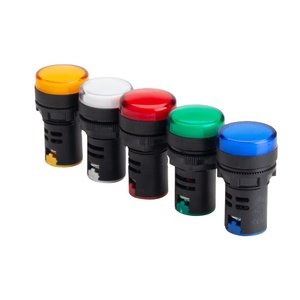
AD16-22DS Industrial Plastic LED Signal Indicator Light 16mm/22mm
Inquire Now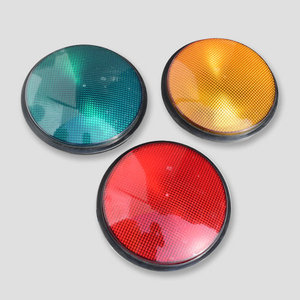
EN12368 Certified Heavy-Duty Commercial LED Traffic Signal Head
Inquire NowDirect Manufacturer Capabilities, Not Trading Brokerage
Operating from our 29,000+ sq ft ISO-certified manufacturing facility in MIDC Bhosari, Pune, India, we offer end-to-end control over electronic assembly, optical molding, thermal dissipation, and final assembly test protocols.
Proprietary Optical & Firmware Engineering
Our in-house R&D team designs custom constant-current driver circuits, RF sync firmware algorithms, and precision Fresnel lenses. We eliminate third-party black-box dependency, providing complete IP ownership and software customization for private-label OEM partners.
Rigorous Compliance & Batch Traceability
Every production run undergoes strict photometric lux testing, chromaticity coordinate verification, IP68/IP65 water immersion, and 72-hour burn-in cycles. Export consignments include full Manufacturer Test Certificates (MTC) and CE/EN12368 compliance dossiers.
Rapid Custom Tooling & Enclosure Modification
From custom mounting brackets and stainless steel panel indicators (16mm to 25mm) to UV-stabilized polycarbonate or die-cast aluminum signal housings, our rapid prototyping capabilities reduce custom OEM product launch timelines by up to 60%.
Proven Global Supply Chain & EPC Approvals
Under the Shreeji Marketing Corporation group, our warning beacons and signal systems are deployed by major conglomerates including AM/NS India, Adani Group, JSW Steel, NTPC, IFFCO, Shapoorji Pallonji, and FIAT across Africa, Middle East, UAE, and South Asia.
White Paper: Engineering Standards & Optical Physics in Modern Warning Beacons
In high-risk industrial, municipal, and highway environments, visual warning systems are the primary defense against vehicle collisions, structural impacts, and personnel casualties. An effective warning beacon or LED traffic signal must fulfill strict photometric performance parameters while maintaining operational integrity across severe ambient temperature fluctuations, high humidity, corrosive industrial airborne particulates, and continuous mechanical vibration.
This technical guide establishes the critical parameters B2B procurement heads, EPC contractors, and OEM engineers must evaluate when specifying light signal devices, strobe beacons, and intelligent signal heads for global deployment.
1. Photometric Performance, Luminous Intensity Distribution & Chromaticity
The core function of any obstruction light or safety beacon is to deliver unmistakable visual stimulus to vehicle operators under full midday sunlight (high ambient illuminance > 100,000 Lux) as well as heavy fog, rain, or night conditions. Standard commercial LED indicators often suffer from severe "sun phantom effects," where reflective sunlight inside the refractor housing tricks drivers into misinterpreting an inactive signal as active.
To eliminate this catastrophic risk, engineering standards such as EN 12368 specify three crucial photometric parameters:
- Luminous Intensity Classes (R1, R2, R3): Class R1 mandates a peak axial intensity around 100-200 cd, suitable for urban streets with speeds under 50 km/h. Class R2 (400-800 cd) and R3 (>800 cd) are required for high-speed expressways and major arterial highways where stop-sight distances exceed 200 meters.
- Phantom Light Resistance (Class 1 to Class 5): Achieved by utilizing tinted internal Fresnel lenses, anti-reflective inner diffusers, and deep aluminum sun visors that trap ambient incident solar rays before they reflect back to the observer.
- CIE Color Boundaries (Signal Red, Amber, Green, Blue, White): Strict wavelength tolerance ensures that under high ambient thermal stress, LED die shift does not alter the signal color. For instance, Amber signals must maintain a dominant wavelength strictly within 589nm - 595nm to prevent visual confusion with signal red or low-temperature halogen yellow.
2. Thermal Management & Constant-Current LED Circuit Design
The operational lifespan of high-power Surface Mount Device (SMD) LEDs is inversely proportional to junction temperature ($T_j$). Operating an LED at elevated junction temperatures accelerates phosphor degradation, resulting in severe lumen depreciation (lumen decay > 30% within 10,000 hours) and color drift.
Industrial OEM warning beacons manufactured by Trafitronics integrate direct-metal-bonded aluminum core printed circuit boards (MCPCB) coupled with die-cast ADC12 aluminum thermal heat sinks. Drivers feature wide-input buck-boost converters with built-in micro-controller thermal fold-back protection. If ambient internal temperatures exceed 85°C, the constant-current driver automatically scales down operating current by 15%, lowering thermal stress while preserving continuous optical output without abrupt signal failure.
| Aspect / Parameter | 100mm Signal / Indicator | 200mm Urban Traffic Head | 300mm Highway Signal Head | Synchronized Strobe Beacon |
|---|---|---|---|---|
| Primary Application | Toll Plazas, Industrial Machinery, Gates | City Intersections, Commercial Decks | High-Speed Highways, Expressways | Road Construction, Hazard Cones |
| Luminous Intensity | > 80 cd (Red / Amber) | > 400 cd (Class R1/R2) | > 800 cd (Class R2/R3) | > 1200 cd Peak Flash |
| Operating Voltage | 12-24V DC / 110-220V AC | 12-24V DC / 100-277V AC | 12-24V DC / 100-277V AC | 3.7V Rechargeable / 12V DC |
| Housing Material | Stainless Steel / ABS | UV Polycarbonate / Aluminum | Die-Cast ADC12 Aluminum | Impact Polycarbonate + Base |
| Ingress Rating | IP68 (Submersible Panel) | IP65 Dust & Water Resistant | IP65 Weatherproof Sealed | IP67 Heavy-Duty Waterproof |
| Expected Lifespan | > 100,000 Hours MTBF | > 80,000 Hours MTBF | > 80,000 Hours MTBF | > 50,000 Hours Battery Cycles |
Future Procurement Trends in Industrial Safety & Traffic Signalling
The global traffic management and industrial safety beacon market is transitioning rapidly from isolated illuminated indicators to connected, intelligent hazard mitigation nodes. Corporate procurement directors and municipal buyers are restructuring tender requirements around several defining technology shifts:
1. Wireless RF Multi-Beacon Synchronization
In temporary highway work zones, standard non-synchronized warning lights create a chaotic visual environment for drivers approaching at high speeds. Modern highway safety standards mandate sequential flashing arrow arrays and synchronized cone beacons. Utilizing sub-GHz wireless RF communication (868MHz / 915MHz proprietary protocols), master-slave beacon chains automatically negotiate timing pulses without requiring interconnecting cables. As a result, approaching motorists perceive a smooth, cascading wave of light that intuitively guides them away from lane closures, reducing work-zone intrusion accidents by up to 42%.
2. Solar Energy Integration & MPPT Battery Optimization
Off-grid and remote arterial road installations present severe electrification challenges. Procurement teams are moving away from passive solar charging circuits toward micro-controller-driven Maximum Power Point Tracking (MPPT) solar charge controllers paired with Lithium Iron Phosphate ($LiFePO_4$) battery chemistry. $LiFePO_4$ technology delivers superior thermal stability in high-ambient regions (operating safely up to 65°C), zero memory effect, and a duty cycle exceeding 3,000 charge-discharge cycles compared to legacy sealed lead-acid (SLA) batteries.
3. IoT Telemetry & Dynamic Diagnostics
Modern Smart Cities and automated toll network operators demand continuous device health monitoring. Next-generation 300mm LED traffic signal heads and radar speed display systems now integrate RS485 MODBUS or CAN-bus interfaces, enabling central traffic management servers to receive real-time telemetry on LED array failure, power line voltage drops, housing tamper alerts, and ambient light sensor feedback.
Emerging Technology Trends in Optical Signalling
How advanced engineering in material science, optics, and IoT is redefining next-generation emergency warning beacons and municipal traffic signals.
C-V2X Direct Beacon Communication
Integration of Cellular Vehicle-to-Everything (C-V2X) wireless transceivers into emergency strobes and signal heads, broadcasting direct digital emergency alerts into approaching autonomous and connected vehicle navigation dashboards.
Optical Beam Shaping & Uniformity
Custom engineered compound parabolic concentrator (CPC) optics and Fresnel lens arrays deliver 98% light collection efficiency, eliminating hot-spots and providing uniform luminance across wide viewing angles (up to 70° horizontal).
Self-Cleaning Nano-Coated Lenses
Hydrophobic and anti-static nano-ceramic coatings applied to outer polycarbonate optical covers prevent dust accumulation, salt spray crystallization, and soot buildup in harsh mining and industrial coastal sectors.
Frequently Asked B2B Buyer Questions
Direct technical answers provided by our senior engineering team to assist international buyers, OEM partners, and project specifiers.
Ready to Partner With a Trusted OEM/ODM Warning Beacon Manufacturer?
Whether you require standardized EN12368 traffic signals, custom IP68 industrial indicators, or synchronized emergency warning strobes, our engineering desk is ready to review your technical drawings and provide competitive factory-direct quotations.