Featured OEM/ODM Traffic Enforcement & Monitoring Systems
Field-proven vision hardware customized for Intelligent Transportation Systems (ITS), multi-lane speed measurement, and automated license plate recognition.
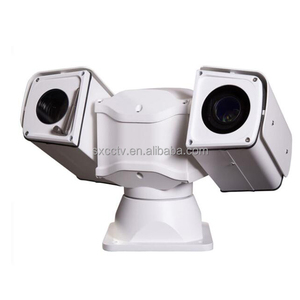
500 Meters CCTV Camera for Car Intelligent CCTV Day Night
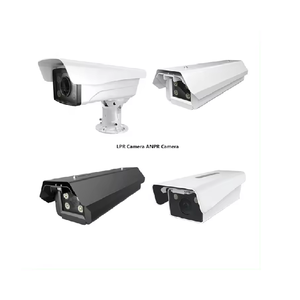
Intelligent Vehicle Plate Reader System Security Camera ALPR/ANPR System
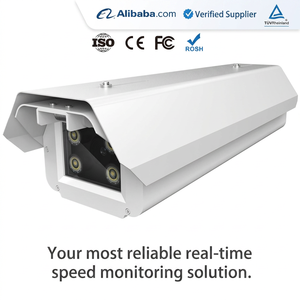
Advanced AI Evidence Recording Bridge Traffic Control High Speed Capture Road Camera PoE Powered
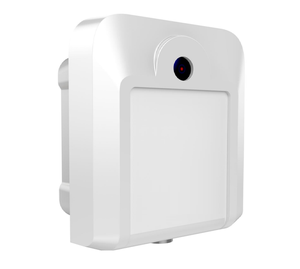
AIRE260 Speed Sensor Traffic Radar Integrated Camera 260m Range 6 Lanes Coverage
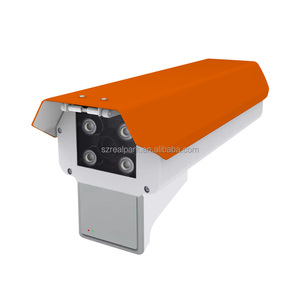
3MP AI Traffic Road Enforcement LPR Camera Radar Measuring Vehicle Speed ANPR Camera
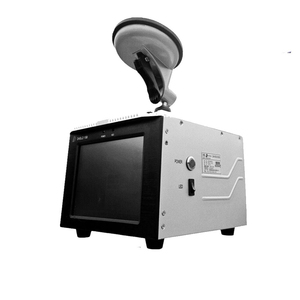
Smart Traffic Equipment Integrated Traffic LPR Camera 24.15GHz Portable Speed Radar
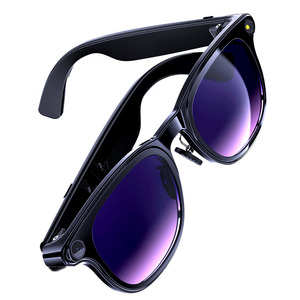
Smart AI Camera Glasses HD 8MP Photo Video Image Stabilization Wireless Translation
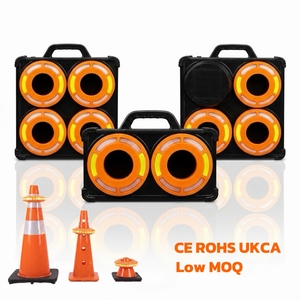
CE Synchronized Traffic Cone Light Beacon Warning Commander Strobe Signal LED Safety Light
Navigating the Paradigm Shift in Intelligent Transportation Systems (ITS)
An Engineering Blueprint for System Integrators, Smart City Consultants, and Government Procurement Officers
The Transition from Centralized Processing to Deep Learning Edge AI
Modern traffic management infrastructure is undergoing a radical structural transformation. Legacy Automatic Number Plate Recognition (ANPR) and speed enforcement architectures depended on uncompressed RTSP video streaming transmitted over cellular or fiber networks back to centralized server farms. This traditional pipeline created catastrophic operational bottlenecks: extreme network bandwidth consumption, elevated latency in signal triggering, and massive cloud storage overheads.
As a leading OEM/ODM Traffic Camera Manufacturer, our engineering philosophy prioritizes Edge Computing Edge AI Architectures. By embedding high-throughput Neural Processing Units (NPUs capable of 4 TOPS to 32 TOPS) directly inside the camera housing, plate recognition, vehicle classification, speed calculation via 24GHz Doppler radar, and abnormal traffic event detection occur locally within under 30 milliseconds. Network bandwidth is reserved strictly for high-priority metadata JSON payloads and cryptographic evidence packages, dramatically lowering TCO (Total Cost of Ownership) for highway agencies.
Solving Optical & Environmental Challenges in High-Speed Capture
Capturing clear, legally enforceable evidence images of license plates moving at speeds exceeding 250 km/h under complex lighting conditions—such as extreme solar glare, pitch-black rural highways, wet road reflections, and high-beam headlights—demands superior optical hardware design:
- Global Shutter CMOS Sensors: Unlike rolling shutter sensors that introduce motion skew and distortion on fast-moving targets, our industrial traffic cameras feature Sony Pregius global shutter sensors that lock every pixel simultaneously.
- Synchronized Strobe Flash (850nm / 740nm IR & White Light): Hardware-level GPIO synchronization ensures IR illuminators pulse in precise lockstep with the sensor shutter (exposure times as fast as 1/100,000s), eliminating plate burnout from retro-reflective plates while revealing driver cab details.
- Multi-Exposure WDR (>120dB): Dual-gain shutter technology captures dual images per frame to preserve contrast across dark asphalt and ultra-bright license plates.
Custom Engineering Ecosystem: Full-Stack OEM & ODM Flexibility
From custom PCB layout to localized OCR algorithm training, we provide end-to-end white-label hardware and software solutions.
1. Mechanical & Thermal ODM Design
High-altitude, desert, and tropical road deployments demand extreme durability. We engineer custom die-cast aluminum enclosures with IP66, IP67, and IK10 ratings. Thermal designs include internal heat pipes and forced thermal convection, ensuring continuous operation from -40°C up to +75°C without image sensor noise degradation.
2. Sensor & Radar Integration
We combine optical cameras with 24.15GHz or 77GHz millimeter-wave Doppler radars onto a single mainboard architecture. By bonding tracking radar data with visual pixels, our OEM traffic cameras deliver precise speed verification (±1 km/h) up to 260 meters across 6 simultaneous traffic lanes.
3. Regional ANPR OCR Adaptation
Plate formats vary widely across Europe, the Middle East, Asia-Pacific, and the Americas. Our SDK allows regional integrators to flash localized deep-learning OCR models. We support multi-line, Arabic, Cyrillic, Thai, Hanzi, and custom retro-reflective registration fonts with over 99% accuracy.
Targeted System Recommendations by Deployment Scenario
Match your physical site constraints with our optimized hardware-software configurations.
Scenario A: High-Speed Expressway & Bridge Speed Enforcement
Primary Recommended Hardware: AIRE260 Speed Sensor Traffic Radar Integrated Camera & 3MP AI Traffic Enforcement Camera.
Engineering Challenge: High approach velocities (up to 250 km/h), wide multi-lane spans, and the need for indisputable evidence recording.
Solution Configuration:
- Integrated 24.15GHz multi-target tracking radar covering 6 lanes up to 260m.
- Motorized zoom optics (8mm–32mm) with auto-focus locked to radar tracking zones.
- Dual-image evidence output: High-resolution plate crop + wide-angle vehicle context image with watermarked cryptographic timestamp, speed data, GPS location, and lane ID.
- Power delivery via standard PoE+ (IEEE 802.3at) or direct solar/battery input for off-grid sites.
Scenario B: Urban Intersections & Toll Plaza Access Control
Primary Recommended Hardware: Intelligent Vehicle Plate Reader System & 500M CCTV Long-Range Day/Night Camera.
Engineering Challenge: Stop-and-go vehicle flow, steep camera mounting angles, rapid barrier gate triggering, and night headlight illumination.
Solution Configuration:
- Ultra-low latency ALPR engine (plate recognition under 50ms) for instant barrier actuation.
- ONVIF Profile S/G/T compliant for effortless integration with existing Video Management Software (VMS) like Milestone, Genetec, or proprietary toll software.
- Integrated Relay I/O for direct physical connection to automatic barrier gates and loop detectors.
- Wide-angle 1/1.8" starlight optical sensor maintaining full-color images down to 0.001 Lux.
Future Procurement Trends in Intelligent Traffic Cameras
Key technology trends shaping municipal RFPs, highway tenders, and OEM specifications over the next decade.
1. Multi-Sensor Data Fusion (Camera + Radar + LiDaR)
Standalone video analytics are susceptible to environmental degradation from heavy fog, torrential rain, or snow. Future municipal tenders increasingly mandate Sensor Fusion, combining video object tracking with Doppler radar or 3D LiDAR. The resulting spatial model delivers all-weather enforcement capabilities.
2. In-Cab Safety & Behavioral Violation Detection
The industry is expanding beyond simple speed and red-light enforcement. Modern OEM traffic camera specifications demand AI models capable of identifying driver seatbelt non-compliance, mobile phone usage while driving, and windscreen sticker validation across glass reflections.
3. Autonomous Energy Solutions & Ultra-Low Power Draw
Deploying grid power along remote highway stretches incurs immense trenching and cabling costs. The market is rapidly pivoting toward ultra-low power consumption camera modules (<6W operational) capable of running continuously on standalone solar panels and lithium-iron-phosphate (LiFePO4) storage batteries.
System Architecture & Performance Metrics
Direct comparison of industrial OEM traffic camera classes engineered at our Pune manufacturing facility.
| System Architecture Specification | High-Speed Highway Enforcement | Urban Intersection ALPR | Portable Radar Speed Unit |
|---|---|---|---|
| Optical Sensor Type | 1/1.8" Global Shutter CMOS | 1/2.8" Starlight Rolling/Global CMOS | 1/2" High Sensitivity CMOS |
| Radar Speed Integration | 24.15GHz / 77GHz Multi-Lane Doppler | Optional Pulse Radar / Loop Trigger | 24.15GHz K-Band Integrated Radar |
| Detection Distance & Range | Up to 260 Meters (6 Lanes) | 15 to 50 Meters (2 Lanes) | Up to 150 Meters (4 Lanes) |
| AI Processing Power (NPU) | 16 TOPS to 32 TOPS Dual NPU | 4 TOPS Edge AI Engine | 8 TOPS Integrated SoC |
| Supported Vehicle Speed Range | 0 km/h to 300 km/h (±1 km/h) | 0 km/h to 120 km/h | 5 km/h to 200 km/h |
| Ingress & Environmental Rating | IP67 / IK10 / NEMA 4X (-40°C to +75°C) | IP66 / Die-Cast Aluminum Enclosure | IP65 Weatherproof Portable Casing |
| Protocols & Compliance | ONVIF (T/G), NTCIP 1202, REST API, MQTT | ONVIF (S/T), SDK, HTTP Post, SDK | Custom SDK, Wireless 4G/5G, Bluetooth |
Why Infrastructure Leaders Trust Our Manufacturing Facilities
Rooted in over 30 years of engineering innovation at MIDC Bhosari, Pune, India.
29,000 Sq. Ft. Fully Integrated Production Plant
Unlike trading entities or regional assembly houses, our manufacturing ecosystem in Pune houses complete end-to-end hardware development capabilities:
- Surface Mount Technology (SMT) Lines: In-house high-speed SMT placement lines for processing complex multi-layer camera mainboards and NPU driver boards.
- Photometric & Optical Calibration Labs: Specialized darkrooms for testing lux sensitivity, shutter sync precision, and IR illuminator beam uniformity.
- Environmental Test Chambers: IP65/IP67 water submersion tanks, high-temperature burn-in ovens, and vibration test rigs to ensure compliance under tough road conditions.
Audited Quality Systems & Prestigious Track Record
Our quality operational framework adheres to stringent international benchmarks:
Trusted by major global infrastructure contractors, defense establishments, municipal corporations, and industrial giants including Adani, NTPC, JSW, Aditya Birla Group, AM/NS India, IFFCO, BKT, JK Cement, Shapoorji Pallonji, and FIAT.
Frequently Asked Technical Questions
Direct insights from our senior optical, hardware, and firmware engineering teams.
What sets global shutter cameras apart from rolling shutter cameras in traffic enforcement?
Rolling shutter sensors scan images line-by-line, causing physical distortion ("jello effect" or spatial skewing) when capturing fast-moving vehicles. Global shutter sensors expose all pixels simultaneously, capturing ultra-crisp vehicle images and clear license plate characters at speeds exceeding 250 km/h without geometric warping.
How does the integrated 24GHz Doppler radar sync with the camera optics?
Our camera mainboard runs a real-time hardware clock synchronization protocol. When the Doppler radar detects a target exceeding pre-configured speed limits within the 260m radar arc, it sends a hardware interrupt pulse directly to the camera NPU in under 5ms, locking optical focus and triggering the synchronized IR strobe flash for immediate violation evidence capturing.
Can your OEM cameras be white-labeled for local system integrators?
Yes. We provide complete OEM/ODM white-label services. This includes custom powder-coated housing colors (RAL palette), laser-etched corporate logos, customized camera web GUI interfaces, proprietary ONVIF device names, and tailored firmware metadata outputs designed around your system software protocols.
What protocol standards do your traffic cameras support for VMS integration?
Our cameras natively support ONVIF (Profile S, Profile G, Profile T), RTSP, RTMP, HTTP Post, REST APIs, MQTT for IoT traffic signaling networks, and NTCIP 1202 standards for intelligent transportation central management systems.
How do your systems handle extreme environmental conditions like tropical monsoons or desert heat?
Our enclosures utilize pressure-die-cast aluminum alloys treated with anti-corrosion powder coatings. All units undergo IP65/IP67 testing, feature internal defogging heater glass elements, Gore-Tex breathable vent membranes to prevent internal condensation, and operate across a extended temperature range of -40°C to +75°C.
What lead times are required for international custom OEM/ODM production runs?
Standard product configurations typically ship within 2 to 3 weeks. Custom OEM/ODM orders involving specialized PCB design modifications, customized bracket hardware, or deep OCR software algorithm training require 4 to 6 weeks from technical drawing approval.