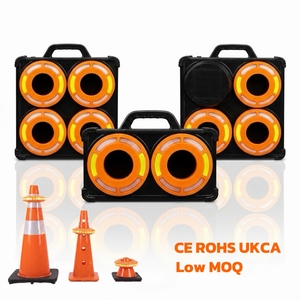
CE Synchronized Traffic Cone Light Beacon Warning Commander Strobe Signal Obstruction LED Safety Light
RF synchronized flashing beacon system engineered for temporary roadwork, obstruction marking, and emergency traffic control. High-intensity LED arrays deliver 360-degree visibility with solar recharging capabilities.
CE Certified
RF Sync
Solar Power
IP67 Waterproof
Contact Us
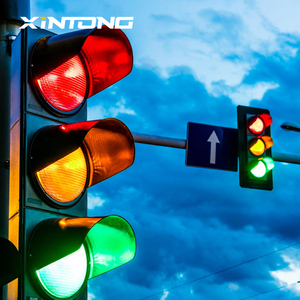
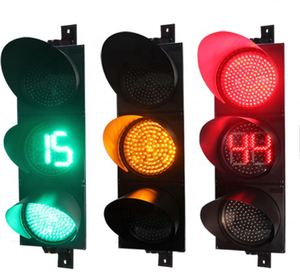
Xintong 200/300/400mm Intelligent LED Traffic Signal Light with Countdown Timer for Vehicle
Modular urban traffic aspect signal integrated with real-time numeric countdown display. Constructed with UV-stabilized polycarbonate and high-luminance monochromatic optical matrices.
200/300/400mm
Countdown Module
Low Power
EN12368
Contact Us
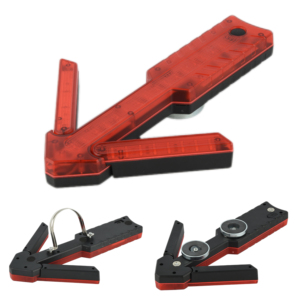
32PCS LED Road Safety Folding Arrow Rechargeable Warning Lights For Car Truck Emergency Beacon
Compact, heavy-duty folding directional arrow light equipped with 32 ultra-bright LEDs. Magnetic and cone-mountable housing ideal for highway maintenance vehicles and rapid emergency response units.
32 LED Matrix
Rechargeable
Folding Frame
Magnetic Base
Contact Us
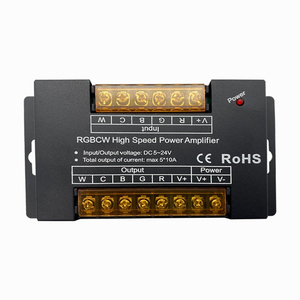
Voltage DC5-24V RGBWC Signal Amplifier LED Strip Light Signal Repeater Module
High-frequency industrial signal power repeater designed for continuous multi-channel LED lighting arrays. Provides optocoupler isolation and voltage stabilization across long signal runs.
DC 5V-24V Wide Input
RGBWC Support
High-Speed PWM
Aluminum Case
Contact Us
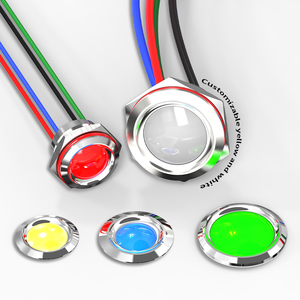
LANBOO Tri-Color Metal Panel Mount LED Indicator Light IP68 Waterproof Signal Lamp
Hermetically sealed metal indicator lamp designed for control consoles, toll gate operator terminals, and industrial traffic junction cabinets. Rugged brass/stainless housing with tri-color output.
IP68 Hermetic
16/19/22/25mm Cutout
Tri-Color Red/Grn/Blu
5V-220V Options
Contact Us
12-24V DC / 100-277V AC 300mm High Brightness LED Traffic Signal Lights Red/Yellow/Green
Full-size 300mm aspect signal head for highway speed lanes and major arterial intersections. Configurable for direct DC solar connection or global universal AC grid supply with IP65 weather seal.
300mm Aspect Size
Dual Voltage Input
High Photometric Lux
Sun-Visor Included
Contact Us
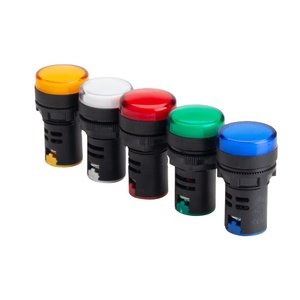
LVBO 16MM/22MM Plastic LED Signal Light AD16-22DS Industrial Panel Indicator Lamp
Standardized industrial indicator module engineered for high-density cabinet instrumentation, automation racks, and toll plaza lane status monitors. Long operating life exceeding 50,000 hours.
AD16-22DS Standard
Low Power Consumption
Flame Retardant
Multiple Lens Colors
Contact Us
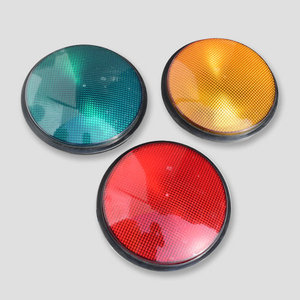
EN12368 Compliant Standard LED Traffic Light Signal Assembly for Highways
Fully certified EN 12368 traffic signal head designed to eliminate phantom light reflections under direct sun flare. Modular toolless housing allowing fast field serviceability and bracket adjustments.
EN12368 Certified
Anti-Phantom Class 5
IP65 Ingress
Polycarbonate / ALU
Contact Us
30+ Years
In-House Manufacturing
29,000 Sq Ft
ISO-Certified Facility
500+
Infrastructure Projects
IP65 / CE
Certified Compliance
1. Technical Whitepaper: Sourcing OEM/ODM Solar Light & Signal Systems
The global transition toward sustainable, zero-emission municipal infrastructure has elevated OEM/ODM solar light manufacturers & suppliers into strategic partners for civil engineering contractors, government procurement agencies, and ITS (Intelligent Transportation Systems) integrators. Sourcing solar-powered warning blinkers, traffic signals, and hazard lights requires a deep understanding of optical physics, photovoltaic conversion efficiencies, energy storage chemistries, and environmental IP enclosure ratings.
Unlike standard outdoor architectural lighting, commercial solar traffic management hardware operates under strict performance envelopes mandated by standards such as EN 12368, ISO 9001, and local Department of Transportation (DOT) directives. A failure in luminous output or autonomic battery backup during continuous cloudy weather poses critical road safety risks. Therefore, engineering-driven OEM/ODM manufacturers focus heavily on photometric lux consistency, thermal dissipation, MPPT charge management, and anti-phantom light reflections.
OEM vs. ODM Sourcing Frameworks
When procuring solar signal lights at scale, B2B buyers must evaluate whether an OEM (Original Equipment Manufacturer) or ODM (Original Design Manufacturer) framework best serves project requirements:
⚡
OEM Manufacturing (Custom Branding & Assembly)
Clients provide definitive engineering drawings, PCB schematics, component bills of materials (BOM), and enclosure specifications. The OEM manufacturer utilizes its SMT production lines, plastic injection molding, sheet metal fabrication, and photometric testing labs to build units exactly to contract specifications.
🧠
ODM Turnkey Engineering (R&D to Production)
The client defines operational objectives (e.g., a 300mm solar signal beacon operating in high-humidity coastal zones with 5 days of autonomy). The ODM partner designs the firmware, driver circuits, optics, housing mold, and integrated solar charge controller from scratch.
🛡️
Hybrid Customization Protocols
Adapting existing proven product platforms with custom voltage ranges (12V/24V DC to 110V-277V AC), localized lens pictograms, specialized mounting brackets, or customized client logo badging and color schemes without full tooling setup costs.
2. Engineering Matrix: Solar Light & Signal Specifications
Selecting the optimal signal light configuration depends heavily on road approach speed, ambient light conditions, operating voltage architecture, and regional solar irradiance indices. Below is the comprehensive selection guide utilized by project engineers when specifying Trafitronics / OEM solar signals:
| Aspect Size / Category |
Primary Application Field |
Target Approach Speed |
Effective Visibility Distance |
Power Consumption / Aspect |
Ingress Protection |
| 300mm LED Aspect |
National Highways, Expressways, Toll Plazas |
> 60 km/h |
Up to 250 Meters |
10W – 14W |
IP65 / IP67 |
| 200mm LED Aspect |
Urban Arterial Road Junctions, City Streets |
30 – 60 km/h |
Up to 150 Meters |
7W – 10W |
IP65 |
| 100mm Compact Light |
Toll Lanes, Factory Gates, Parking Facilities |
< 30 km/h |
Up to 60 Meters |
3W – 5W |
IP65 |
| Synchronized Beacons |
Work Zone Cone Lights, Temporary Hazard Zones |
Variable (20-80 km/h) |
Up to 300 Meters (Strobe) |
1.5W – 3W (Peak Pulse) |
IP67 Waterproof |
| Pedestrian & Timer |
Zebra Crossings, School Zones, Transit Hubs |
Pedestrian Walk Phase |
Up to 80 Meters |
6W – 12W |
IP65 |
* Data based on standard optical fresnel lens configurations and constant-current LED driver circuits operating under normal thermal conditions.
3. Industry Trends: Future Sourcing Strategies for Solar & Traffic Lights
The global solar traffic safety lighting sector is undergoing rapid technological transformation. Procurement directors and municipal planners must align their purchasing strategies with upcoming market developments:
🌐
1. IoT-Enabled Wireless Mesh & Cloud Telemetry
Modern solar blinkers and warning signals no longer operate as isolated hardware nodes. ODM integration of 2.4GHz RF synchronization, LoRaWAN, and NB-IoT modules allows real-time status reporting, battery health diagnostics, and remote timing synchronization across miles of roadwork.
🔋
2. Transition to LiFePO4 (Lithium Iron Phosphate)
Traditional sealed lead-acid (SLA) batteries are being replaced by high-cycle LiFePO4 chemistry. Offering over 3,000 charge cycles, thermal stability up to 65°C, and higher depth-of-discharge (DoD), LiFePO4 drastically reduces long-term maintenance visits.
☀️
3. High-Efficiency N-Type TOPCon Solar Cells
OEM/ODM manufacturers are upgrading solar collection panels from conventional poly-crystalline cells to N-Type TOPCon and monocrystalline PERC panels delivering over 22.5% solar conversion efficiency—maximizing charge rates during short winter days.
👁️
4. Dynamic Ambient Auto-Dimming Optics
To prevent glare during night operations and conserve battery power during extended rainy spells, intelligent signals now incorporate ambient light sensors (LDR) that automatically modulate pulse-width modulation (PWM) LED intensity.
♻️
5. Recyclable UV-Stabilized Polycarbonate Enclosures
Environmental regulations demand sustainable materials. Heavy-duty engineering plastic housings are treated with UV stabilizers to prevent yellowing and embrittlement under intense tropical solar radiation, extending field lifespans beyond 10 years.
🤖
6. AI-Driven Adaptive Traffic Controllers
Integration between solar signal heads and vehicle detection radar/cameras enables dynamic signal timing adjustments based on live queue density, eliminating unnecessary idling and reducing carbon footprints.
4. Enterprise Strengths: Why Partner With Our In-House Manufacturing Facility
As an established manufacturer with over 30 years of specialized focus (operating from a dedicated 29,000+ sq ft ISO-certified plant in MIDC Bhosari, Pune), our production facility delivers measurable advantages over trading companies and uncertified suppliers:
01
In-House Optical & Electronic Design
We do not use generic off-the-shelf driver boards. Our R&D team designs custom constant-current drivers, MPPT solar controllers, and optic lenses in-house.
02
Certified Integrated Quality Systems
Operations are strictly governed by ISO 9001:2015 (Quality), ISO 14001:2015 (Environment), and ISO 45001:2018 (Occupational Health & Safety) standards.
03
100% Photometric & IP Ingress Testing
Every batch undergoes rigorous lux verification, goniophotometer color spectrum analysis, 10kV surge testing, and IP65/IP67 water chamber testing prior to dispatch.
04
Global Export Freight & Compliance
Proven export experience serving clients across the UAE, Africa, Nepal, Bangladesh, Sri Lanka, and Southeast Asia with fully compliant shipping documentation.
Comprehensive OEM/ODM Service Capabilities
From custom housing injection molding, sheet metal powder coating in specific RAL shades, to custom language pictogram silkscreening and embedded firmware programming—we provide turnkey custom manufacturing tailored for highway authority tenders and corporate infrastructure packages.
Ready to Request an OEM/ODM Sourcing Quotation?
Submit your technical project specifications, bill of quantities (BOQ), or custom design drawings directly to our engineering desk for immediate B2B pricing and sample evaluation.
5. Frequently Asked Sourcing Questions (FAQ)
Essential guidance for procurement managers, project engineers, and international distributors evaluating solar light and traffic signal manufacturers:
What is the difference between OEM and ODM procurement for solar lights?
OEM (Original Equipment Manufacturing) involves producing solar signal hardware according to drawings, components, and specifications provided by the client. ODM (Original Design Manufacturing) means our in-house engineering team handles the complete design cycle—from optical simulation, PCB schematic layout, solar panel sizing, to plastic mold creation—delivering a turnkey product that meets your performance requirements.
How are solar signal light battery autonomy days calculated?
Autonomy refers to the number of consecutive days a solar light can operate without sun exposure. We calculate autonomy by factoring the daily power draw of the LED aspect matrix and microcontroller against the depth-of-discharge (DoD) limits of the LiFePO4 or SLA battery bank. Standard highway specifications require 3 to 7 days of autonomy depending on climate geography.
What optical standards do your traffic signals comply with?
Our traffic signals and solar blinkers are designed to conform with EN 12368 (European Standard for Traffic Control Equipment), establishing required luminous intensity classes (Class 1, 2, or 3), color chromaticity coordinates, anti-phantom light resistance (Class 5), and environmental ingress protection up to IP67.
Can the signal lights operate on both solar DC and grid AC power?
Yes. We engineer hybrid driver options capable of taking 12V/24V DC input directly from solar charge controllers while maintaining a wide-voltage universal AC input switch mode power supply (100V-277V AC) for automatic grid fallback during prolonged severe weather.
What customized features can be added through ODM manufacturing?
ODM customization options include RF wireless synchronization between multiple beacons, integrated Doppler radar speed feedback sensors, ambient auto-dimming optical controls, custom pedestrian pictogram designs, specialized RAL housing powder-coating, and custom wireless communication protocols (LoRa, NB-IoT, RS485 Modbus).
How do you prevent housing deterioration under extreme sunlight and weather?
We use UV-stabilized virgin polycarbonate resin for light lenses and housings, combined with powder-coated aluminum visors and stainless-steel external hardware. Internal electronic boards are conformal-coated to withstand high humidity, coastal salt fog, and extreme ambient operating temperatures ranging from -40°C to +80°C.
What documentation is provided with international B2B export orders?
Every export consignment includes a formal Manufacturer Test Certificate (MTC), Certificate of Origin (COO), detailed packing lists, HS-code verified commercial invoices, IP65/IP67 ingress test reports, photometric test certificates, and English installation/wiring manuals suitable for customs clearance and tender audit compliance.
What are the standard production lead times for customized OEM orders?
Standard catalog models and standard solar blinkers typically ship within 2 to 3 weeks. Fully customized OEM/ODM production runs—requiring new mold creation, custom circuit board spins, or customized bracket fabrication—generally range from 4 to 6 weeks after sample and drawing approval.
Partner with a Trusted OEM/ODM Solar Light Manufacturer
Whether you are designing a high-speed motorway safety system, equipping a municipal intersection, or expanding a local distributor portfolio, our technical engineering team delivers uncompromised quality, competitive direct factory pricing, and full certification support.