Featured OEM Signal & Warning Modules
Precision-engineered LED modules, intelligent controllers, and signal hardware compliant with EN 12368, CE, ISO 9001, and IP65 standards for global B2B procurement.
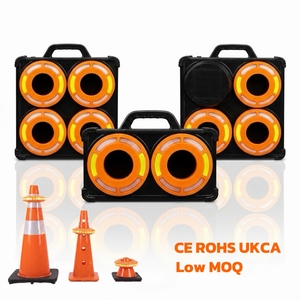
CE Synchronized Traffic Cone Light Beacon Warning Commander Strobe Signal Obstruction LED Safety Light For Road Work Emergency
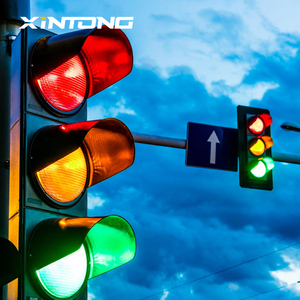
Xintong 200/300/400mm Intelligent LED Traffic Signal Light with Countdown Timer for Vehicle
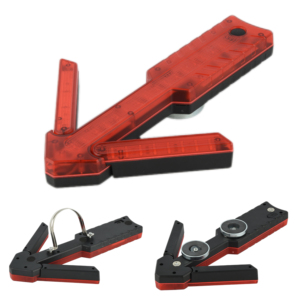
32PCS LED Road Safety Folding Arrow Rechargeable Warning Lights For Car Truck Traffic Beacon Lamp Emergency Signal Cone Light
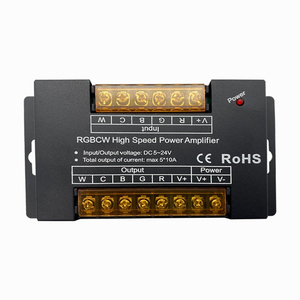
Voltage DC5-24V RGBWC signal amplifier led strip light signal repeater

LANBOO Tri-Color LED Indicator Light 16mm 19mm 22mm 25mm Metal Panel Mount IP68 Common Anode Cathode 5-24V 220V
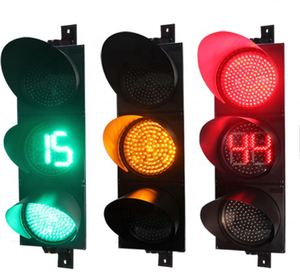
12-24V DC 100-277V AC 300mm High Brightness LED Traffic Signal Lights with Red/Yellow/Green Colors for Road Safety
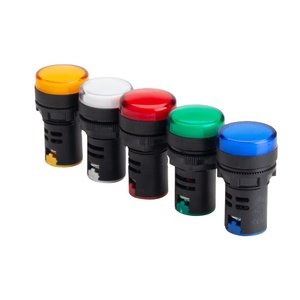
LVBO Wholesale 16MM/22MM Plastic LED signal Light AD16-22DS Industrial signal Indicator Light Indicator Lights
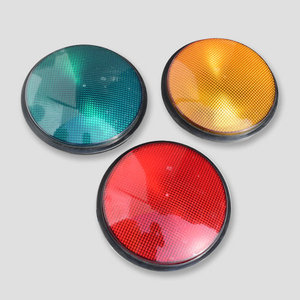
En12368 Led Traffic Light Signal
Whitepaper: Engineering OEM Traffic Light Modules for High-Reliability Urban & Highway Infrastructure
Modern traffic management demands far more than basic visual signalling. As global municipalities transition to smart urban mobility, Intelligent Transportation Systems (ITS), and connected vehicle frameworks (C-V2X), the underlying traffic module hardware must deliver uncompromised optical clarity, structural integrity, and electronic longevity under severe thermal and environmental stress. Custom OEM manufacturing plays a vital role in fulfilling these specs across diverse regulatory regimes—from European EN 12368 optical standard classes to North American ITE VTCSH specifications.
1. Optical Physics, Fresnel Lens Geometry, and LED Binning
The core objective of an OEM traffic signal optical engine is achieving uniform luminance distribution while preventing "sun phantom" effects—false signal indication caused by sunlight reflecting off internal parabolic surfaces. Advanced traffic light module manufacturing utilizes customized micro-structured Fresnel lenses paired with high-power, bin-sorted SMD LEDs (typically Cree, OSRAM, or Lumileds).
Spectral purity is equally critical. Optical chromaticity coordinates for Red, Amber, and Green aspects are strictly controlled within ITE and EN 12368 color boundaries. Wavelength isolation (625nm for Red, 590nm for Amber, 505nm for Traffic Green) eliminates color shift even when operating under high-temperature conditions exceeding +75°C ambient internal housing temperatures.
2. Electronic Topology: Constant-Current Drivers & Power Factor Optimization
Power instability is a primary driver of field failure in traffic signalling infrastructure. Municipal power grids often experience severe voltage fluctuations, brownouts, and surge transients. High-grade OEM traffic signal modules employ wide-input switching power supplies with active Power Factor Correction (PFC > 0.95) and total harmonic distortion (THD) below 15%.
- Dual Voltage Adaptability: Driver modules engineered for dual-mode operation (e.g., 80V–277V AC universal input or 12V/24V DC solar microgrid integration).
- Transient Surge Suppression: Built-in 6kV to 10kV MOV (Metal Oxide Varistor) surge protection safeguarding sensitive SMT LED driver ICs against lightning and grid switching transients.
- Degradation Monitoring & Automatic Dimming: Optional PWM dimming input lines allowing dynamic night-time intensity reduction (30% to 50% lumen dimming) to cut power consumption and reduce nighttime driver glare.
OEM Architectural Specifications & Standard Comparison
When procuring custom OEM traffic modules, engineering teams must evaluate physical dimensions, optical output classes, ingress seals, and thermal management metrics against regional municipal codes:
| Module Diameter | Primary Application | Optical Standard | Luminous Intensity | Ingress Rating | Power Draw (Aspect) |
|---|---|---|---|---|---|
| 300mm (12 inch) | Highways, Arterial Intersections, Interstates | EN 12368 Class 2/1, ITE VTCSH | > 400 cd (Red/Green/Yellow) | IP65 / IP66 Sealed | 7W – 12W Max |
| 200mm (8 inch) | Urban Streets, Secondary Intersections | EN 12368 Class 1, CE Compliant | > 200 cd (Red/Green/Yellow) | IP65 Gasketed | 5W – 8W Max |
| 100mm (4 inch) | Toll Plazas, Industrial Gates, Parking Decks | ISO 9001 Commercial Grade | > 80 cd High-Contrast | IP65 Rated | 3W – 5W Max |
| Pedestrian / Countdown | Zebra Crossings, School Safety Zones | EN 12368 / Custom Graphic | High-Contrast Pictogram | IP65 Weatherproof | 6W – 10W Max |
*Note: Custom OEM options include UV-polycarbonate vs die-cast aluminum enclosures, customized arrow geometric masks, and CAN-bus/RS485 smart diagnostic communication modules.
Future Purchasing & Technology Trends in Traffic Modules
Anticipating the technological shifts shaping the next decade of intelligent traffic infrastructure and municipal procurement contracts.
1. C-V2X & IoT Module Integration
Future OEM traffic signal modules are evolving into edge-computing hubs. Next-generation requirements mandate integrated optical sensor arrays and C-V2X (Cellular Vehicle-to-Everything) transceivers inside the module housing to broadcast real-time signal phase and timing (SPaT) data directly to autonomous and connected vehicles.
2. Ultra-Low Power & Solar Microgrid Autonomy
Global decarbonization mandates are driving shift toward off-grid traffic signaling. OEM factories are manufacturing ultra-efficient modules requiring under 4 Watts per active aspect. Combined with MPPT solar controllers and long-life LiFePO4 battery storage, these systems ensure continuous 12-day operation through monsoon or overcast conditions without utility grid reliance.
3. AI Predictive Maintenance & Fail-Safe Diagnostics
Modern municipal tenders increasingly reject passive optical heads. Next-generation OEM modules incorporate current-sensing digital feedback circuits that automatically report individual LED array degradation, power supply voltage droop, or optic damage back to central traffic management servers (ATMS) before catastrophic junction blackout occurs.
Why Global Procurement Teams Choose Trafitronics OEM Factory Services
Operating from a 29,000+ sq ft ISO 9001:2015, ISO 14001:2015, and ISO 45001:2018 certified manufacturing plant in MIDC Bhosari, Pune, India, Trafitronics India Pvt Ltd delivers end-to-end engineering, tooling, surface-mount assembly (SMT), and photometric certification under one roof.
In-House Production & Tooling
Unlike trading entities, we control 100% of production—from automated SMT LED component placement and potted waterproof drivers to precision sheet metal and polycarbonate molding.
Rigorous Photometric & Ingress Testing
Every single batch undergoes high-precision goniophotometer lumen intensity mapping, color chromaticity verification, thermal chamber stress cycling, and IP65/IP68 water jet immersion validation.
Transparent B2B Documentation
We provide full Manufacturer Test Certificates (MTC), third-party lab test reports, EN 12368 compliance sheets, English CAD dimensional drawings, and complete HS-code export documentation for quick customs clearance.
Frequently Asked Questions by OEM & Export Buyers
Authoritative technical answers to common procurement, compliance, and custom manufacturing inquiries.
Ready to Partner with a Verified OEM Traffic Signal Factory?
Contact our senior engineering and export desk today to request technical datasheets, full photometrics, factory audit access, or factory-direct B2B price quotations.
Contact Us