Featured Industrial Grade Traffic Control Products
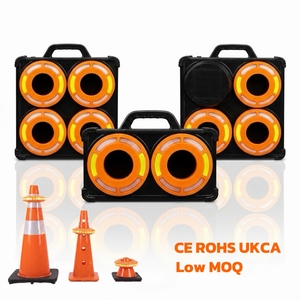
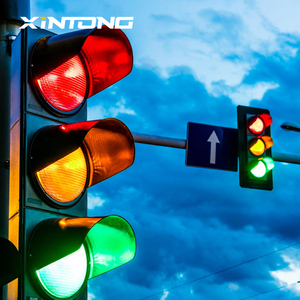
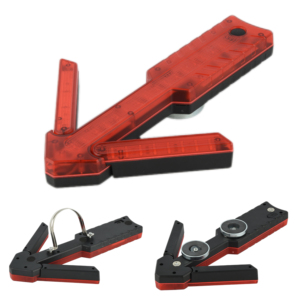
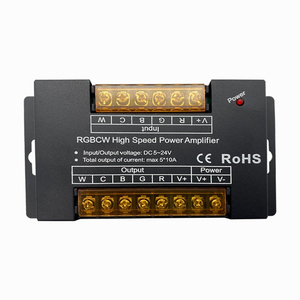
Explore our export-ready, photometrically audited signal systems, traffic cone warning strobes, and industrial indicator arrays manufactured for global municipal, highway, and industrial site deployment.

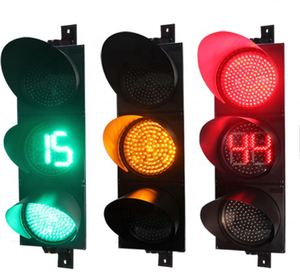
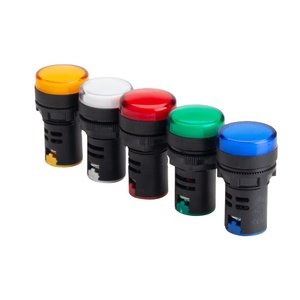
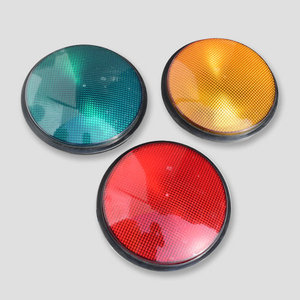
1. B2B Sourcing Framework: Evaluating China Traffic Sign & Signal Manufacturers
Navigating the global procurement landscape for high-specification traffic safety infrastructure requires moving beyond basic unit cost comparisons. As municipal traffic authorities, highway EPC contractors, and international distributors scale their intelligent transportation system (ITS) deployments, supplier selection must be anchored in verifiable photometric compliance, thermal dissipation engineering, and long-term supply chain integrity.
China's traffic sign and signal manufacturing ecosystem spans thousands of vendors, yet fewer than 5% possess the end-to-end original equipment manufacturing (OEM) capabilities required to meet rigorous international standards such as EN12368 (European Standard for Traffic Control Signal Heads), ITE (Institute of Transportation Engineers) VTCSH, and strict IP65/IP68 ingress ratings. Procurement directors must audit prospective factories across three non-negotiable operational dimensions:
In-House Component SMT Assembly
Tier-1 factories maintain ISO-certified Surface Mount Technology (SMT) cleanrooms to populate LED driver boards directly. Avoid suppliers outsourcing PCB assembly, as unverified third-party wave soldering leads to high field-failure rates under wide temperature fluctuations (-40°C to +80°C).
Photometric & Spectroradiometric Testing
Factory-level compliance mandates integrated goniophotometer labs. Luminous intensity (measured in cd), chromaticity coordinates, and beam distribution profiles must be certified per production batch to guarantee daylight legibility up to 300 meters.
Environmental Stress Screening (ESS)
Leading manufacturers implement mandatory 48-hour burn-in cycles inside climate-controlled thermal chambers alongside automated high-pressure water jet ingress testing to validate IP65/IP68 gaskets prior to export packaging.
2. Technical Selection Guide: Signal Aspect Sizing & Application Parameters
Selecting the optimal aspect size, housing alloy, and power system topology is critical to balance capital expenditure (CAPEX) with operational performance. The matrix below outlines standard engineering parameters utilized across international civil tenders:
| Aspect Diameter | Primary Application Field | Approach Speed Limit | Minimum Daylight Visibility | Typical Power Consumption | Key Compliance Benchmark |
|---|---|---|---|---|---|
| 400 mm (16 inch) | Expressways, Interstates, High-speed highway approaches | > 80 km/h (50 mph) | 350 to 450 meters | 12W – 18W per aspect | EN12368 Class A (High Intensity) |
| 300 mm (12 inch) | Urban arterial roads, major intersections, multi-lane junctions | 50 – 80 km/h (30-50 mph) | 250 to 300 meters | 8W – 12W per aspect | ITE VTCSH LED Compliant |
| 200 mm (8 inch) | City center streets, industrial parks, secondary roads | < 50 km/h (30 mph) | 150 meters | 5W – 8W per aspect | CE / IP65 / AS4291 |
| 100 mm (4 inch) | Toll plaza lanes, factory security gates, parking garages | < 20 km/h (12 mph) | 60 meters | 3W – 5W per aspect | ISO 9001 Factory Certificate |
| Solar Hazard Beacons | Remote curves, work zone cones, unlit rural crossings | Variable (Warning context) | 200+ meters (Strobe mode) | 1.2W Solar / 3.7V MPPT | CE Sync / IP68 Submersible |
3. Technology & Global Sourcing Trends in Traffic Management Systems
The global traffic sign and signal manufacturing market is undergoing a structural transition driven by smart city digitalization, decarbonization mandates, and autonomous vehicle ecosystem integration. B2B buyers must align their procurement strategies with four disruptive technological vectors:
A. Transition from Static Signage to V2X Interactive LED Display Systems
Traditional retroreflective roadside signs are increasingly augmented or replaced by active-emissive LED chevron boards, dynamic speed feedback radar displays, and connected V2X (Vehicle-to-Everything) traffic signal heads. Modern municipal tenders in North America and Western Europe now routinely mandate RS-485 Modbus, CAN-bus, or NTCIP (National Transportation Communications for Intelligent Transportation System Protocol) compatibility within signal junction controllers to enable real-time signal timing optimization via AI traffic monitoring algorithms.
B. Advanced Optical Lenses & Anti-Phantom Reflection Engineering
Sun phantom light—where low-angle sunlight enters a signal head and creates the dangerous optical illusion that an unlit aspect is illuminated—remains a major safety concern. Advanced Chinese manufacturers utilize customized Fresnel micro-cavity optical lenses paired with dark internal baffle grids. This optical layout ensures compliance with EN12368 Class 5 phantom light standards while maximizing forward luminous efficiency, reducing power draw by up to 40% compared to legacy LED arrays.
C. Off-Grid Autonomous Solar Beacons with Smart MPPT Charge Controllers
Deploying grid power to remote highway sections incurs astronomical cabling costs. The market standard has shifted decisively toward autonomous solar-powered warning blinkers and synchronized traffic cone strobes. Modern systems integrate high-efficiency monocrystalline solar panels with Maximum Power Point Tracking (MPPT) charge controllers and long-life Lithium Iron Phosphate ($LiFePO_4$) battery chemistries, achieving up to 7–10 days of continuous autonomy even during extended monsoon or winter weather events.
D. Sustainable Materials & Modular UV-Shielded Enclosures
Environmental, Social, and Governance (ESG) criteria are altering raw material selection. Leading factories now combine recycled high-pressure die-cast aluminum alloys for primary structural housings with virgin, UV-stabilized GE Lexan polycarbonate front visors. Polycarbonate housings are engineered for 10+ years of high-UV resistance without yellowing or thermal distortion, significantly reducing total lifecycle carbon footprints and maintenance overhead.
4. Factory Direct Capabilities: The OEM/ODM Infrastructure
Our featured manufacturing plant spans over 29,000 square feet of certified industrial space, operating fully integrated production lines optimized for high-volume wholesale export and bespoke municipal tailoring. Unlike merchant traders, our facility houses comprehensive R&D, electronic fabrication, and mechanical engineering under one roof:
Integrated Mechanical & Sheet Metal Workshop
Utilizing high-precision CNC laser cutters, hydraulic press brakes, and automated powder coating booths. We produce custom mounting brackets, overhead lane structures (OHLS), and rugged aluminum signal housings with customer-specified RAL color finishes.
Wide-Voltage Driver Engineering
Our proprietary constant-current LED power supplies accommodate wide voltage fluctuations (85V–265V AC or 9V–36V DC), featuring built-in 10kV surge protection devices (SPD) to withstand extreme electrical storms and unstable rural electrical grids.
Export-Grade Packaging & Shipping Logistics
Every order undergoes custom export packing: individual signal modules are enclosed in foam-molded impact wraps, packed in double-wall corrugated master cartons, and palletized on ISPM-15 compliant heat-treated timber pallets for sea/air freight protection.
5. Frequently Asked Questions (FAQ) for International Procurement Teams
Below are detailed responses to the most critical technical and commercial questions posed by global import agents, tender consultants, and highway contractors during vendor qualification:
Partner with a Certified Traffic Signal Factory Today
Streamline your supply chain with factory-direct pricing, certified photometric compliance, and full OEM technical customization. Contact our engineering desk to request complete catalog pricing and tender technical specifications.