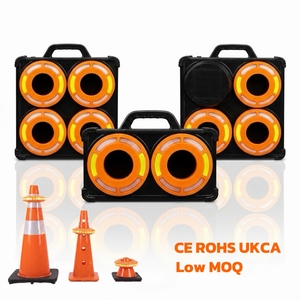
CE Synchronized Traffic Cone Light Beacon Warning Commander Strobe Signal
RF Sync Enabled
CE / IP67
Work-Zone Ready
Direct factory procurement of CE & EN12368 compliant warning beacons, traffic signals, and LED hazard lights tested for extreme thermal stability and IP68 ingress protection.
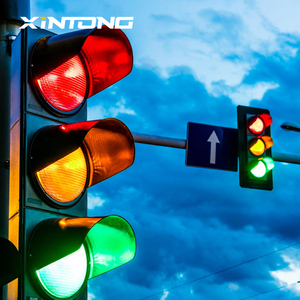
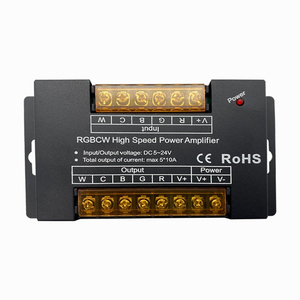

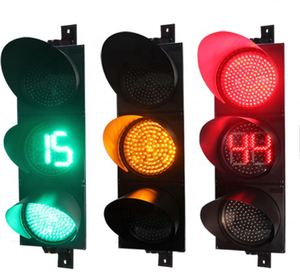
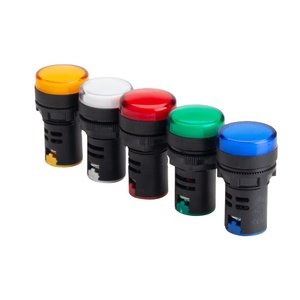
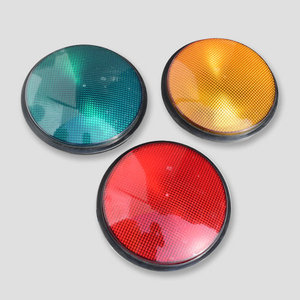
Modern traffic management demands far more than basic illuminated visual cues. As urban vehicular densities increase and high-speed arterial roadways expand globally, the technical baseline for wholesale traffic flashers, solar warning beacons, and signal indicators has pivoted toward strict photometric precision, robust thermal dissipation topology, and intelligent wireless synchronization protocols.
As a premier China wholesale traffic flasher factory and exporter, our engineering division integrates advanced optical design with industrial-grade electronic assembly to eliminate signal degradation, phantom light reflection, and premature driver burnout. This technical manual provides civil engineering procurement departments, highway safety contractors, and municipal authorities with an actionable framework for evaluating traffic flasher manufacturing integrity.
Core Procurement Standard: Industrial traffic signal beacons must guarantee continuous luminance compliant with EN12368 (Class R2/L8H) across operational temperatures ranging from -40°C to +85°C, maintained by constant-current LED driver circuits and anti-UV polycarbonate optical lenses.
The primary safety metric of any road work emergency strobe light or highway signal flasher is its on-axis visual intensity and angular luminous distribution. Conventional warning lights often suffer from uneven light spread, creating dangerous visual blind spots for high-speed approaches.
Our OEM manufacturing facility utilizes custom-engineered Fresnel and cobweb optical lenses paired with high-binning OSRAM / CREE SMT LEDs. This configuration concentrates light output along specified viewing vectors while controlling glare and phantom reflections caused by direct solar incidence. By achieving Phantom Light Class 3 compliance under EN12368, our signal assemblies ensure drivers discern signal states instantly, even during low-sun conditions.
Heat dissipation remains the single greatest determinant of LED lifespan and luminous maintenance in traffic warning lights. When deployed in extreme equatorial or high-temperature desert environments, unventilated LED housings experience thermal runaway, leading to rapid lumen depreciation and diode failure.
To combat this, our traffic flashers feature high-thermal-conductivity aluminum PCB substrates (MCPCB) bonded directly to internal heat-sink frames or heavy-duty ADC12 die-cast aluminum housing enclosures. Our power electronics incorporate wide-voltage DC-DC buck-boost converters and multi-stage surge protection circuits capable of absorbing voltage spikes up to 10kV caused by lightning strikes or unstable electrical grid switching.
Custom Fresnel lenses designed via Monte Carlo ray-tracing simulation yield maximum candela output per watt consumed.
Poured liquid-silicone gasket technology prevents moisture, dust, and coastal salt-spray ingress over extended field service.
2.4GHz / 915MHz radio frequency modules allow multi-cone lights to pulse sequentially without physical connecting cables.
The international procurement landscape for traffic safety hardware is undergoing a structural transition. Importers, municipal contractors, and distributor networks are migrating away from unstandardized white-label suppliers toward certified direct-factory manufacturers capable of supplying verified technical compliance, sustainable material lifecycles, and integrated IoT capabilities.
Static, independently blinking hazard lights are rapidly being replaced by sequentially synchronized warning light arrays. In highway construction zones and temporary detour corridors, sequentially flashing beacons create a visual "guiding light" effect (often termed the Commander Strobe Effect) that significantly improves driver reaction time compared to random flashing patterns.
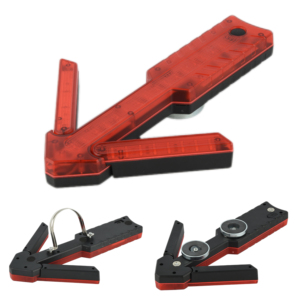
Our factory has integrated self-organizing 2.4GHz wireless mesh networks into traffic cone light beacons and folding arrow warning lamps. Upon power activation, the units auto-pair within milliseconds, establishing a master-slave synchronized wave sequence across dozens of units without requiring manual cable routing or specialized field programming software.
With global infrastructure projects placing higher emphasis on decarbonization and off-grid reliability, solar-powered traffic blinkers must deliver 24/7/365 uninterrupted operational capability. Traditional solar flashers relied on crude pulse-width modulation (PWM) solar chargers and lead-acid batteries, resulting in system collapse during extended rainy spells.
Modern export-grade solar traffic signals utilize high-efficiency monocrystalline solar panels paired with Maximum Power Point Tracking (MPPT) micro-controllers and long-lifespan Lithium Iron Phosphate (LiFePO4) battery cells. This technological advancement extends continuous operational autonomy to over 15–20 rain days (autonomy days) without requiring grid intervention.
Material selection directly impacts total cost of ownership (TCO) in municipal traffic equipment. Sourcing managers must balance weight, structural impact resistance, and weatherability based on specific site deployment criteria:
| Evaluation Parameter | UV-Stabilized Polycarbonate (GE Lexan) | Die-Cast Aluminum (ADC12 Powder Coated) | Recycled / Generic ABS Plastics |
|---|---|---|---|
| Impact Resistance (IK Rating) | IK10 (High Impact / Vandal Proof) | IK10+ (Extreme Heavy Industry) | IK06 - IK07 (Prone to Cracking) |
| UV Degradation (Yellowing) | Zero Yellowing (>10 Years UV Stabilized) | N/A (Corrosion Resistant Coating) | Rapid Degradation (<18 Months) |
| Operating Temperature | -40°C to +120°C Thermal Stability | -50°C to +200°C Thermal Range | -10°C to +60°C (Deforms in Heat) |
| Weight & Shipping Efficiency | Lightweight (Reduces Freight Costs) | Heavy Duty (Higher Shipping Weight) | Lightweight (Poor Structural Rigidity) |
| Optimal Application | Urban Signals, Cone Lights, Hazard Flashers | High-Speed Highway Signals, Toll Plazas | Low-Cost Temporary Domestic Displays |
Navigating global supply chains requires a trusted manufacturing partner who controls every node of production—from electronic schematic design and SMT component mounting to mold injection, pot assembly, and photometric lab certification. As an established OEM/ODM exporter in China, we eliminate the quality volatility associated with middleman trading firms.
Every production batch undergoes 100% burn-in testing, spectroradiometer color verification, and IP68 waterproof chamber testing prior to packing.
Custom housing colors (RAL shades), voltage inputs (DC 5V-24V / AC 100-277V), lens optics, brand labeling, and specialized flash frequency algorithms.
Complete export documentation packages provided, including Certificates of Origin (Form E, CO), CE EMC compliance reports, and EN12368 test sheets.
Direct responses to common engineering, commercial, and logistics queries from highway contractors and wholesale importers.
Request comprehensive CAD drawings, certified test reports, and competitive factory-direct volume pricing for your upcoming road safety project.