Featured Smart Traffic Signal Controllers & Hardware
Precision-engineered, ISO-certified, and IP65-rated traffic signal control units manufactured for municipal intersections, highways, and smart city deployments globally.
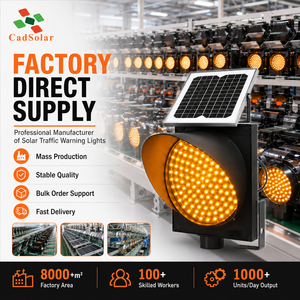
Solar Flashing Amber LED Wireless Smart Intelligent PLC Controller
Autonomous solar-powered signal controller featuring intelligent wireless PLC sync, low idle power consumption, and all-weather IP65 cabinet protection.
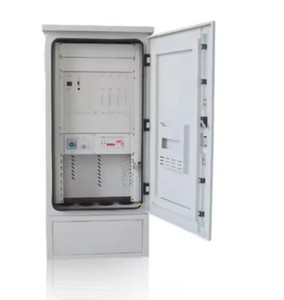
Smart City Intersection 44-Output LED Traffic Signal Controller System
High-density 44-output industrial traffic control matrix designed for complex multi-phase arterial intersections and centralized smart city management.
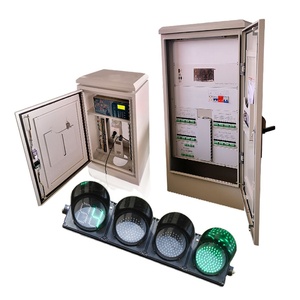
Heavy-Duty Urban Intersection Traffic Signal Control Cabinet
Ruggedized outdoor modular signal controller cabinet equipped with surge protection, solid-state relays, and independent conflict monitor unit (CMU).
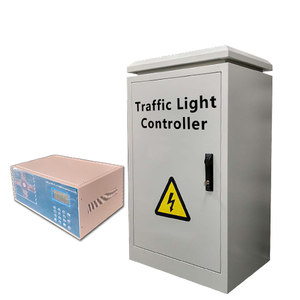
Fixed-Time & Green Wave Coordinated Arterial Traffic Light Controller
Intelligent corridor timing controller optimized for fixed-time multi-junction synchronization ("Green Wave") and arterial congestion reduction.
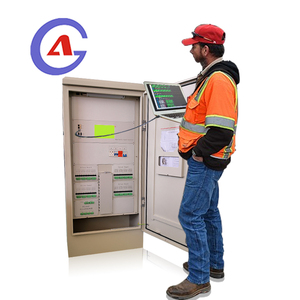
Adaptive UPS Battery Backup Network-Coordinated Signal Controller
Centralized network controller featuring integrated online UPS battery backup, Ethernet remote monitoring, and dynamic adaptive timing adjustments.
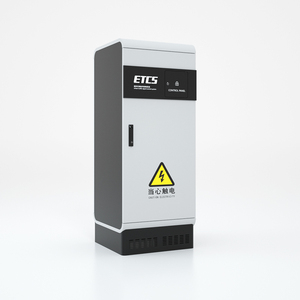
IoT Intelligent Self-Adaptive Coordinated Traffic Signal Control Unit
Next-generation IoT edge controller supporting real-time vehicle loop detection, radar camera data ingestion, and cloud-managed adaptive optimization.
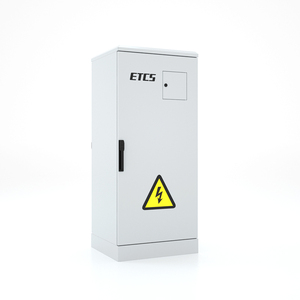
Intelligent Real-Time Micro-Adaptive Coordinated Signal System
High-speed microcontroller-based traffic controller capable of dynamic phase allocation based on real-time intersection queue lengths and vehicle counts.
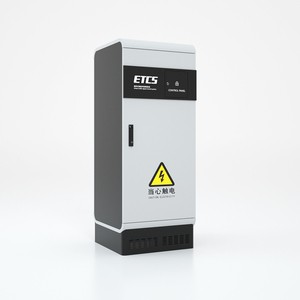
Heavy-Duty All-Weather Road Intersection Adaptive Traffic Controller
Industrial-grade intersection controller designed for harsh thermal environments, offering multi-schedule timing plans and seamless ITS platform integration.
Direct-from-Factory Manufacturing & In-House Engineering Rigor
In the global Intelligent Transportation Systems (ITS) market, securing reliable, high-uptime traffic controller hardware is the single most critical factor for municipal road safety and arterial congestion reduction. As leading China traffic controller manufacturers and specialized OEM/ODM factories, premier production facilities operate fully integrated, in-house electronics assembly, sheet metal enclosure fabrication, SMT surface-mount technology lines, and photometric testing laboratories under one unified quality management system.
Unlike trading intermediaries or third-party re-packagers, genuine Chinese manufacturing centers maintain end-to-end sovereignty over firmware algorithms, printed circuit board (PCB) layouts, constant-current LED drivers, and Conflict Monitor Units (CMU). This complete vertical integration yields substantial information gain for global procurement directors, municipal authorities, EPC contractors, and highway traffic engineers seeking verifiable engineering compliance and long-term spare-part availability.
In-House Firmware & PCB Design
Proprietary real-time operating system (RTOS) microcontrollers developed in-house avoid black-box components, ensuring seamless field customisation and API connectivity.
Fail-Safe Conflict Monitoring
Dedicated hardware-level Conflict Monitor Units (CMU) monitor signal outputs for conflicting green signals or voltage drops, immediately defaulting to yellow flash upon anomaly detection.
Extreme Climate Resilience
Outdoor IP65/IP66 weatherproof enclosures featuring dual-wall thermal isolation, anti-corrosion powder coating, and operating temperature thresholds from -40°C to +80°C.
Future Procurement Trends in Global Traffic Signal Controller Sourcing
As smart cities transition from traditional isolated intersection control toward centralized, data-driven urban mobility ecosystems, procurement specifications for traffic signal light controllers are experiencing a paradigm shift. B me Technical buyers across North America, Europe, the Middle East, and Asia-Pacific are moving beyond initial capital expenditure (CAPEX) comparisons to evaluate Total Cost of Ownership (TCO), interoperability protocols, and hardware modularity.
| Procurement Metric | Legacy Traffic Controller Systems | Next-Gen Chinese Factory Standards | Strategic Buyer Advantage |
|---|---|---|---|
| Communication Protocol | Proprietary closed serial (RS232/RS485) | NTCIP 1202, MQTT, TCP/IP, Open APIs | Eliminates vendor lock-in; enables central ITS platform integration. |
| Detection Ingestion | Basic inductive loop detectors only | Multi-sensor fusion (LiDAR, Radar, AI Vision Cameras) | Supports real-time adaptive signal control and micro-queue detection. |
| Power Architecture | Unprotected AC grid mains input | Hybrid MPPT Solar + Online UPS + Low-Voltage DC | Ensures zero-downtime operation during grid blackouts and power surges. |
| Modular Expansion | Fixed channel outputs (8 or 16 phase) | 19-inch 3U/6U hot-swappable expansion slots (up to 44+ outputs) | Scales effortlessly as intersection geometries and turn lanes expand. |
| Cybersecurity | Unencrypted plain-text telemetry | Hardware Security Module (HSM), TLS 1.3 encryption | Protects critical municipal infrastructure from malicious cyber attacks. |
Key procurement trends clearly indicate that leading municipal traffic agencies prioritize controllers built with open NTCIP standards and standardized physical rack form factors. Modern traffic controller factories in China are at the forefront of this evolution, supplying dual-mode controllers capable of functioning as standalone adaptive units or seamlessly merging into multi-agency Traffic Management Centers (TMC).
Technological Development Trends: Edge-AI & V2X Connected Infrastructure
The technological trajectory of traffic controller manufacturing is defined by three converging disciplines: Edge Computing, Vehicle-to-Everything (V2X) C-ITS integration, and dynamic Micro-Adaptive traffic algorithms. Understanding these advances enables traffic engineers and global distributors to specify future-proof hardware platforms.
1. Edge AI Micro-Optimization
Modern controllers embed neural-network accelerators directly within the cabinet. By processing video camera feeds and Doppler radar signals at the edge, phase timings adjust within milliseconds based on actual approach velocities and tailback lengths, eliminating the network latency of cloud-only systems.
2. V2X & Emergency Preemption
Next-generation traffic controllers incorporate Dedicated Short-Range Communications (DSRC) and C-V2X modules. This allows priority green-wave corridors for emergency vehicles (ambulances, fire engines) and public transit buses while transmitting real-time signal phase and timing (SPaT) data to connected autonomous cars.
3. Distributed Green Wave Networks
Rather than relying on continuous centralized server communication, smart controllers utilize peer-to-peer mesh networks. Neighboring intersection controllers exchange traffic flow density packets to autonomously coordinate arterial green waves even if central fiber-optic backhauls experience downtime.
Factory Audit Guidelines & Quality Assurance Framework
When selecting a traffic signal controller manufacturing partner in China, international procurement teams must execute thorough technical audits to verify manufacturing capacity, testing protocols, and international regulatory compliance. Reputable manufacturers encourage technical transparency and provide detailed documentation packages prior to contract execution.
Essential Audit Protocols for Global Technical Buyers:
- ISO Integrated Management System: Verification of active ISO 9001 (Quality), ISO 14001 (Environmental), and ISO 45001 (Occupational Health & Safety) certifications across all manufacturing plants.
- Electrical & Photometric Testing Verification: Inspection of internal laboratory equipment, including spectroradiometers, goniophotometers, dielectric strength testers, and environmental thermal-humidity cycling chambers.
- Surge Immunity & EMC Compliance: Ensure controller electronics comply with EN 50293 for Electromagnetic Compatibility and possess multi-stage surge protection rated for lightning strikes up to 10kA/20kV.
- Custom Voltage Configuration: Factory capability to assemble power supplies tailored to global utility standards (110V AC, 220V AC, 240V AC, or 12V/24V DC solar micro-grids) without extending lead times.
Frequently Asked Questions (FAQ) for Technical Buyers
Direct responses from factory engineering specialists on customisation, lead times, protocol support, and international dispatch.