Top-Rated Industrial & Traffic Signal Lights
Precision-engineered LED signal modules, warning beacons, and intelligent controllers manufactured to international EN12368, CE, and IP68 standards.
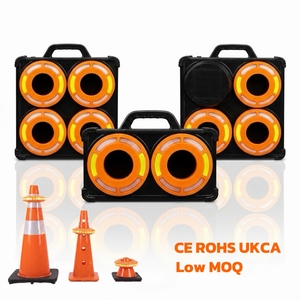
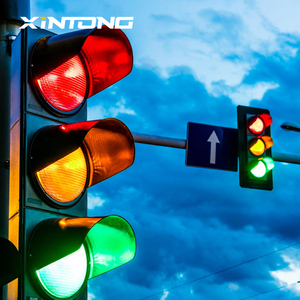
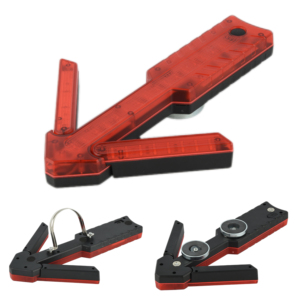
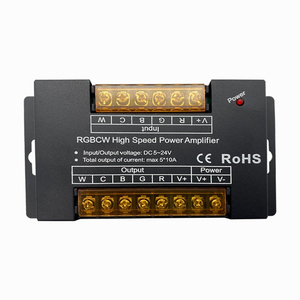
Executive Summary: The Global Landscape of Signal Light Manufacturing
In modern intelligent transportation systems (ITS) and industrial automation, signaling hardware forms the critical physical layer of public safety and operational efficiency. Choosing a partner among China top signal light manufacturers is no longer simply a transaction based on unit price per housing. Today's global procurement officers, municipal project directors, and engineering, procurement, and construction (EPC) contractors require high photometric efficiency, environmental resilience, long-term chromaticity stability, and compliance with stringent international standards such as EN12368, CE, RoHS, and ISO certifications.
China’s manufacturing ecosystem for traffic and industrial signal lights has evolved from basic assembly operations into high-precision, vertically integrated R&D hubs. Leading factories integrate Surface Mount Technology (SMT) automated PCB assembly, optical lens molding, die-cast aluminum and UV-stabilized polycarbonate housing fabrication, potting, and comprehensive darkroom photometric testing under a single roof. This whitepaper analyzes the key technological vectors shaping the industry, future procurement trends, enterprise qualification frameworks, and essential engineering considerations for global buyers.
Future Procurement Trends in Signal Light Hardware (2025–2030)
Understanding structural shifts in international municipal tenders, industrial automation, and highway infrastructure projects.
1. Off-Grid & Solar-Hybrid Autonomous Systems
Global energy volatility and remote rural highway expansions are driving massive demand for autonomous 12V/24V DC solar-powered signal systems. Procurement specifications increasingly require multi-day battery autonomy (3-5 days under continuous overcast conditions), MPPT solar charge controllers, and ultra-low standby power dissipation drivers to guarantee 24/7 reliability without grid dependence.
2. IoT Integration & Real-Time Telemetry
Modern traffic intersections no longer operate as isolated hardware islands. Future-proof signal heads are integrated with smart junction controllers equipped with LoRaWAN, NB-IoT, or 5G modules. Procurement teams now prioritize signal heads with integrated health-monitoring sensors that report LED degradation, power supply failure, or optical visor blockage directly to central traffic management servers.
3. Total Cost of Ownership (TCO) & Modular Repairability
Discerning B2B buyers have moved past assessing initial capital expenditure (CAPEX) alone. The prevailing trend emphasizes operational expenditure (OPEX) minimization. Tenders require modular designs—where optical engines, power drivers, and housings can be individually serviced or replaced in under 5 minutes without dismounting the entire signal head mast.
Key Technological Trends in Signal Light Design
How state-of-the-art optical engineering, power electronics, and material science are redefining performance benchmarks.
The engineering landscape of signal lights—spanning high-speed highway aspect signals, emergency warning beacons, RGBWC signal repeaters, and panel-mount industrial indicators—has experienced rapid technological upgrades over the past three years:
A. Advanced Optical Lensing & Chromatic Uniformity
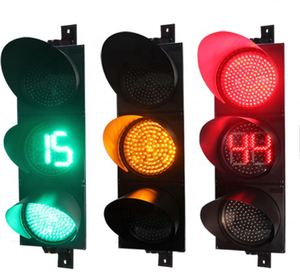
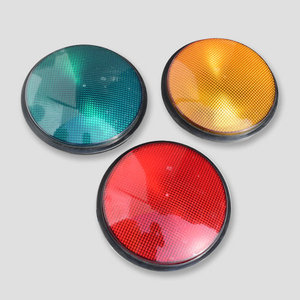
Traditional signal lights suffered from phantom light reflections caused by external sunlight entering the optical chamber and reflecting back through the lens, creating false signals for drivers. Leading Chinese manufacturers now utilize Fresnel-combining micro-structure optical lenses paired with anti-phantom geometric visors. This ensures crisp, uniform luminous intensity (ranging from Class 1 to Class 3 brightness under EN12368) without dead spots or chromatic distortion.
B. Dynamic Thermal Management & Micro-Mesh Heat Sinking
LED degradation is directly correlated with junction temperature. Next-generation 200mm, 300mm, and 400mm signal lights integrate metal-core printed circuit boards (MCPCB) bonded directly to high-thermal-conductivity aluminum heatsinks. This architecture dissipates heat efficiently even in high-ambient environments (such as Middle Eastern summer conditions exceeding 50°C), extending total diode lifespan to over 100,000 operational hours.
C. High-Ingress Protection (IP65 to IP68) & Environmental Protection
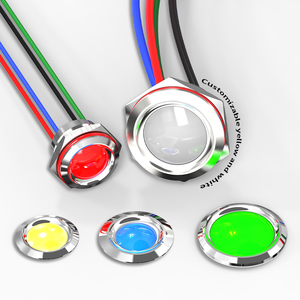
Whether installed in coastal marine zones subject to salt fog corrosion or industrial panel environments exposed to aggressive washdowns, modern signal lights must withstand extreme environmental stress. Premier manufacturers utilize seamless silicone double-o-ring gaskets, conformal PCB coatings, and IP68-rated metal housings (such as the LANBOO series panel indicators) to eliminate moisture ingress, condensation, and dust contamination.
Technical Benchmark Comparison Table
Standard engineering parameter matrix for modern traffic signal aspect sizes and industrial indicators.
| Signal Category / Aspect | Operating Voltage | Ingress Rating | Luminous Intensity | Target Application |
|---|---|---|---|---|
| 300mm / 400mm Aspect Signal | 100-277V AC / 12-24V DC | IP65 / IP66 | > 400 to 800 cd | Highways, High-Speed Arterials, Expressway Ramps |
| 200mm City Signal | 110-240V AC / 12V DC | IP65 | > 200 to 400 cd | Urban Intersections, Bus Rapid Transit (BRT) Lanes |
| Synchronized Warning Beacons | 12V Solar / Internal Li-Ion | IP67 | High-Visibility Strobe | Road Work Construction, Incident Management, Cones |
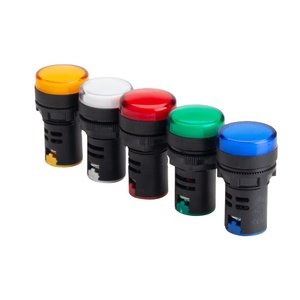
| Panel Indicators (16-25mm) | 5-24V DC / 220V AC | IP68 Waterproof | High-Density Tri-Color LED | Industrial Automation Panels, Machinery Status |
| Signal Amplifiers & Repeaters | DC 5-24V Wide Voltage | IP20 / IP65 Modular | N/A (Signal Repeater) | Long-Distance LED Strip & Architecture Control |
Why Partner with Top-Tier China Signal Light Manufacturers
Direct factory capabilities, ISO quality management frameworks, and end-to-end operational traceability.
1. Single-Roof Manufacturing & Quality Control
Premier factories operate expansive, vertically integrated facilities (over 25,000+ sq ft) encompassing optical design labs, SMT electronics assembly, metal fabrication, powder coating, and darkroom photometric testing. This avoids broken subcontractor chains and guarantees exact specification compliance.
2. Rigorous Audits & Certified Standards
Top China signal light original equipment manufacturers (OEMs) operate under audited ISO 9001:2015 (Quality Management), ISO 14001:2015 (Environmental Management), and ISO 45001:2018 (Occupational Health & Safety) certifications. Every export batch is delivered with full Manufacturer Test Certificates (MTC) covering luminous intensity, insulation resistance, and burn-in test results.
3. Complete OEM/ODM Customization Flexibility
Whether your project requires custom driving voltages (5V, 12V, 24V DC, or 110-277V AC), localized pedestrian pictograms, custom housing colors (RAL paint matching), or specialized arrow geometry for left-hand vs. right-hand drive traffic systems, leading manufacturers fulfill requests without excessive tooling delays.
Frequently Asked Questions (FAQ) for Signal Light Sourcing
Expert engineering answers to critical commercial, technical, and logistical procurement queries.