High-Performance Crosswalk & Signal Systems
Direct OEM factory supply engineered for urban intersections, highway work zones, toll plazas, and high-density pedestrian corridors.
Engineering Standards & Optical Optimization for Modern Pedestrian Crosswalk Signals
Pedestrian safety at urban grade intersections remains the cornerstone of modern Intelligent Transportation Systems (ITS). As smart cities transition from traditional fixed-time signal operation to dynamic, multi-modal adaptive traffic control, the demand for high-reliability, optically superior, and energy-efficient crosswalk signal lights has escalated globally. A crosswalk signal unit is not merely a illuminated housing; it is a critical safety node designed to operate flawlessly under extreme climatic stress, solar glare, and power fluctuations.
1. Optical Photometrics and Photobiological Compliance
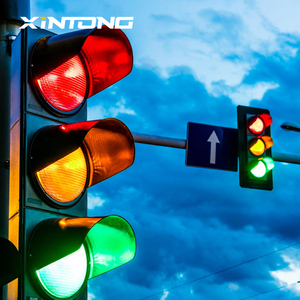
The primary measure of a crosswalk signal's effectiveness lies in its photobiological visibility and resistance to optical illusion, specifically phantom light reflection. According to international standards such as EN 12368 and ITE (Institute of Transportation Engineers) VTCSH, signals must maintain a uniform luminous intensity across varying ambient light conditions.
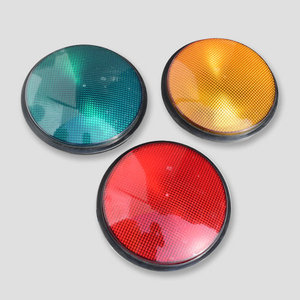
- Luminous Intensity Distribution: Modern crosswalk signals utilize high-power SMT LEDs (such as Epistar or Osram emitters) integrated with custom Fresnel optical lenses or geometric honeycomb reflectors. This layout achieves Class 3 luminous intensity output (>400 cd for red aspect, >800 cd for green aspect) while keeping power draw under 10 Watts.
- Anti-Phantom Class 5 Rating: Sun phantom effect occurs when direct sunlight enters the signal aspect and reflects off internal mirrors, falsely indicating an illuminated state to pedestrians. Our proprietary optical mask geometry deflects external incident light downwards, guaranteeing Class 5 anti-phantom rating for maximum visual clarity.
- Chromaticity & Color Coordinates: Emitters are strictly sorted into narrow wavelength bins (Red: 625nm ± 5nm, Green: 505nm ± 5nm, Amber: 590nm ± 5nm) to guarantee crisp color recognition even for color-blind pedestrians or in dense fog.
2. Thermal Dissipation Management and Driver Reliability
The service life of LED junction signal modules is primarily governed by junction temperature ($T_j$). Excessive heat acceleration leads to luminaire degradation and chromatic shift.
Our manufacturing facility incorporates Metal Core Printed Circuit Boards (MCPCB) backed with conductive silicone thermal paste directly bonded to aluminum alloy internal heat sinks. Coupled with isolated constant-current power drivers (operating efficiency > 88%, Power Factor > 0.95), heat transfer is optimized to keep the LED junction temperature well below 65°C even under continuous 50°C ambient desert conditions. This engineering architecture ensures a certified Mean Time Between Failures (MTBF) exceeding 100,000 operational hours.
Crosswalk & Traffic Signal Technical Specifications
Comprehensive technical breakdown to assist municipal procurement officers, traffic engineers, and EPC contractors in selecting exact hardware parameters.
| Parameter / Aspect Size | 200mm (8 Inch) Urban Crosswalk | 300mm (12 Inch) Highway / Major Junction | 400mm High-Visibility Corridor | Compact 100mm Toll / Gate Signal |
|---|---|---|---|---|
| Primary Application | City downtowns, pedestrian zebra crossings, campus zones | Multi-lane arterial roads, suburban junctions, high-speed zones | Complex industrial intersections, wide transit avenues | Toll booths, parking structures, factory loading docks |
| Optical Wavelength | Red: 625nm / Green: 505nm / Amber: 590nm | Red: 625nm / Green: 505nm / Amber: 590nm | Red: 625nm / Green: 505nm / Amber: 590nm | Red: 625nm / Green: 505nm / Amber: 590nm |
| Luminous Output (cd) | ≥ 400 cd (Red) / ≥ 750 cd (Green) | ≥ 800 cd (Red) / ≥ 1200 cd (Green) | ≥ 1200 cd (Red) / ≥ 1800 cd (Green) | ≥ 200 cd (Red) / ≥ 350 cd (Green) |
| Power Consumption | ≤ 6W per aspect module | ≤ 9W per aspect module | ≤ 14W per aspect module | ≤ 3.5W per aspect module |
| Working Voltage Options | 85-265VAC, 50/60Hz or 12/24VDC Solar | 85-265VAC, 50/60Hz or 12/24VDC Solar | 85-265VAC, 50/60Hz or 12/24VDC Solar | 12/24VDC or 110-220VAC |
| Enclosure Material | GE Lexan UV-Polycarbonate / Die-Cast Aluminum | Die-Cast ADC12 Aluminum / High-Impact PC | Heavy-Duty ADC12 Powder-Coated Aluminum | UV-Stabilized Engineering ABS / PC Blend |
| Ingress & Impact Rating | IP65 Waterproof / IK08 Impact Resistant | IP68 Dust/Water Sealed / IK09 Impact Resistant | IP68 Sealed / IK10 Vandal Resistant | IP65 Dustproof & Weatherproof |
| Operating Temp Range | -40°C to +80°C (-40°F to 176°F) | -40°C to +85°C (-40°F to 185°F) | -40°C to +85°C (-40°F to 185°F) | -35°C to +75°C |
| Compliance Certification | CE, EN12368, RoHS, ISO9001 | EN12368 Class 3, ITE VTCSH, CE, IP68 | EN12368, AASHTO, CE, FCC Part 15 | CE, ISO9001:2015, IP65 |
Why Tier-1 Contractors Partner With Our Plant
We are a dedicated traffic engineering manufacturer, operating complete in-house production lines—not a trading broker.
In-House SMT & Firmware R&D
Our facility houses high-speed Yamaha SMT assembly lines, automated optical inspection (AOI), and dedicated firmware engineers. Drivers, countdown timers, and dynamic controllers are developed directly in-house.
Severe Environment Potting
Every LED PCB and power supply module undergoes automated 2-component polyurethane potting encapsulation. This ensures 100% resistance against moisture ingress, salt spray corrosion, and vibration.
Full Traceable Test Documentation
Every outgoing batch is shipped with complete English QA reports, photometric integrating sphere charts, IP68 waterproofing certificates, and high-potential electrical insulation test data.
Global Standard Customization
Whether your local tender demands left-hand drive aspect configurations, localized animated walk/don't walk pictograms, custom RAL housing paint, or 12V DC solar inputs, our engineering team modifies designs without tooling delays.
Ultra-Wide Surge Protection
Urban grids in developing regions suffer from intense voltage spikes. Our signal power supplies incorporate multi-stage surge protection circuits (up to 10kV / 5kA) to prevent field burnout.
Seaworthy Export Packaging
Signals are wrapped in anti-static foam, packed in reinforced double-wall corrugated export cartons, and wood-palletized with vacuum moisture protection for damage-free ocean freight delivery.
Need Custom OEM/ODM Tender Support for Crosswalk Signals?
Our engineering office provides complete bid documentation support including GA drawings, wiring schematics, optical spec sheets, and sample units for municipal project approval.
Future Procurement Trends in Pedestrian Traffic Signals
Market analysis and technological shifts defining the next generation of crosswalk infrastructure procurement.
1. Smart V2X Integration & Connected Crosswalks
Procurement agencies are rapidly prioritizing crosswalk signals equipped with Vehicle-to-Everything (V2X) communication units. Modern crosswalk modules broadcast pedestrian clearance countdown status via 5G NR-V2X or DSRC protocol directly to incoming autonomous and connected vehicles, preventing collisions before optical contact is made.
2. Zero-Carbon Autonomous Solar Signal Nodes
With municipal net-zero sustainability targets, off-grid solar crosswalk solutions are taking over suburban and rural highway crossings. High-efficiency MPPT controllers combined with LiFePO4 (Lithium Iron Phosphate) battery banks now allow signal beacons to maintain continuous 24/7 operation with 5 to 7 days of continuous rain autonomy.
3. AI Vision-Based Dynamic Pedestrian Timing
Fixed-time push-button crosswalks are being replaced by AI video analytics and Time-of-Flight (ToF) sensors embedded inside signal housings. If a crowded group or slow-moving mobility-impaired pedestrian is detected in the crosswalk zone, the intelligent signal controller automatically extends the green pedestrian interval in real-time.
The Evolution & Future Trajectory of Crosswalk Signals
From incandescent bulb aspects to smart cyber-physical urban safety hubs.
Historical Shift: Incandescent to LED Matrix
The initial generation of crosswalk signals relied on 67W or 116W incandescent traffic lamps paired with glass optical lenses. These systems suffered high thermal stress, frequent filament burnout, and heavy energy consumption. The transition to high-efficiency LED arrays reduced power draw by over 85%, extended operational lifetime from 2,000 hours to 100,000 hours, and virtually eliminated physical field maintenance trips.
Present Phase: Dynamic Numeric & Pictogram Countdowns
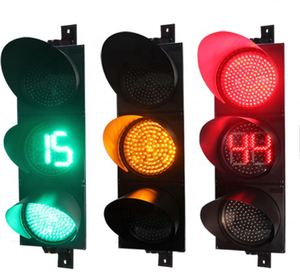
Modern crosswalk signals combine animated walking-person pictograms with synchronized numeric countdown displays. This psychological feedback reduces pedestrian jaywalking by up to 45% because crossing pedestrians can accurately gauge remaining clearance time.
Next Horizon: Smart Multi-Sensory Accessibility
The immediate future of crosswalk engineering revolves around universal accessibility and sensor fusion. Next-generation signals incorporate smart acoustic blind-assistance speakers that automatically modulate volume based on ambient street noise, tactile vibration push-buttons, and integrated ground-projected laser warning lines that illuminate the road surface for distracted smartphone users ("smombies").
Modular Edge AI Integration
Crosswalk signal heads are evolving into edge-computing infrastructure nodes. Equipped with thermal imaging micro-sensors, localized air quality sensors, and optical traffic counters, the crosswalk head functions as a localized urban data harvester connected directly to central traffic management software (ATMS).
Crosswalk Signal Procurement FAQ
Direct answers from our engineering desk addressing common technical, regulatory, and commercial purchasing questions.
Ready to Upgrade Your City's Pedestrian Crosswalk Infrastructure?
Contact our traffic engineering specialists today to request product catalogs, photometric test reports, sample units, or wholesale factory pricing.