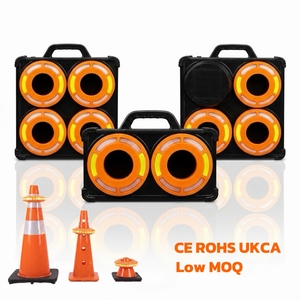
Hardware Catalogue
Featured Traffic Sensors, Indicators & Warning Systems
Industrial-grade highway signal heads, Doppler radar sensors, and warning devices manufactured under ISO 9001:2015 and EN12368 compliance.
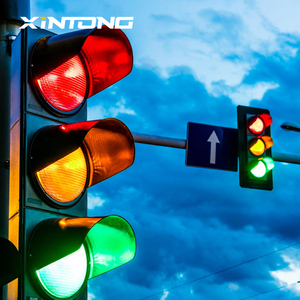
Xintong 200/300/400mm Intelligent LED Traffic Signal Light with Countdown Timer for Vehicle
Send an Inquiry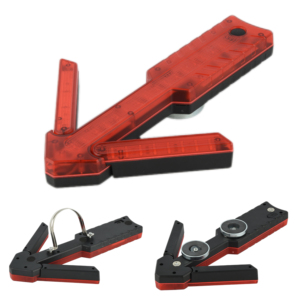
32PCS LED Road Safety Folding Arrow Rechargeable Warning Lights For Car Truck Traffic Beacon Lamp Emergency Signal Cone Light
Send an Inquiry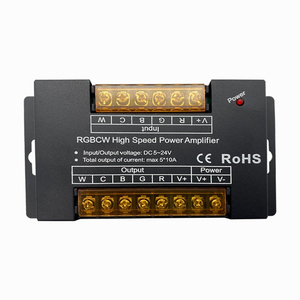
Voltage DC5-24V RGBWC signal amplifier led strip light signal repeater
Send an Inquiry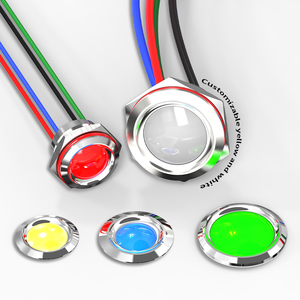
LANBOO Tri-Color LED Indicator Light 16mm 19mm 22mm 25mm Metal Panel Mount IP68 Common Anode Cathode 5-24V 220V
Send an Inquiry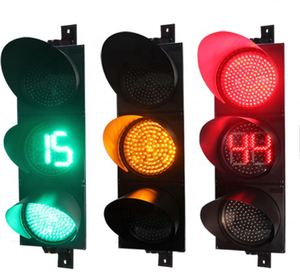
12-24V DC 100-277V AC 300mm High Brightness LED Traffic Signal Lights with Red/Yellow/Green Colors for Road Safety
Send an Inquiry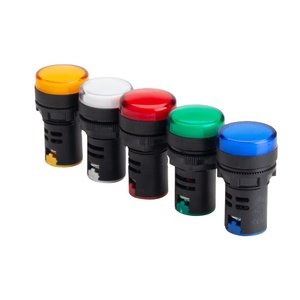
LVBO Wholesale 16MM/22MM Plastic LED signal Light AD16-22DS Industrial signal Indicator Light Indicator Lights
Send an Inquiry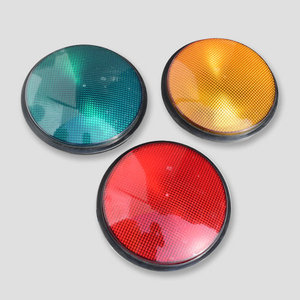
En12368 Led Traffic Light Signal High Photometric Performance Aspect Head
Send an Inquiry30+
Years Manufacturing Heritage
29,000+
Sq. Ft. ISO Certified Plant
500+
Global ITS Projects Deployed
IP68 / CE
Rigorous Ingress & Safety Rating
Engineering Deep-Dive
Traffic Sensor Modalities: Technical Comparison & Sensing Architecture
Selecting the appropriate traffic sensing technology requires balancing detection accuracy, weather immunity, total cost of ownership (TCO), and system integration overhead.
| Sensor Modality | Detection Principle | Optimal Use Case | Environmental Immunity | Maintenance & Life Expectancy |
|---|---|---|---|---|
| 24GHz / 77GHz FMCW Radar | Doppler Shift & Frequency Modulated Continuous Wave | Highway speed monitoring, long-range vehicle queue counting, dilemma zone detection | Exceptional (Unaffected by heavy rain, fog, snow, or solar glare) | Zero road-cut; 10+ years operational MTBF |
| AI Optical Video Analytics | Deep Learning Object Detection (YOLO / CNN Inference) | Multi-lane vehicle classification, ANPR (Plate Recognition), pedestrian flow analytics | Moderate (Requires IR illuminators for night glare or extreme fog) | Non-intrusive overhead mount; lens cleaning required |
| Inductive Loop Detectors | Electromagnetic Field Distortion | Intersection stop-line presence detection, automated toll barrier actuation | High subterranean stability (Vulnerable to asphalt deformation) | Road-cutting mandatory; vulnerable to pavement re-surfacing |
| LiDAR 3D Laser Scanning | Time-of-Flight (ToF) Infrared Pulse Reflection | Over-height vehicle detection, high-density 3D volumetric profiling | High precision (Degrades slightly in torrential downpours) | High capital cost; solid-state models offer 5-7 year life |
| Wireless Geomagnetic Sensors | Earth Magnetic Field Distortion (Magnetometer) | On-street smart parking, remote low-power urban arterial monitoring | High subterranean immunity | Battery powered (5-8 years battery lifespan) |
Modern Intelligent Transportation Systems (ITS) are increasingly moving away from intrusive legacy systems like inductive loop cutting toward multi-modal sensor fusion. By combining microwave radar doppler modules with AI-enabled optical edge processing, tier-1 highway contractors achieve greater than 99.5% classification accuracy across all weather conditions.
Enterprise Strengths
Why Sourcing Traffic Hardware from Leading Chinese Manufacturers Offers Direct Market Advantage
Combining vertical integration, scalable automated SMT assembly, and strict global compliance standards to deliver unmatched quality-to-cost ratios.
In-House SMT & Photometric Labs
Our 29,000+ sq. ft. modern manufacturing complex houses automated surface-mount technology (SMT) lines, darkroom photometric integrating spheres, and climate-controlled burn-in chambers. Every LED signal aspect is verified for exact cd/m² optical output prior to export.
Quadruple Quality Certification
Manufacturing operations adhere strictly to ISO 9001:2015 (Quality Management), ISO 14001:2015 (Environmental Management), ISO 45001:2018 (Occupational Health), and European EN12368 / CE standards for traffic control equipment.
Proven Global Track Record
From municipal traffic junctions in Southeast Asia and highway toll plazas in the Middle East to heavy industrial plants across Africa and South America, our hardware withstands extreme ambient temperatures (-40°C to +80°C) and monsoon-grade humidity.
Market Outlook
Future Procurement Trends in Smart Traffic Sensors & Signals
Infrastructure procurement officers, municipal engineers, and EPC contractors must align their specifications with these five fast-emerging macro procurement trends.
1. Shift Towards Off-Grid Solar & Ultra-Low-Power Sensing
Municipalities are shifting heavy infrastructure budgets toward energy-neutral hardware. Modern traffic sensors and LED blinkers now demand native 12V/24V DC operating architectures with MPPT dynamic solar regulation, allowing autonomous operation for 5–7 cloudy days without utility grid connection.
2. Standardized Native V2X Communication Protocols
Procurement criteria increasingly specify built-in Cellular Vehicle-to-Everything (C-V2X) and DSRC dual-mode connectivity. Modern traffic sensor arrays must transmit real-time signal phase and timing (SPaT) data directly to autonomous and connected vehicles to reduce intersection collisions.
3. Edge AI Processing Over Cloud Dependency
To comply with strict data privacy mandates and minimize cellular latency, traffic sensors must perform neural-network image processing directly on the pole (Edge Inference). Buyers prioritize systems that output aggregated vector metadata (count, speed, vehicle class) rather than streaming raw HD video backhaul.
4. Modular & Toolless Field Maintenance Designs
Contractors are penalization-sensitive to road closure downtime. Current RFPs call for modular polycarbonate housing with quick-latch optical engine access, plug-and-play wiring harnesses, and common-anode/cathode universal driver compatibility to cut field repair times below 15 minutes.
R&D Roadmap
Key Technological Trends Driving Next-Gen Traffic Sensors
How solid-state physics, advanced optical materials, and micro-radar technology are reshaping municipal traffic hardware capability.
Multi-Spectral Sensor Fusion (Radar + Thermal + Vision)
Single-technology sensors face physical limits. The industry gold standard is evolving into multi-spectral fusion arrays where a 77GHz millimeter-wave radar measures vehicle velocity and distance, a thermal sensor tracks heat signatures during night or heavy smog, and an optical camera performs license plate and vehicle model identification.
High-Efficiency Micro-Fresnel Optical Lenses
Modern LED signal aspects utilize custom-engineered UV-stabilized polycarbonate micro-Fresnel lenses. This design achieves uniform luminance intensity across wide viewing angles while eliminating phantom light reflections caused by low-angle sun glare—greatly enhancing motorist safety at high-speed highway intersections.
Self-Diagnostic Health Monitoring & CAN Bus Integration
Smart signal heads now incorporate embedded microcontrollers that continuously monitor LED string current, internal operating temperature, and lens degradation. Fault signals are instantly reported over RS-485 Modbus or CAN Bus protocols to central traffic control cabinets before catastrophic signal dark outages occur.
Buyer Knowledge Base
Traffic Sensor & Signal Procurement FAQ
Direct technical and commercial answers to frequent queries raised by global importers, tender consultants, and system integrators.
What aspect sizes and operating voltages are available for custom factory orders?
We manufacture full product ranges including 100mm (toll plaza & industrial gates), 200mm (urban arterials), 300mm (highways), and 400mm specialized signal heads. Electrical configurations cover wide-voltage 100–277V AC for municipal grids, as well as 12V/24V DC for solar or battery-backed emergency deployments.
How do you verify waterproof and thermal durability before shipment?
Every production batch undergoes strict ingress protection testing (IP65/IP68 rating verification) in automated rain and spray chambers. Additionally, completed optical modules undergo a minimum 48-hour continuous burn-in test inside high-temperature environmental chambers (+70°C) to guarantee ZERO infant mortality rates in field deployments.
Can signals be customized for different international driving orientations and symbols?
Yes. We supply customized arrow masks (left, right, straight, multi-lane split), countdown timer logic (numeric, animated walking person), and localized pictogram symbols adapted to left-hand drive (LHD) or right-hand drive (RHD) traffic codes for any global jurisdiction.
What documentation is provided to support international government project tenders?
All export shipments are supported by a complete documentation package in English: ISO 9001/14001/45001 certificates, CE conformity statements, IP65/IP68 lab test reports, Photometric luminous intensity certificates, General Arrangement (GA) CAD drawings, and factory origin certificates (CO).
What is the standard manufacturing lead time for bulk container orders?
Standard LED signal heads and solar blinkers are typically dispatched within 2 to 3 weeks. Complex multi-phase junction controller packages, customized Doppler radar displays, and heavy toll plaza systems require approximately 3 to 5 weeks following final drawing and parameter approval.
Partner with China's Premier Traffic Sensor & Signal Factory
Request factory-direct technical drawings, photometric test reports, or a competitive quotation tailored to your infrastructure tender specifications.
Send an Inquiry