High-Performance Traffic Signals & Warning Arrays
Direct OEM manufacturing under ISO-certified darkroom optical testing. Sourced by global EPC contractors, municipal authorities, and highway concessionaires.
Engineering Capacity & Global Footprint
Built upon 30+ years of dedicated optical engineering, automated SMT board assembly, and direct OEM/ODM fulfillment for tier-1 traffic infrastructure projects.
Engineering Architecture of High-Reliability Solar Signal Systems
An authoritative breakdown of optical physics, power harvesting dynamics, thermal management, and protocol integration for modern intelligent transportation systems (ITS).
1. Photometric Luminance & Optical Physics
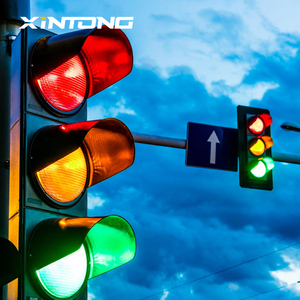
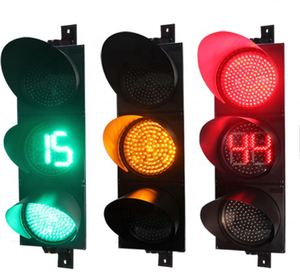
Modern LED traffic signals must overcome extreme ambient sunlight without producing deceptive "phantom reflections." Compliance with EN12368 Class 3 standards mandates luminous intensity reaching up to 800 cd for 300mm signal aspects while keeping phantom light ratios below Class 1 thresholds.
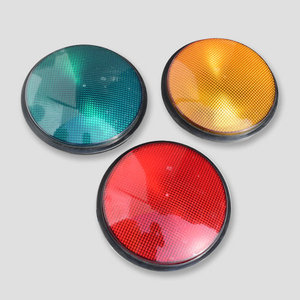
Our optical lens arrays utilize high-transmittance, UV-stabilized GE Lexan™ polycarbonate. Fresnel lens geometry ensures uniform light distribution across horizontal (+/- 30°) and vertical (+/- 15°) viewing angles without hot-spot pixelation.
2. Solar MPPT & Lithium Energy Storage
Legacy solar signals relied on inefficient PWM controllers and heavy lead-acid batteries, resulting in premature failure during prolonged rainy periods. Advanced solar signals integrate Maximum Power Point Tracking (MPPT) charge algorithms operating at 98.5% efficiency.
Combined with LiFePO4 (Lithium Iron Phosphate) battery chemistry, solar systems achieve 3,000+ deep-discharge cycles at 80% DoD. Integrated Battery Management Systems (BMS) provide thermal cutoff (-20°C to +65°C), cell balancing, and over-discharge prevention.
3. Fail-Safe Protocol & RF Wireless Sync
Intersections requiring rapid temporary or permanent signals utilize 2.4GHz / 915MHz spread-spectrum RF wireless mesh communication. Time-synchronized signal controllers eliminate costly road trenching and cabling while maintaining sub-10ms phase alignment between master and slave signal posts.
In case of wireless interference, controllers automatically revert to fallback fixed-time fail-safe sequences or amber flash warning modes to guarantee continuous motorist safety.
Procurement Note on Environmental Ingress & Thermal Dissipation
Solar traffic signals deployed in desert or tropical maritime environments face dual degradation vectors: thermal throttling of driver ICs and moisture intrusion into lens cavities. Our OEM engineering standards specify IP65/IP68 hermetic vacuum sealing, conformal coating on all SMT PCB assemblies, and die-cast ADC12 aluminum heat-sink backplates capable of dissipating ambient thermal loads up to +85°C ambient temperature.
Commercial Grade vs. Factory OEM Industrial Standard
Why tender authorities and infrastructure developers specify engineered industrial solar signals over off-the-shelf commercial alternatives.
| Technical Feature Parameter | Standard Commercial Grade | China Factory OEM Industrial Grade |
|---|---|---|
| Optical Compliance Standard | Basic LED brightness (Uncalibrated cd/m²) | EN12368 Class 1/2/3 Luminous Intensity & Chromaticity |
| Enclosure / Lens Material | Standard ABS Plastic / Recycled PC | UV400 Stabilized GE Polycarbonate or ADC12 Aluminum |
| Ingress Protection Rating | IP54 - IP63 (Prone to moisture fogging) | IP65 to IP68 Hermetic Vacuum Seal (Silicone Potting) |
| Solar Charge Management | PWM Controller (70-75% Efficiency) | Smart MPPT Controller (98.5% Conversion Efficiency) |
| Battery Chemistry & Lifespan | Lead-Acid / AGM (1-2 Year Cycle Life) | LiFePO4 Grade A Cells (7-10 Year Operational Life) |
| Operating Temperature Window | -10°C to +50°C | -40°C to +85°C Extreme Climate Rating |
| Surge Protection (SPD) | None or minimal 1kV fuse | 10kV / 20kA Integrated Surge Suppression |
Future Trends in Global Solar Signal Procurement
Key technological shifts shaping the next decade of intelligent road safety infrastructure and smart city tender requirements.
V2X & C-ITS Infrastructure Readiness
Future-ready traffic signals are no longer standalone lights. Modern municipal tenders require signal controllers equipped with Dedicated Short-Range Communications (DSRC) and Cellular V2X (C-V2X) modules.
These allow solar signals to broadcast Signal Phase and Timing (SPaT) data directly to autonomous vehicles, emergency response fleets, and transit priority systems in real time.
Edge AI & Radar Adaptive Actuation
Static green-light cycles lead to unnecessary urban congestion. Sourcing trends favor solar signal heads paired with Doppler radar sensors and Edge AI vision cameras.
By analyzing real-time queue length and vehicle approach velocity at the intersection edge, solar controllers dynamically adjust signal duration, cutting idle emissions by up to 28%.
BIPV Solar Integration & Zero-Carbon TCO
Building Integrated Photovoltaics (BIPV) and flexible mono-crystalline panels are being molded directly into signal visors and housing structures. This minimizes wind drag, deters vandalism, and achieves 100% grid independence.
Government procurement mandates increasingly calculate Total Cost of Ownership (TCO) over a 10-year lifespan, favoring solar assets with zero ongoing electricity tariffs.
Why Partner With Our China OEM Manufacturing Base?
Complete single-roof production—from raw aluminum casting to SMT PCB placement and photometric darkroom verification.
In-House Manufacturing Excellence
Unlike trading entities, our 29,000+ sq. ft. facility executes total end-to-end production quality control:
- High-Speed Yamaha SMT lines for automated LED PCB component placement.
- In-house Photometric Darkroom testing for cd/m² beam distribution and color coordinates.
- Environmental Testing Chambers (-40°C to +85°C, thermal shock & humidity cycling).
- IP6X Dust Chamber and High-Pressure Water Jet Ingress Testing Rig.
- Strict adherence to ISO 9001, ISO 14001, and ISO 45001 EHS management systems.
- Custom tooling capability for OEM casing, brand silk-screening, and specialized mounting hardware.
Supply Chain & Global Export Logistics
Streamlined export processing built to simplify procurement for international project contractors:
- Full export documentation: CO, Form E, Form F, CE, IP65 Test Certificates, and RoHS Compliance.
- Custom sea-worthy packaging: Double-wall corrugated cartons reinforced with corner foam protection and fumigated wooden pallets.
- Multi-voltage supply: 12V DC, 24V DC, 110V AC, and 220-240V AC universal grid compatibility.
- Short production lead times: Standard signal heads within 10-15 days; custom junction systems within 20-25 days.
- Lifetime engineering support: Technical wiring schematics, controller programming files, and spare parts supply guarantee.
Trusted Supplier to Major Infrastructure & Industrial Projects






Frequently Asked Questions (FAQ)
Key technical, commercial, and operational questions answered by our engineering and export team.
Ready to Upgrade Your Traffic Infrastructure?
Contact our senior engineering sales team today to request complete product datasheets, optical photometric certificates, factory-direct OEM quotations, or project layout evaluations.