High-Precision Vehicle Detection Systems
Explore our CE-certified inductive single/dual channel loop detectors and next-generation 79GHz radar sensor replacements built for heavy industrial usage.
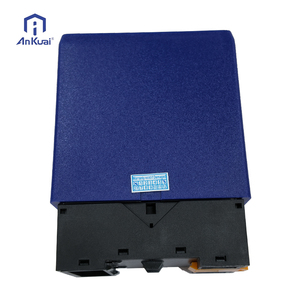
AK-TL002 High Sensitivity Vehicle Loop Detectors Used for Barrier Gates Parking Lot Access Control System
Get Catalog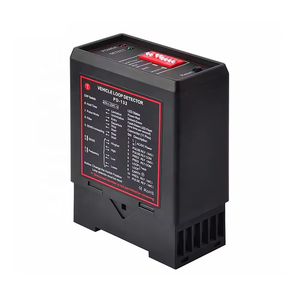
PD132 Parking Access Control System Single Channel Sensor Wireless Vehicle Loop Detector for Barrier Gate
Get Catalog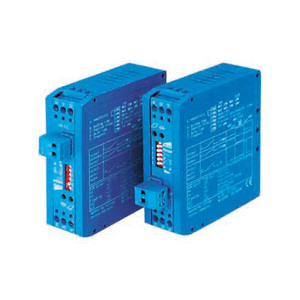
Electronic 12V 24V AC/DC Single Channel Loop Detector for Vehicle Detection
Get Catalog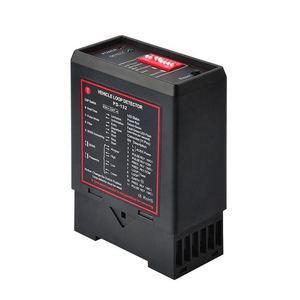
PD132 Induction Loop Traffic Sensor Vehicle Loop Detector Wire Metal Detector for Boom Barrier Parking Lot System
Get Catalog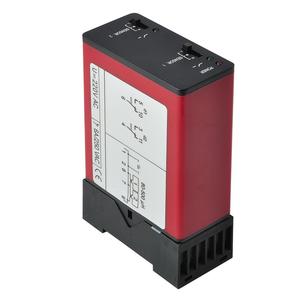
220V Parking Control Vehicle Parking System Inductive Loop Detector
Get Catalog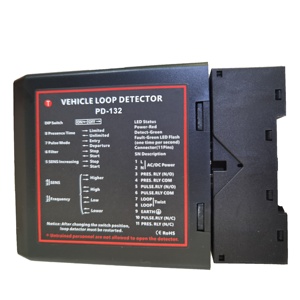
Inductive Loop Vehicle Detector Traffic Signal Loop Detector Vehicle Loop Detector Pd132
Get Catalog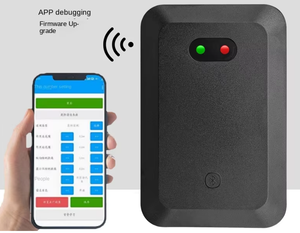
79GHz Millimeter Wave Barrier Gate Radar Anti-crushing Vehicle Detector Parking Lot LPR System Loop Detector Replacement
Get Catalog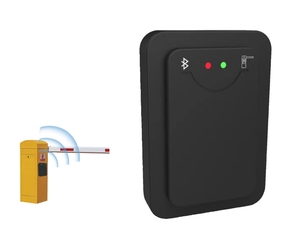
79Ghz Straight Bar Gate Anti-Smash Blue-tooth Wireless Radar Vehicle Loop Detector for Parking Barrier Gate
Get CatalogEngineering Whitepaper: Advanced Vehicle Detection Technologies for Modern Intelligent Transportation Systems (ITS)
Vehicle loop detectors serve as the critical sensing backbone for automated barrier gates, toll collection plazas, traffic signal automation, and modern commercial parking access control systems. As a premier CE certified loop detector manufacturer and global factory enterprise, our engineering division manufactures high-reliability inductive loop detectors (such as the standard PD132 and AK-TL002 series) alongside modern 79GHz millimeter-wave radar detection systems designed to eliminate physical pavement trenching.
Information Gain Insight: Modern inductive loop sensors utilize high-frequency LC resonant circuits (typically tuned between 20 kHz and 150 kHz). When a ferromagnetic vehicle mass enters the wire loop embedded in the pavement, it decreases the loop inductance while increasing the resonant frequency. Our microcontrollers process this delta within milliseconds to trigger boom barriers or send telemetry to traffic management software.
Core Operating Mechanics of Inductive Loop Sensors
Inductive loop detectors rely on electromagnetic induction principles. A continuous insulated copper wire loop is embedded into rectangular or octagonal saw-cuts inside the asphalt or concrete drive lane. Connected to our DIN-rail or 11-pin plug-in module, the loop forms a tuned tank circuit. Upon vehicle entry, Eddy currents induced in the vehicle frame counteract the loop field, resulting in a measurable shift in inductance (ΔL/L). Our proprietary firmware features dynamic frequency tracking to prevent false triggers caused by environmental humidity shifts, ground temperature fluctuations, or nearby structural steel rebar.
Key OEM Feature Sets Demanded by Global Engineering Contractors
Procurement directors and system integrators inspecting loop detector factories require strict adherence to international electrical safety and electromagnetic compatibility standards. Our CE-marked single and dual-channel loop detectors offer:
- Multi-Level Sensitivity Adjustment: Front-panel DIP switch toggles allow fine-tuning from low sensitivity (detecting only large trucks/buses) to ultra-high sensitivity (detecting high-bed trailers, motorcycles, or low-slung sports cars).
- Crosstalk Isolation & Multi-Frequency Channels: Built-in channel isolation switches allow adjacent loop channels to operate at different frequencies (High, Medium-High, Medium-Low, Low), preventing mutual electromagnetic interference when loops are placed in close proximity.
- Permanent Presence vs. Pulse Relay Output: Configurable relay contacts for presence sensing (barrier stays open while car is over loop) or pulse output (generating a quick signal to trigger License Plate Recognition / LPR cameras or ticket dispensers).
- Automatic Frequency Reset & Fault Diagnostics: Automatic self-tuning upon power-up, combined with LED diagnostic codes indicating loop short circuits, open loops, or out-of-range inductance values.
Technology Comparison: Inductive Wire Loops vs. 79GHz Millimeter-Wave Radar Sensors
System integrators often face the decision between traditional pavement-embedded inductive loops and surface-mounted millimeter-wave radar detectors. As a comprehensive OEM manufacturer supplying both solutions, we provide an unbiased engineering matrix to guide project procurement:
| Evaluation Parameter | Inductive Loop Detector (e.g., PD132 / AK-TL002) | 79GHz Millimeter-Wave Radar (Barrier Replacement) |
|---|---|---|
| Installation Method | Saw-cutting pavement, laying wire, epoxy backfilling. | Direct pole or barrier housing mount (Zero road damage). |
| Pavement Condition Impact | Requires structural asphalt/concrete; damaged by road cracks. | 100% immune to road degradation, water logging, or ice. |
| Vehicle Detection Profile | Detects metal mass directly over the loop footprint. | 3D spatial wave detection (separates pedestrians vs vehicles). |
| Anti-Smash Protection | High reliability for metallic vehicles; limited for carbon-fiber. | Ultra-high accuracy for all vehicle types & pedestrian safety. |
| Deployment Time per Lane | 2 to 4 hours (curing time required for loop sealant). | 15 to 30 minutes (Bluetooth app calibration). |
| Maintenance & Lifespan | Requires re-sealing every 3–5 years in harsh climates. | 10+ years maintenance-free IP67 solid-state design. |
| CE & EMC Compliance | EN 61000-6-1, EN 61000-6-3 (Industrial Immunity). | ETSI EN 300 440, CE RED Directive compliant. |
Why Source From Our Certified Manufacturing Facilities?
Operating from our 29,000+ sq ft ISO-certified production plant, we offer end-to-end quality control, direct OEM/ODM customization, and rigorous technical validation.
Fully Automated SMT Production
High-speed Surface Mount Technology lines ensure exact component placement, eliminating hand-soldering variances and delivering consistent, long-term electrical reliability.
100% Environmental Burn-In & QA
Every single batch of loop detectors undergoes 72-hour thermal stress testing (-40°C to +85°C) and high-voltage dielectric isolation testing before leaving the factory.
Full CE & LVD Compliance
Complete test reports and Declaration of Conformity (DoC) documents available for international customs clearance, tender submissions, and consultant approvals.
Future Procurement Trends in Vehicle Detection (2025–2030 Roadmap)
As smart cities transition toward connected infrastructure and Automated Toll Collection (ETC), procurement managers are re-evaluating their hardware purchasing strategies. The following strategic trends define the future of loop detector manufacturing and wholesale sourcing:
1. Shift Toward Dual-Sensory Anti-Smashing Redundancy
High-value automated parking lots and toll expressways are increasingly specifying dual-technology setups. Barrier gates now integrate an inductive ground loop (for presence verification and vehicle classification) alongside a top-mounted 79GHz millimeter-wave radar sensor (for dynamic anti-smashing and pedestrian tracking). Factory packaging of compatible dual kits is rapidly becoming a key supplier selection metric.
2. Demand for Universal Power Inputs & Plug-and-Play DIN Rails
Global distributors are moving away from regional SKU variants. Modern vehicle loop detectors are engineered with wide-range power supplies (110V–240V AC / 12V–24V AC/DC integrated into a single universal transformerless power unit). Furthermore, standard 11-pin circular bases and 35mm DIN-rail mountings have established market dominance due to rapid field replacement capability.
3. Wireless Bluetooth Diagnostics & IoT Telemetry Integration
Field technicians no longer rely solely on physical DIP switches. Emerging loop detector lines (including our smart radar replacements) feature integrated Bluetooth connectivity. Installers can tune sensitivity curves, view real-time signal waveforms, calibrate detection zones, and diagnose loop faults directly through a mobile application, significantly reducing installation labor costs.
Frequently Asked Questions by Technical Buyers
Get immediate answers regarding OEM manufacturing, product specifications, lead times, and installation requirements.
What certifications do your loop detectors hold for international export?
All our loop detectors and radar sensors carry full CE certification (EMC Directive 2014/30/EU and LVD Directive 2014/35/EU). Manufacturing facilities operate under audited ISO 9001:2015, ISO 14001:2015, and ISO 45001:2018 management systems.
What wire gauge and inductance range are recommended for your loop sensors?
We recommend using double-insulated stranded copper wire (1.5mm² or 0.75mm² XLPE/PVC). Ideal total loop inductance (including feeder cable) should sit between 80µH and 300µH (100µH to 200µH optimal). Our detectors can auto-tune from 20µH up to 1000µH.
Can 79GHz radar completely replace buried inductive ground loops?
Yes! 79GHz millimeter-wave radars serve as direct replacements for barrier gate anti-smashing loops. They eliminate saw-cutting into concrete or asphalt, cut installation time down to 20 minutes, and prevent damage caused by road work or severe weather.
Do you offer white-label OEM / ODM manufacturing for global distributors?
Yes, we provide full white-label services including custom housing colors, silk-screened brand logos, custom packaging, modified default DIP switch settings, and specialized relay output firmware tailored to your access control system.
How do your detectors handle crosstalk when two loops are installed side by side?
Our loop detectors feature front-panel frequency select switches. By setting adjacent loop channels to different operating frequency bands (e.g., Channel 1 High, Channel 2 Low), electromagnetic coupling and false triggering are totally eliminated.
What is the standard production lead time for bulk wholesale orders?
Standard catalog models (such as PD132 and 24V AC/DC modules) ship within 3 to 7 working days. Custom OEM orders, specialized firmware variations, or container-load volumes typically require 2 to 3 weeks for full manufacturing and testing.
Need Factory Direct Pricing & Engineering Drawings?
Contact our technical sales engineers today for comprehensive product datasheets, CE compliance certificates, installation schematics, and direct OEM quotation options.