CE Certified Traffic Signals & LED Signaling Systems
Precision-engineered LED signal modules, warning strobe beacons, intelligent intersection controllers, and industrial panel indicators compliance-tested for high-speed highways, smart cities, and heavy industrial facilities.
Whitepaper: Engineering & Compliance Standards for CE Certified LED Signs & Traffic Signals
In modern intelligent transportation systems (ITS) and municipal road management, selecting a CE certified LED sign supplier is far more than a routine procurement checkbox. European Conformity (CE) marking represents a comprehensive engineering commitment to electromagnetic compatibility (EMC), low voltage electrical safety (LVD), photometric precision, and environmental durability. Procurement officers, municipal infrastructure authorities, and EPC contractors must navigate complex international standards—most notably EN 12368 for traffic control signal heads and EN 12966 for variable message signs (VMS)—to ensure highway safety and operational longevity.
Critical Insight: Photometric Phantom Class & Solar Interference
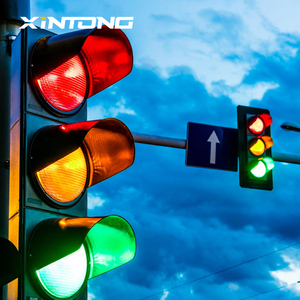
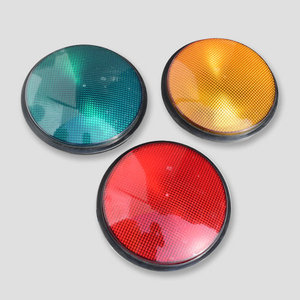
A primary failure mode in non-certified traffic signals is the "phantom light effect," where low afternoon sunlight reflects off the reflector, giving drivers a false indication. CE certified signals meeting EN 12368 Class 5 phantom light performance utilize precision Fresnel optical geometry and anti-glare visors to ensure absolute signal clarity under direct solar exposure.
1. The Regulatory Framework: Harmonized Standards for LED Road Displays
To qualify for CE marking, an LED sign or traffic signal must undergo rigorous testing across several European Directives:
- EMC Directive 2014/30/EU: Ensures the LED driver electronics do not emit high-frequency radio interference that disrupts emergency service communication networks or roadside sensors, while maintaining high immunity against nearby lightning strikes and power surges.
- Low Voltage Directive (LVD) 2014/35/EU: Governs electrical insulation, creepage distances, and shock protection across wide AC input ranges (typically 100V to 277V AC) and low-voltage DC installations (12V/24V DC).
- EN 12368 (Traffic Control Equipment - Signal Heads): Specifies photometric performance, including luminous intensity (Class 1 to Class 3), signal color chromaticity coordinates (Red, Amber, Green, Blue, White), and environmental resistance against wind loading, ambient temperature extremes (-40°C to +60°C), and water ingress.
- EN 12966 (Variable Message Traffic Signs): Regulates visual performance, beam width angles, contrast ratio under intense ambient illumination, and micro-processor controller reliability for highway VMS boards.
2. Advanced Thermal Dissipation & Photometric Stability
LED luminous degradation is directly tied to junction temperature ($T_j$). Inferior LED sign suppliers drive high currents through low-cost LED chips without adequate heat sinking, resulting in rapid brightness decay within 12 to 18 months of continuous operation. Premium CE certified signaling systems incorporate multi-layer metal-core printed circuit boards (MCPCB), thermal conductive potting resins, and heavy-duty aluminum die-cast or UV-stabilized polycarbonate enclosures.
By keeping the internal LED junction temperature well below 75°C under maximum load, certified LED signals achieve an operational lifespan exceeding 100,000 hours with less than 10% luminous decay—drastically reducing municipal maintenance cycles and roadside worker exposure.
Why Tier-1 Contractors Trust Our Engineering Platform
In-House Photometric Testing
Every batch of LED signal heads undergoes goniophotometer spectral analysis to guarantee exact lux output, viewing angle distribution, and color chromaticity compliance before export clearance.
IP65 & IP68 Sealed Enclosures
Designed with seamless dual-ring EPDM gaskets and anti-corrosive hardware, shielding interior optics against torrential rain, dust storms, salt mist, and industrial pollutants.
Universal Driver Compatibility
Integrated isolated drivers feature active power factor correction (PFC > 0.95), operating reliably across unstable power grids or off-grid solar-battery microgrids.
Future Procurement Trends in LED Signs & Traffic Management (2025–2030)
As urban mobility evolves toward smart cities and connected vehicle infrastructure, procurement specifications for LED signs and traffic signals are shifting from static, standalone fixtures to dynamic, intelligent transport network nodes. B2B buyers and project engineers should align their procurement strategies with four key emerging trends:
1. V2X (Vehicle-to-Everything) & C-ITS Connectivity Integration
Next-generation LED traffic signals are increasingly equipped with edge-computing microprocessors and low-latency wireless communication protocols (C-V2X and DSRC). This allows the traffic signal light module to broadcast real-time Signal Phase and Timing (SPaT) data directly to autonomous vehicles and emergency response fleets, reducing intersection bottlenecks and enabling priority green-wave corridors.
2. Dynamic Photometric Auto-Dimming for Carbon Reduction
Fixed-luminance signs consume unnecessary power at night and can cause nighttime driver glare. Modern CE certified LED sign suppliers are embedding integrated ambient light sensors (LDRs) and pulse-width modulation (PWM) dimming control. By automatically adjusting LED intensity in response to ambient lux levels, cities reduce power consumption by up to 40% while maintaining compliance with EN 12966 contrast classes.
3. Solar-Hybrid Micro-Grid Systems with LiFePO4 Storage
Off-grid highway safety blinkers and remote intersection signals are migrating from traditional lead-acid batteries to high-density Lithium Iron Phosphate (LiFePO4) chemistry paired with MPPT solar controllers. This combination yields over 3,000 charge cycles, zero maintenance overhead, and uninterrupted autonomous operation for up to 5 consecutive overcast days.
4. Modular Hot-Swappable Optical & Electronics Assembly
To lower Total Cost of Ownership (TCO), city authorities now mandate modular hardware architecture. Rather than replacing an entire signal housing, technicians can hot-swap individual LED optical engines, countdown timer displays, or driver modules on-site within minutes, drastically reducing lane closure costs and traffic disruption.
CE Certified LED Signal Selection & Performance Guide
Comparative technical specifications for highway authorities, industrial system integrators, and equipment buyers.
| Product Category | Primary Application | Operating Voltage | Compliance / Standard | Ingress / Impact | Photometric Class |
|---|---|---|---|---|---|
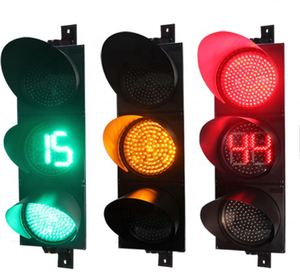
| 300mm / 400mm Traffic Signals | Expressways, Arterial Highways | 100–277V AC / 12–24V DC | EN 12368, CE, ISO 9001 | IP65 / IK08 Polycarbonate | Class 2 / Class 3 High Lux |
| 200mm City Intersection Signals | Urban Roads, Commercial Corridors | 100–240V AC / 12V DC Solar | EN 12368, CE Marked | IP65 / UV-Stabilized PC | Class 1 / Class 2 Standard |
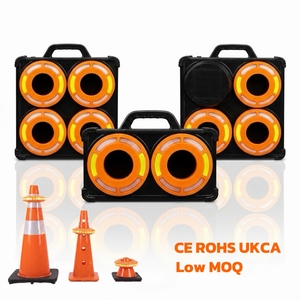
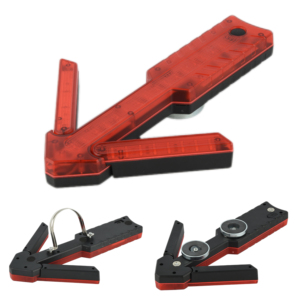
| Synchronized Strobe Beacons | Work Zones, Highway Diversions | 12V DC / LiFePO4 Battery | CE, Road Safety Directive | IP66 Waterproof Base | High-Visibility Amber Strobe |
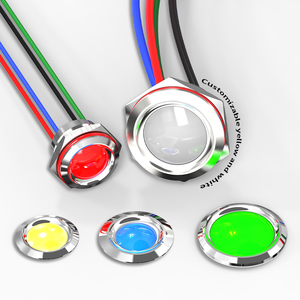
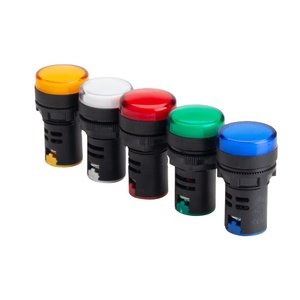
| Panel Mount Industrial Indicators | Control Desks, Factory Automation | 5–24V DC / 110–220V AC | CE, RoHS, IP68 Rated | IP68 / IK10 Stainless Steel | High-Density Tri-Color SMD |
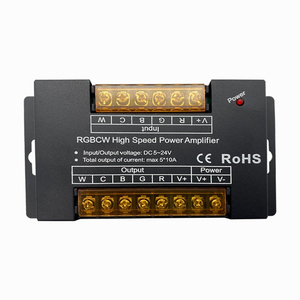
| Signal Repeater & Amplifiers | VMS Boards, Long-Distance Strip Signs | 5–24V DC Industrial Input | CE EMC Certified | IP20 / IP65 Modular DIN | High-Speed PWM Amplification |
Frequently Asked Questions by Procurement Officers
Clear, engineering-focused answers covering regulatory compliance, custom manufacturing, logistics, and warranty terms.
Partner with a Certified LED Sign Manufacturer
Request comprehensive technical datasheets, photometrics, EN 12368 compliance reports, or a custom project quote directly from our engineering team.
Contact Us