
1. Executive Summary & Manufacturing Engineering Benchmark
In modern Intelligent Transportation Systems (ITS) and high-speed corridor management, the reliability of signal infrastructure directly correlates with highway safety and traffic throughput. Procurement departments, EPC municipal contractors, and traffic safety engineering teams require highway signal suppliers capable of demonstrating strict compliance with international standards such as CE Marking, EN 12368, ISO 9001:2015, ISO 14001:2015, and ISO 45001:2018.
Operating out of a state-of-the-art 29,000 sq ft manufacturing facility in MIDC Bhosari, Pune, India, Trafitronics India Pvt Ltd (along with its global export distribution network under Shreeji Marketing Corporation) has established over 30 years of in-house manufacturing authority. Unlike trading intermediaries, true original equipment manufacturers control the complete value chain: from optical fresnel lens design, Surface Mount Technology (SMT) LED board assembly, constant-current power driver encapsulation, sheet metal and poly-alloy housing molding, to photometric integrating-sphere testing.
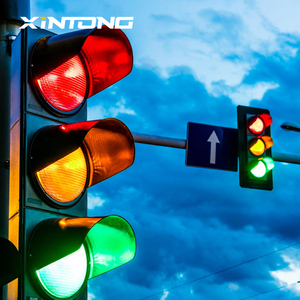
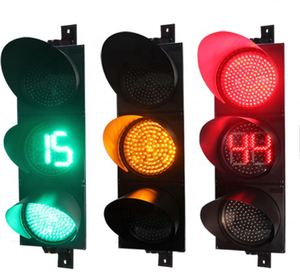
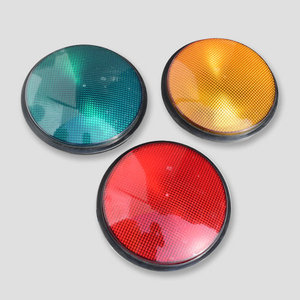
Technical Information Gain Note: According to EN 12368 optical parameters, high-speed highway traffic signals (300mm and 400mm aspect sizes) must achieve Class 2 or Class 3 luminous intensity (exceeding 400 to 800 cd) while eliminating false visual indications caused by low-angle sunlight reflections—a phenomenon known as the Phantom Light Effect.
2. Technical Standards Guide: CE Marking & EN 12368 Compliance Matrix
When sourcing highway signal heads and warning beacons, international tender specifications mandate strict compliance parameters across electrical, environmental, and photometric spectrums. The table below outlines the critical engineering criteria required for CE-certified highway signal installations:
| Standard & Parameter | Engineering Requirement | Testing Protocol | Impact on Highway Procurement |
|---|---|---|---|
| EN 12368 Optical Performance | Luminous Intensity Class 1, 2, or 3 (up to 800 cd for 300mm Red/Yellow) | Goniophotometer angle sweep (-20° to +20°) | Guarantees 250m+ visibility under direct sunlight on high-speed expressways. |
| Sun Phantom Light Ratio | Class 1 to Class 5 anti-phantom rating (Ratio > 1:10) | Solar simulator beam reflection test at 10° elevation | Prevents driver misinterpretation caused by false signal glare during sunrise/sunset. |
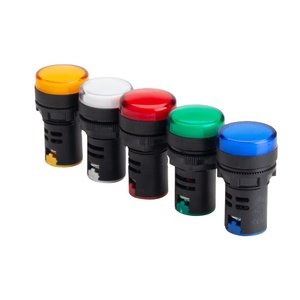
| Ingress Protection (IP Rating) | IP65 for Signal Heads / IP68 for Panel Indicators & Junction Boxes | Water jet pressure chamber & dust chamber testing | Prevents moisture ingress, lens fogging, and short circuits during heavy monsoons. |
| Wide Input Power Voltage | 100–277V AC (50/60Hz) or 12V/24V DC Off-Grid Solar Input | High-voltage surge withstand (up to 10kV / 5kA) | Protects signal electronics against unstable municipal power grids and lightning strikes. |
| Housing Impact Resistance | IK08 to IK10 UV-stabilized Polycarbonate or Aluminum Alloy | Charpy pendulum impact test (EN 60598-1) | Ensures a 10+ year operational lifespan under high thermal expansion and coastal salt spray. |
3. Future Procurement Trends in Highway Signal Technology (2025–2035)
As global infrastructure transitions toward Smart Cities and Connected Autonomous Vehicles (CAV), highway signal procurement strategies are evolving beyond basic visual indicators. Forward-thinking transportation authorities are prioritizing suppliers who integrate the following next-generation technologies:
1. V2X & C-ITS Integration
Modern CE-certified signal controllers are now equipped with RS485, Ethernet, and CAN-bus interfaces supporting Vehicle-to-Infrastructure (V2I) communication. This enables real-time signal phase timing broadcast directly to vehicle heads-up displays.
2. Hybrid Solar + MPPT Storage
Off-grid highway blinkers and emergency hazard beacons are migrating to ultra-efficient Photovoltaic Maximum Power Point Tracking (MPPT) charge controllers paired with Lithium Iron Phosphate (LiFePO4) energy storage, extending operation autonomy to 7–10 rain days.
3. Dynamic AI Countdown Timers
Self-learning countdown timers dynamically calculate traffic volume via radar sensors or video ANPR cameras, automatically adjusting green time display without requiring complex central server intervention.
4. Enterprise Advantages: In-House Manufacturing Capabilities
Why do international EPC contractors and government infrastructure boards choose direct factory sourcing over trading agents? Original equipment manufacturing provides unmatched quality control and long-term project viability:
29,000 Sq Ft Integrated Facility
Our Pune manufacturing facility houses complete electronics SMT assembly, automated potting lines, metal fabrication shops, electrostatic powder coating lines, and a darkroom optical testing lab.
Custom Engineering & OEM Flexibility
From custom aspect sizes (100mm, 200mm, 300mm, 400mm) to custom arrow mask geometry, local language pedestrian pictograms, and housing color matching (RAL standard shades).
Audit-Ready Documentation
Every dispatch is accompanied by batch-traceable Manufacturer Test Certificates, EN 12368 photometric charts, IP65 ingress reports, and export compliance documents in English.
5. Frequently Asked Questions (FAQ) for B2B Procurement Teams
Comprehensive engineering and commercial responses to common technical questions submitted by tender boards, project engineers, and international importers: