CE Certified Emergency Light & Warning Signals Catalog
Explore our engineered portfolio of CE-compliant emergency illumination, synchronized warning beacons, traffic safety strobe signals, and panel indicator systems built for harsh operational environments.
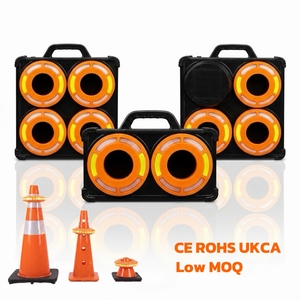
CE Synchronized Traffic Cone Light Beacon Warning Commander Strobe Signal Obstruction LED Safety Light For Road Work Emergency
Wireless sequential blinking strobe beacon designed for high-risk highway maintenance and emergency road closure mitigation.
Get Catalog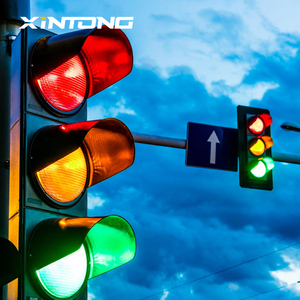
Xintong 200/300/400mm Intelligent LED Traffic Signal Light with Countdown Timer for Vehicle
Heavy-duty poly-carbonate and aluminum housing intersection signal with dynamic numeric timing and ultra-low power drive.
Get Catalog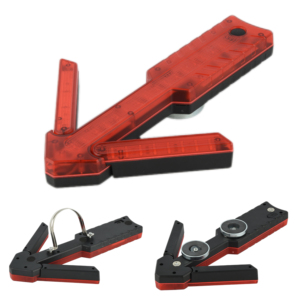
32PCS LED Road Safety Folding Arrow Rechargeable Warning Lights For Car Truck Traffic Beacon Lamp Emergency Signal Cone Light
Portable magnetic folding arrow array for rapid deployment by emergency responders and heavy equipment transport teams.
Get Catalog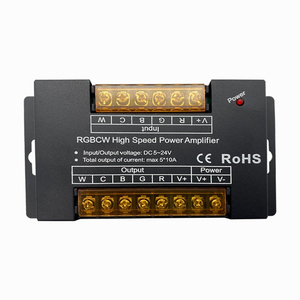
Voltage DC5-24V RGBWC signal amplifier led strip light signal repeater
Industrial-grade PWM signal amplifier designed for expanded architectural emergency guide lines and perimeter lighting setups.
Get Catalog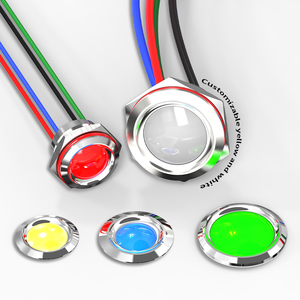
LANBOO Tri-Color LED Indicator Light 16mm 19mm 22mm 25mm Metal Panel Mount IP68 Common Anode Cathode 5-24V 220V
Vandal-proof stainless steel panel mount indicators engineered for industrial control stations and critical status feedback.
Get Catalog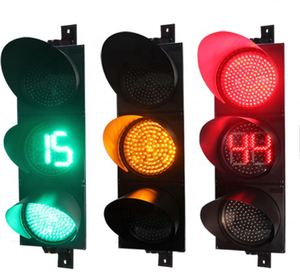
12-24V DC 100-277V AC 300mm High Brightness LED Traffic Signal Lights with Red/Yellow/Green Colors for Road Safety
Long-range visual acquisition light head built with UV-stabilized Fresnel lenses and integrated surge suppression modules.
Get Catalog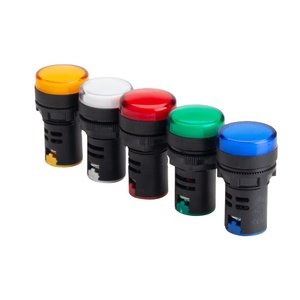
LVBO Wholesale 16MM/22MM Plastic LED signal Light AD16-22DS Industrial signal Indicator Light Indicator Lights
Cost-optimized, long-life industrial indicator lamps suitable for power distribution panels, control desks, and emergency machinery.
Get Catalog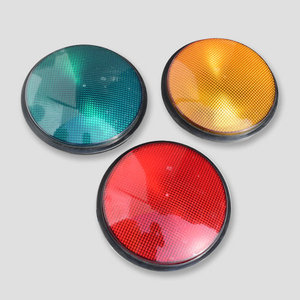
En12368 Certified Led Traffic Light Signal Module for Highway and Urban Intersection Safety
Strictly audited optical signal engine providing precise chromaticity and phantom-light resistance under direct sunlight exposure.
Get CatalogEngineering Blueprint: Next-Generation Emergency Lighting Compliance & Manufacturing
In modern industrial infrastructure, commercial real estate, and municipal transport networks, CE certified emergency lighting and emergency warning signal hardware serve as the foundational pillar of life safety systems. Emergency lighting is not merely an auxiliary illumination layer; it is a critical safety control mechanism mandated by international building codes, fire safety directives, and Occupational Health and Safety Management Systems (ISO 45001).
As a verified manufacturer operating an integrated 29,000+ square foot facility in MIDC Bhosari, Pune, our organization has engineered emergency beacons, traffic strobes, and signal systems for over three decades. Our in-house manufacturing architecture combines high-speed Surface Mount Technology (SMT) component placement, automated optical potting, environmental IP testing chambers, and full-spectrum photometric goniophotometer measurement systems.
Rigorous CE & EN Compliance
Full alignment with EN 60598-2-22 (Particular requirements for emergency lighting), EN 50172 (Emergency escape lighting systems), and EN 12368 for traffic visual signals, guaranteeing zero compliance friction during international tenders.
In-House Circuit & SMT Design
Constant-current driver topology paired with transient voltage surge suppressors (TVSS). Eliminates micro-strobe flicker and prevents premature battery degradation under unstable voltage conditions (110V–277V AC or 12V–24V DC).
Export-Ready Global Logistics
Delivering fully documented OEM/ODM consignments to over 5+ international regions including Europe, UAE, Nepal, Bangladesh, Sri Lanka, and Africa with certified sea-worthy palletization and clear HS code classification.
Future Procurement Trends in Emergency Lighting (2025–2030)
Procurement directors, municipal buyers, and EPC project leaders are shifting away from traditional emergency fixtures toward intelligent, low-maintenance, sustainable hardware. Analyzing international market intelligence, four core technological transitions define the future procurement landscape:
1. Transition to LiFePO4 (Lithium Iron Phosphate) Energy Storage
Legacy Nickel-Cadmium (Ni-Cd) and Lead-Acid battery technologies are rapidly being phased out across European and North American markets due to environmental toxicity directives (RoHS) and thermal vulnerability. Modern CE-certified emergency lighting systems utilize integrated LiFePO4 battery management systems (BMS). LiFePO4 provides 2,000+ charge-discharge cycles—over three times the operational lifespan of traditional Ni-Cd cells—while exhibiting superior thermal stability up to 65°C without thermal runaway risk.
2. Centralized DALI-2 & Wireless Self-Testing Ecosystems
Manual physical inspection of emergency lighting fixtures in commercial complexes is costly and prone to human error. Future-proof procurement specifications demand DALI-2 (Digital Addressable Lighting Interface) protocol compliance or wireless Mesh-based self-testing modules. These intelligent systems automatically conduct periodic functional and duration tests according to EN 50172 guidelines, transmitting failure alerts (e.g., driver fault, battery degradation, luminaire failure) directly to central Building Management Systems (BMS).
3. High Optical Efficiency & Dynamic Escape Route Photometrics
Energy efficiency targets now mandate emergency luminaires to deliver higher lumen output per watt (lm/W) during battery-discharge mode. Advanced custom Fresnel lenses and asymmetrical optical distributions ensure that escape routes receive uniform illumination without visual glare, allowing emergency exit paths to be identified from distances exceeding 30 meters under high-smoke density conditions.
4. Hybrid Solar & Grid-Tied Off-Grid Warning Systems
For highway roadworks, remote tunnel portals, and critical transit nodes, emergency warning lights are increasingly incorporating dual-input power architectures. Integrated High-Efficiency MPPT (Maximum Power Point Tracking) solar charge controllers enable beacons to operate on zero grid power during daylight hours while maintaining continuous 3-to-5-day battery autonomy during sustained inclement weather.
Technical Development & Hardware Engineering Framework
Engineered resilience under severe operating conditions requires strict thermal management, robust ingress sealing, and high-purity material selection. Below is an engineering comparison matrix detailing standard commercial emergency lights versus our industrial CE-certified manufacturing benchmark:
| Technical Parameter | Standard Commercial Grade | Industrial CE Certified Benchmark (Our Plant) |
|---|---|---|
| Operating Temperature | -5°C to 40°C | -20°C to 65°C (Extended Industrial Grade) |
| Battery Chemistry & Life | Ni-Cd / Lead Acid (300-500 cycles) | LiFePO4 with Smart BMS (2000+ cycles) |
| Ingress Protection (IP) | IP20 – IP54 (Basic dust proof) | IP65 – IP68 (Dust-tight & Continuous Submersion) |
| Housing Material | Recycled ABS plastic | UV-Stabilized Polycarbonate & Die-Cast Aluminum |
| Driver Topology | Linear resistor limiters | Isolated Constant-Current with TVSS Surge Protection |
| Compliance Standard | Basic CE Mark (Self-Declared) | Certified EN 60598-2-22, EN 50172, EN 12368, ISO 9001 |
Our engineering design process utilizes finite element thermal analysis to optimize heat dissipation pathways away from high-power LED dies. By maintaining junction temperatures below 75°C, our emergency lights achieve an L70 lifetime rating exceeding 50,000 continuous operating hours, ensuring zero lumen depreciation during life-safety deployments.
Enterprise Advantage: Why Global Buyers Partner With Us
Choosing an emergency light manufacturer requires evaluating raw manufacturing depth, quality control protocols, and direct engineering accountability. Operating from our modern manufacturing infrastructure in Pune's industrial hub, we provide distinct operational benefits for B2B buyers, EPC contractors, and global OEM partners:
Single-Roof Integrated Production
From raw sheet metal CNC punching, aluminum pressure die-casting, and robotic SMT PCB assembly to final polyurethane potting and photometric testing, 100% of manufacturing processes take place inside our 29,000 sq. ft. plant.
Complete Quality Traceability
Our facility operates under rigorous ISO 9001:2015 (Quality Management), ISO 14001:2015 (Environmental Management), and ISO 45001:2018 (Occupational Health & Safety) frameworks. Every batch receives individual serial tracking and a comprehensive Manufacturer Test Certificate.
Flexible OEM / ODM Customization
We provide custom input voltage ranges (12V DC, 24V DC, 110V AC, 277V AC), tailored optic beam angles, custom metal bracketry, private labeling, and regional pictogram designs tailored to destination market safety regulations.
Frequently Asked Questions (Procurement & Technical FAQ)
Addressing common technical, legal, and logistical inquiries raised by B2B buyers, electrical engineers, and tender committees.
Q: What specific directives must a CE Certified Emergency Light satisfy for European import?
A: CE certification for emergency lighting requires compliance with the Low Voltage Directive (LVD 2014/35/EU), Electromagnetic Compatibility Directive (EMC 2014/30/EU), and specific product standard EN 60598-2-22. For visual traffic or emergency signal beacons, compliance with EN 12368 is also required to verify chromaticity and light intensity limits.
Q: What emergency backup duration is standard for your emergency light fixtures?
A: Standard emergency lighting fixtures offer 1-hour or 3-hour backup durations via internal LiFePO4 batteries upon loss of AC grid power. Custom emergency beacon systems can be configured with extended battery banks or external solar power units for 24 to 72 hours of uninterrupted operation.
Q: How do your emergency lights prevent battery damage during prolonged storage?
A: All electronics assemblies feature integrated deep-discharge protection circuits within the Smart BMS. If storage extends without power connection, the system automatically enters an ultra-low micro-amp sleep mode, preventing battery cell reversal or permanent capacity degradation.
Q: Do you provide photometrics (IES/LDT files) for lighting design calculations?
A: Yes. We supply complete photometric test reports including IES and LDT file formats generated in our darkroom goniophotometer laboratory. Electrical design engineers can directly import these files into Dialux or Relux software for precise illuminance calculations.
Q: What is the typical production lead time for international container orders?
A: Standard catalog products ship within 2 to 3 weeks from drawing approval. Custom OEM production runs or specialized project orders (e.g., custom housing colors, specific DALI-2 programming) typically ship in 3 to 5 weeks depending on volume.
Q: Can your products withstand severe coastal or high-humidity outdoor environments?
A: Absolutely. Industrial models utilize UV-stabilized polycarbonate lenses, marine-grade aluminum housing with thermoset polyester powder coating, stainless steel 316 hardware, and IP68 silicone gaskets to prevent moisture ingress, salt spray corrosion, and chemical degradation.
Q: What documentation accompanies an export shipment for customs and auditing?
A: Every export shipment includes Commercial Invoices, HS-coded Packing Lists, Certificate of Origin (COO), CE Declaration of Conformity (DoC), Factory Acceptance Test (FAT) reports, and detailed English installation schematics.
Request Custom Product Specifications & Factory B2B Pricing
Speak directly with our senior optical and electrical engineering team. Get comprehensive technical datasheets, photometrics, compliance certificates, and competitive OEM wholesale quotations for your upcoming infrastructure projects.