A 100mm compact traffic signal is a small-format signal head designed for locations where space is limited and clear indications still matter. Picture a narrow street corner, a compact pole, and a bright red, amber, or green lens visible above the waiting line. The 100mm measurement refers to the nominal aspect diameter; it does not, by itself, describe brightness, visibility, or suitability for every site. Those details depend on the complete signal design and installation.
The distinction matters. A smaller signal can help reduce visual bulk, but it must remain legible in its setting. The Federal Highway Administration’s Manual on Uniform Traffic Control Devices treats signal placement, visibility, and consistent operation as core elements of traffic control. Safety data also underline the stakes: the Insurance Institute for Highway Safety reports that 1,149 people were killed in crashes involving red-light running in the United States in 2022. That figure is not specific to compact signals, but it shows why signal performance deserves careful attention.
This guide explains what 100mm compact traffic signals are, where they may be used, and which specifications deserve scrutiny. Look beyond the diameter. Check the signal’s documented performance, construction, and intended application. One sourcing note: no verifiable expert quotation or source article was provided, so I have not invented a named specialist’s statement. A sourced quotation should be added only after its wording and attribution are confirmed.
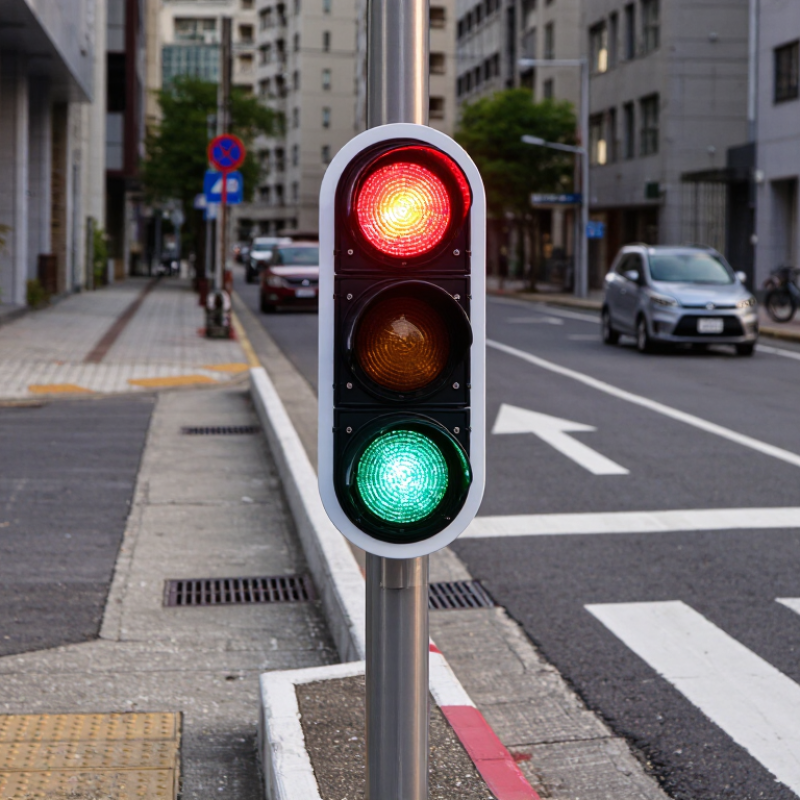
A 100mm compact traffic signal is a signal head whose illuminated aspect is typically about 100 millimetres across. The figure usually describes the lens or light aperture, not the full housing. Exact measurement conventions can vary by project specification. Its purpose is to show a clear instruction, such as stop or proceed, within a small physical footprint. Compact housings may suit narrow streets, parking areas, or sites where larger equipment could obstruct sightlines. But compact does not mean universally suitable. Viewing distance, mounting height, background clutter, and ambient light all affect how easily people can see the signal.
A typical unit combines colored aspects with a weather-resistant casing. Visors may help reduce glare or confusion from nearby lights. LED elements are common, though visibility and reliability still depend on product quality and maintenance. Installers should check that each aspect is visible from the intended approach and unobstructed by signs, branches, or parked vehicles. Small details matter. At a distance, a 100mm aspect may be harder to read than a larger one. The label alone tells only part of the story; site-specific visibility checks still matter.
A 100mm compact traffic signal uses a nominally 100-millimeter lens, about 3.9 inches across. The measurement describes the circular signal face, not the full housing. That distinction matters. A rim, gasket, and visor can make the assembled unit noticeably wider.
Behind the lens, an LED module creates the light, while optical elements help distribute it across the face. The housing protects these parts from weather and dust. Wiring connects the signal to its control system, and mounting hardware holds it in position. A short visor can reduce glare from nearby sunlight, though its effect depends on placement and surroundings.
Compact does not mean miniature in every respect. The 100mm face may suit installations where space is limited, but visibility depends on viewing distance, brightness, angle, and ambient light. Check the manufacturer’s dimensional drawing before designing a bracket; nominal lens size alone is not enough. I have seen small differences between the stated lens diameter and the visible opening cause avoidable fitting confusion. A ruler helps, but it cannot tell you whether the signal will be clear from the driver’s approach.
A 100mm lens is approximately 3.94 inches across. The chart compares this compact size with other commonly used traffic-signal lens diameters.
Key components: the lens or optical cover shapes and protects the light; the light source produces the signal; the housing holds the assembly; and a visor can help shade the lens and limit unwanted reflections. A smaller 100mm aspect is suited to compact applications where visibility and installation requirements allow it. Actual size requirements vary by application and local standards.
A 100mm compact traffic signal uses a lens about 100 millimetres wide to display clear, familiar traffic instructions in a smaller signal head. Its message comes from the lit colour and, where fitted, an arrow. Red tells drivers to stop. Green permits movement when the route is clear and conditions allow. Amber warns that the signal is changing; it is not an invitation to speed up. The exact sequence and timing depend on the intersection.
The signal head displays instructions sent by a traffic controller. That controller follows a programmed sequence and may also respond to vehicle detectors. The compact size can suit locations with limited mounting space, but visibility still matters. A signal partly hidden by a branch, dirt, or glare may be harder to read. Small does not mean effortless to see.
Tips: Scan the signal early, then check the stop line and nearby traffic. Keep the lens and its surroundings clear during routine maintenance. If an arrow is lit, follow its direction rather than assuming the main green signal applies. At some intersections, the layout can feel counterintuitive; pause and read the indications carefully.
A 100mm compact traffic signal uses smaller signal lenses than standard road-scale units. Its reduced size can suit controlled spaces where drivers or pedestrians approach slowly and stand close to the signal. Common locations include parking garage exits, private access roads, loading areas, and narrow internal lanes. It is not automatically suitable for every small road. Viewing distance, background clutter, and approach speed still matter.
At a parking exit, a signal can help separate vehicles from a busy pedestrian walkway. At a gated site entrance, it may indicate when a vehicle can proceed through a single-lane passage. Compact signals can also serve indoor facilities, such as warehouses, when mounted where operators can see them from their working position.
Placement should account for turning vehicles, parked equipment, glare, and obstructions. A signal hidden behind a post is not useful. Small units may be harder to notice outdoors, especially in bright daylight.
Tips: Check visibility from the actual approach path, not just from directly below the unit. Confirm mounting height, wiring, and control logic with a qualified installer. Keep the lens clean, and test the signal after installation. One detail is easy to overlook: a clear view in daylight may change at night.
A 100mm compact traffic signal typically refers to a signal head with a 100mm lens. Its smaller face can suit restricted spaces, such as narrow streets, site entrances, or locations with limited mounting room. The reduced size may also make the installation look less visually dominant. A tidy fit.
Compact does not automatically mean suitable. Drivers need enough time and distance to recognize each indication, especially at faster approaches or in bright sunlight. Buildings, parked vehicles, and sharp bends can further reduce visibility. At wider intersections, a larger signal may be easier to see. Check the viewing angle, mounting height, ambient light, and expected users before choosing a compact unit. I would not judge suitability from lens size alone; a site visit can reveal problems that a drawing misses. Local engineering requirements should also be checked, since permitted applications and specifications vary. A smaller signal can solve a space problem, but it cannot compensate for poor placement.
Its lens is about 100 millimetres wide. The smaller signal head can suit places with limited mounting space. Small does not mean easy to see.
Red means stop. Green permits movement when the route is clear and conditions allow. Amber warns that the signal is changing. Do not treat it as a reason to speed up.
Follow the arrow’s direction. Do not assume the main green signal applies to every movement. Check the stop line, too.
A traffic controller runs a programmed sequence. It may also respond to vehicle detectors. Timing varies by intersection.
They can be used at parking garage exits, private access roads, loading areas, and narrow internal lanes. Warehouses may use them where operators can see them.
Not automatically. Viewing distance, approach speed, and background clutter matter. A small road can still need a larger or differently placed signal.
Branches, dirt, glare, parked equipment, or a post can block the view. Bright daylight may also reduce visibility. Check from the actual approach path.
Confirm mounting height, wiring, and control logic with a qualified installer. Keep the lens and nearby area clear. Test the signal after installation. A view that seems clear from below may mislead; check again from where people approach.
A 100mm compact traffic signal is a small-format signal designed to give clear, simple instructions where a full-size unit may be impractical. The “100mm” refers to the approximate diameter of its lens, while the complete assembly typically includes colored light sources, lenses, a housing, and mounting hardware. By illuminating different colors in sequence, it communicates whether road users should stop, proceed, or take care.
100mm compact traffic signals can be used at pedestrian crossings, cycle routes, private access points, parking areas, and other locations with limited space or lower traffic speeds. Their compact size can make them easier to install and less visually intrusive, but it may also reduce how far away they are readily visible compared with larger signals. Their suitability therefore depends on viewing distance, surrounding conditions, and the needs of the location.