Pedestrian traffic signals guide people across busy roads with clear visual and audible instructions. A red standing figure means wait, while a walking figure signals permission to cross. Some intersections also display countdown numbers, helping pedestrians judge whether enough time remains. These signals communicate with drivers, cyclists, and people using mobility devices at the same crossing.
The system usually works through a programmed controller connected to vehicle signals, push buttons, detectors, and crossing lights. When a pedestrian presses the button, the controller may request a crossing phase. It then coordinates traffic movements, warning intervals, and the time needed to reach the opposite curb. Audible beeps or vibrating surfaces can support people with visual impairments. Tactile paving can also identify the crossing edge.
Good design depends on engineering judgment, local traffic patterns, road width, and pedestrian speed. Transportation agencies typically follow technical standards, but settings can differ between cities. A countdown may feel reassuring, yet it does not guarantee that every person can cross safely before traffic moves. Weather, crowding, distraction, and damaged equipment can change real conditions.
The technology is useful, not perfect.
Understanding these signals helps people make safer decisions without treating the displayed symbol as a complete safety guarantee. Drivers must still yield when required, and pedestrians should check approaching traffic before stepping forward. This article explains the main signal faces, timing stages, detection methods, accessibility features, and common limitations. It also considers why a signal may appear confusing in practice.
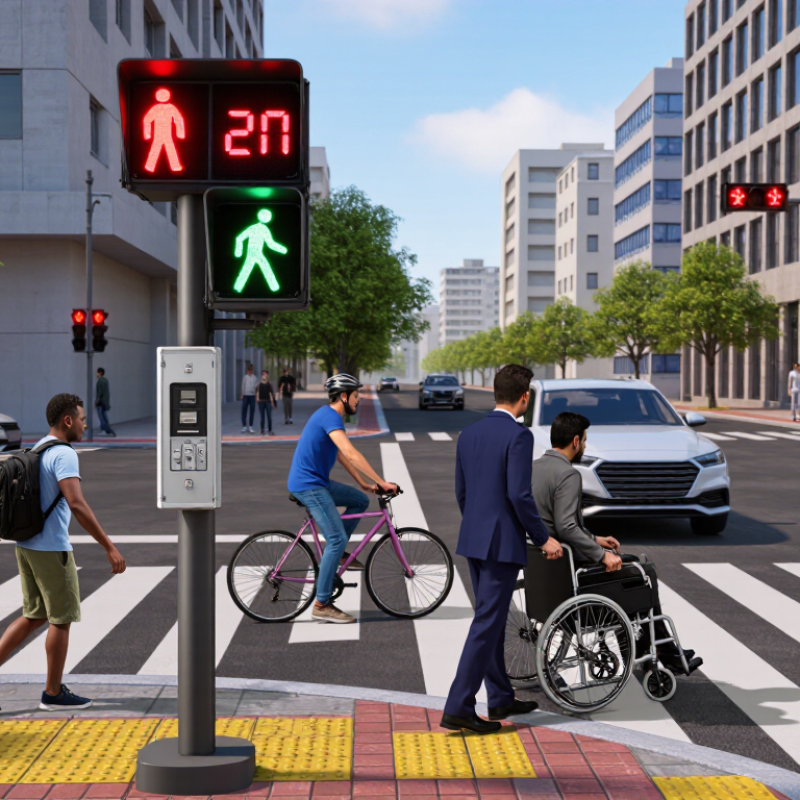
Pedestrian traffic signals are street-level instructions for people walking, cycling, or using mobility devices. They show when to wait, walk, or finish crossing safely. Their importance extends beyond convenience. A clear symbol can protect a child near a busy junction. It can also guide older adults across wide roads. Timing matters.
Most systems use illuminated walking and raised-hand symbols. A push button may request a crossing phase, while sensors can detect waiting pedestrians. During the walk interval, people cross; a flashing hand warns newcomers not to start. A countdown display shows the remaining seconds, although it does not promise everyone will finish. At complicated intersections, audible tones and vibrating surfaces help people with limited vision identify the signal. Visibility matters.
From observing crossings, I have noticed that placement often affects behavior as much as color. A button hidden behind a pole can be missed, especially during rain or crowded periods. Short crossing times may pressure people using mobility aids. Professional design reviews consider sight lines, traffic speed, walking distance, and accessibility standards. Still, no signal removes every risk. People may watch only the vehicle light or step forward before the symbol changes. That gap matters. A wet button, blocked curb ramp, or faded lens can change a careful decision within seconds.
A pedestrian signal system uses several parts to guide people across a roadway. The signal head displays a walking person or a raised hand. Its bright lens must remain visible in sunlight, rain, and nighttime glare. A countdown timer shows how many seconds remain before crossing ends. These numbers help pedestrians judge their pace instead of guessing.
The push button sends a request to the signal controller. Usually, it sits on a sturdy pole near the curb, within comfortable reach. The controller coordinates vehicle lights, pedestrian displays, and crossing intervals. Some systems also provide audible tones or vibration for people with limited vision or hearing. Road markings, curb ramps, and warning signs support the signal, but they do not replace careful observation. In field checks, I have noticed that a working button can still confuse users when its location is poorly marked. Small design details matter.
Tips: Stand near the curb, not in the roadway. Press the button once and wait for the walking symbol. Check both directions before moving. Keep watching while crossing, because turning vehicles may not stop perfectly. Countdown numbers are useful, but they are not a guarantee of extra time. Weather, glare, blocked signs, and distracted drivers can reduce safety. Signal timing also varies between intersections. A system may function correctly and still feel difficult to understand. That deserves review.
Pedestrian traffic signals translate a person’s crossing request into timed movements. At an intersection, pressing the push button sends a call to the signal controller. The controller checks vehicle phases, opposing pedestrian movements, and available clearance time. It then stops conflicting traffic before displaying WALK. Simple, but not automatic.
The Federal Highway Administration’s Manual on Uniform Traffic Control Devices explains the sequence clearly. WALK allows pedestrians to begin crossing. Flashing DON’T WALK means new crossings should not start, while people already crossing may continue. Steady DON’T WALK prohibits entry. A countdown display shows the remaining clearance interval, helping pedestrians judge distance and walking speed. Accessible signals may add audible tones, speech messages, and vibrating surfaces. These details matter for people with limited vision or hearing.
Signal timing also depends on crossing length, traffic speed, and pedestrian demand. Some intersections call the phase only after someone presses the button; others serve pedestrians every cycle. The FHWA reports crash reductions of about 47% for rectangular rapid-flashing beacon treatments and 55% for pedestrian hybrid beacons. These figures are useful, not universal guarantees. NHTSA’s 2023 traffic fatality data recorded 7,314 pedestrian deaths, showing why movement control remains important. Yet a compliant signal can still feel confusing when buttons are hidden, markings have faded, or drivers stop beyond the line. Engineers should review real crossing behavior, not timing sheets alone. Mistakes happen. That review cannot be skipped.
Pedestrian traffic signals divide a road crossing into clear, timed phases. A steady WALK symbol tells people to begin crossing, while a flashing raised hand warns that the starting period has ended. The steady hand means pedestrians should not enter the roadway. These signals work with vehicle lights, turning controls, and crossing distances.
Timing matters more than many people realize. During a typical phase, vehicles stop first. Pedestrians then receive a WALK interval, often followed by a flashing clearance interval. The clearance time should allow someone already crossing to reach a safe refuge or sidewalk. The Federal Highway Administration’s Manual on Uniform Traffic Control Devices bases clearance timing on crossing distance and walking speed, rather than guesswork alone. A longer crossing needs more time.
Some intersections use a leading pedestrian interval. It gives pedestrians several seconds to move before vehicles receive a green signal. This can improve visibility, especially where turning vehicles commonly cross the walking path. The National Highway Traffic Safety Administration reported 7,522 pedestrian deaths in the United States in 2022, the highest number recorded since 1981. That figure shows why phase design deserves careful attention. The World Health Organization also identifies pedestrians as a major vulnerable road-user group worldwide. Still, timing cannot solve every problem. Blocked sightlines, poor lighting, and hurried decisions remain real weaknesses. A signal may be working correctly, yet a person can still feel uncertain in the middle of a wide intersection.
Example signal phases for a 100-foot road crossing
The WALK phase tells pedestrians to begin crossing. The flashing DON'T WALK phase provides clearance time, calculated here at approximately 3.5 feet per second. The steady DON'T WALK phase stops new crossings before the next signal cycle.
Pedestrian traffic signals guide people across roads through clear visual and audible instructions. A steady walking figure means crossing may begin. A flashing hand warns that the remaining time is limited. The steady hand means pedestrians should wait for the next cycle. This sequence reduces guesswork at busy intersections.
Safety improves when signals address different abilities. Raised push buttons help people identify controls by touch. Audible tones can support pedestrians with limited vision. Tactile arrows show the crossing direction. Bright signal borders improve visibility in rain, glare, and evening shadows. Some crossings also provide countdown displays, allowing people to judge whether they can finish safely. These features seem simple, but placement matters.
Timing matters greatly. A longer crossing interval can help older adults, children, and wheelchair users move without rushing. A leading pedestrian interval gives walkers a short head start before turning vehicles receive permission to move. Detection systems may extend the crossing period, although they are not perfect in every condition. In field inspections, blocked buttons, faded markings, or tree branches can weaken careful design. A countdown may also pressure people to hurry. Clearer timing and regular maintenance deserve equal attention.
It guides people across a roadway using symbols, countdown numbers, sounds, and vibrations. It coordinates pedestrian movement with vehicle traffic. Simple, but not automatic.
A steady walking figure means pedestrians may begin crossing. A flashing hand warns that new crossings should not start. A steady hand means wait for the next cycle.
Pressing the button sends a crossing request to the signal controller. The controller checks traffic phases and available crossing time. Press once, then wait.
It shows how many seconds remain in the crossing interval. This helps pedestrians judge distance, walking speed, and remaining time. It is not extra time.
Stand near the curb, not in the roadway. Press the button once and wait for the walking symbol. Check both directions before stepping forward.
Turning vehicles may enter the crossing unexpectedly. Distracted drivers, glare, rain, or blocked signs can reduce safety. Stay alert.
Audible tones, speech messages, vibrating surfaces, raised buttons, and tactile arrows can provide additional guidance. Bright borders also improve visibility during rain and evening glare.
Yes. A hidden button, faded road marking, or overhanging tree can make a system difficult to understand. I may have underestimated these small failures. Real crossing behavior deserves review.
Pedestrian traffic signals are essential tools that organize how people cross roads and interact with vehicle traffic. They use clear visual symbols, such as walking and waiting indicators, to show when crossing is permitted and when pedestrians should remain on the sidewalk. A complete system may include signal heads, push buttons, countdown displays, audible alerts, pavement markings, and supporting control equipment. Together, these parts help make crossing instructions easier to understand for people of different ages and abilities.
The signals manage crossing movements by dividing traffic and pedestrian activity into carefully timed phases. When vehicles are stopped or assigned a safe turning condition, the pedestrian phase begins, allowing people to cross in a designated direction. Flashing warnings may indicate that the crossing period is ending, while countdown timers communicate how much time remains. Accessible features, improved visibility, tactile surfaces, refuge areas, and audible or vibrating notifications can further support safer and more independent travel.
