[email protected] +91-70303 60044 MIDC Bhosari, Pune, India
0%

Choosing China’s top Traffic signal countdown timers requires more than comparing prices and product photos. A reliable choice begins with the road environment, signal controller, installation method, and maintenance plan. Urban intersections may need bright displays, wide viewing angles, weather resistance, and stable operation through rain, dust, and temperature changes. Highway approaches may require different visibility distances and mounting structures.

Experienced buyers should examine LED brightness, digit size, timing accuracy, communication protocols, power consumption, and enclosure protection. Ask suppliers for technical drawings, test records, sample units, and clear warranty terms. A professional manufacturer should explain how its timer connects with existing traffic signal systems. It should also identify compatibility limits instead of promising that every model fits every intersection. Small details matter. A loose connector can create serious maintenance work.

Factory experience is useful, but it does not replace independent verification. Check production quality, component sources, software functions, and after-sales response before placing a large order. Request a pilot installation at one intersection. Observe the display during bright noon, heavy rain, and nighttime traffic. The result may reveal issues that a laboratory document misses.

A low quotation can seem attractive. However, hidden costs may appear through custom brackets, shipping, installation, or replacement parts. I have seen product decisions focus too heavily on appearance. That approach can overlook synchronization and field servicing. The best selection balances safety, compatibility, durability, documentation, and long-term support. This guide explains the key questions buyers should ask when evaluating Chinese suppliers and choosing countdown timers with greater confidence.
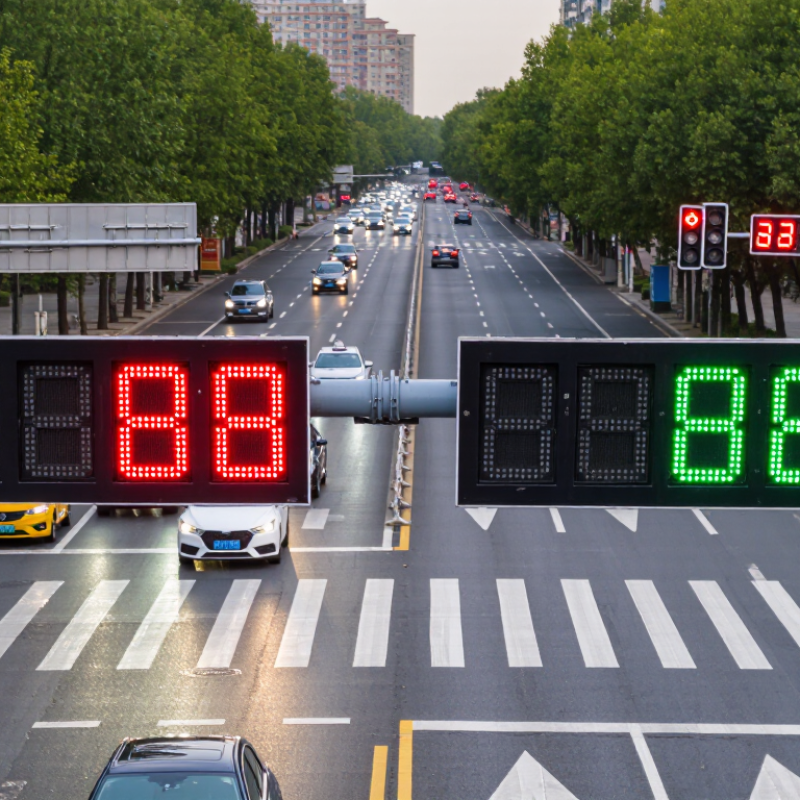
China Top Traffic Signal Countdown Timers How to Choose?

What Are Traffic Signal Countdown Timers and How Do They Work?

A traffic signal countdown timer is an electronic display beside a traffic light. It shows the remaining seconds for a red, yellow, or green phase. Drivers and pedestrians can read the changing numbers from a distance. The timer normally receives phase information from the traffic signal controller. Its internal processor converts that information into a clear LED countdown. When the signal changes, the display resets automatically.

In practice, accurate synchronization matters more than large digits alone. A reliable unit should match the controller’s communication method and timing logic. It also needs strong contrast, weather protection, and stable brightness during rain or direct sunlight. For wide roads, viewing distance should guide the digit size. Maintenance teams should check heat, moisture, cable connections, and nighttime glare during site testing.

Field inspections often reveal small problems that product sheets miss. A timer may look clear in a factory but become difficult to read under afternoon sunlight. Timing can also become confusing if the controller changes its phase unexpectedly. This is why installers should test several signal cycles before approval. I would not choose the cheapest display without checking test records, electrical safety, environmental ratings, and local installation requirements. Even a well-designed timer needs regular inspection. Uptime is never automatic.

Why China Is a Leading Source of Traffic Countdown Timers

Why China Is a Leading Source of Traffic Countdown Timers

China has become a leading source of traffic countdown timers through deep manufacturing capacity and flexible engineering. UNIDO’s International Yearbook of Industrial Statistics 2024 identifies China as the largest contributor to global manufacturing value added. This matters when projects need LED modules, controller boards, metal housings, and complete signal assemblies. Suppliers can often adjust digit size, brightness, enclosure design, and communication protocols for different intersections. The range is practical. The quality is not always consistent.

The World Health Organization reported about 1.19 million annual road deaths in its Global Status Report on Road Safety 2023. A countdown timer cannot solve unsafe road design, but it can make signal changes easier to understand. Buyers should check visibility at 100 metres, viewing angles, IP protection, temperature tolerance, timing accuracy, and controller compatibility. Independent laboratory testing is more reliable than a product sheet alone. This is where some purchasing decisions become weak. Low price may hide poor sealing or uneven LED brightness.

Tips: Request a sample before bulk production. Test it during rain, glare, and night operation. Confirm the timer follows local signal standards and emergency-control logic. Ask for photometric data, service records, and spare-part availability. China’s supply advantage is real, but careful verification still matters. A cheaper unit is not always the better choice.

Which Types of Countdown Timers Fit Your Traffic System?

Choosing a traffic countdown timer starts with the signal system, not the display size. Vehicle timers suit fixed-time intersections with predictable traffic flows. They show drivers the remaining red or green phase clearly. However, they can mislead drivers when signal timing changes frequently.

Adaptive intersections need timers that receive real-time controller data. These units must update immediately when detection equipment changes a phase. A delayed display creates confusion. Compatibility testing is essential before installation. Technicians should check communication protocols, voltage, cabinet space, and emergency priority functions. A bright display is not enough.

Pedestrian countdown timers fit crossings near schools, transit stops, and busy commercial streets. They should show the remaining crossing interval with clear symbols and strong contrast. For wide roads, larger digits improve visibility from the far curb. Solar-powered models may help at remote locations, but battery performance can weaken during long cloudy periods. This detail is easy to overlook.

Mixed traffic environments may require separate vehicle and pedestrian timers. Engineers should review speed limits, lane numbers, weather, and nighttime visibility before selecting a type. Field teams often test the timer during rain and peak traffic, not only under ideal conditions. That practical step reveals problems early. A timer that works in a workshop may still perform poorly beside a dusty, vibrating roadway. Reliable selection depends on measured conditions and local traffic regulations.

China Top Traffic Signal Countdown Timers How to Choose? - Which Types of Countdown Timers Fit Your Traffic System?

Countdown Timer Type Best-Fit Traffic System Typical Display Common Digit Size Typical Visibility Distance Installation Position Main Advantages Key Selection Point
Pedestrian Signal Countdown Urban crosswalks, school zones, transit stops, and pedestrian crossings Usually 2-digit seconds; red standing-person and green walking-person phases may be supported Approximately 100–300 mm Approximately 30–100 m, depending on digit height and viewing conditions Mounted beside or integrated with the pedestrian signal head Improves crossing-time awareness and supports clearer pedestrian decisions Confirm compatibility with pedestrian signal phases and local accessibility requirements
Vehicle Signal Countdown Signalized intersections with fixed or coordinated vehicle phases Usually 2-digit seconds for red, green, or selected phase countdowns Approximately 200–400 mm Approximately 60–150 m, subject to road geometry and optical performance Attached to the vehicle signal pole, mast arm, or signal housing Provides drivers with advance information about phase changes Use only where the controller can provide reliable, synchronized phase data
Fixed-Time Countdown Intersections operating on predictable, pre-programmed signal plans Digital numerical countdown based on a programmed cycle Approximately 100–400 mm Approximately 30–150 m Integrated with or mounted next to the traffic signal head Simple configuration, lower integration complexity, and predictable operation Avoid use where traffic conditions frequently change the phase duration
Adaptive or Controller-Synchronized Countdown Adaptive signal control, coordinated corridors, and variable-phase intersections Real-time numeric countdown received from the traffic signal controller Approximately 200–400 mm Approximately 60–150 m Connected to the signal controller through a compatible wired or wireless interface Better suited to changing phase durations and coordinated signal networks Verify communication protocol, fail-safe behavior, latency, and controller certification
LED Matrix Countdown General urban intersections requiring high contrast and programmable symbols 7-segment or matrix-based numeric digits; some models support symbols Approximately 100–400 mm Approximately 30–150 m Traffic signal face, side-mounted cabinet, or overhead signal structure High brightness, low power consumption, and flexible display design Check daytime brightness control, viewing angle, pixel layout, and maintenance access
Solar-Powered Countdown Remote roads, temporary work zones, and locations with limited grid access LED numeric display powered by a photovoltaic panel and battery system Approximately 100–300 mm Approximately 30–100 m Pole-mounted with a solar panel, battery enclosure, and controller Reduces dependence on mains electricity and can simplify deployment Size the panel and battery for local sunlight, winter conditions, and operating hours
Portable or Temporary Countdown Road construction, event traffic, emergency control, and temporary crossings Single- or double-sided numeric LED display with portable control equipment Approximately 100–300 mm Approximately 30–100 m Temporary stand, trailer, barrier, or portable pole Fast deployment, relocation, and independent operation Prioritize weather resistance, battery runtime, stability, and simple programming
Selection note: The specifications above are typical planning ranges rather than universal standards. Final selection should be based on local traffic regulations, signal-controller compatibility, required viewing distance, enclosure protection, ambient temperature, power availability, and installation conditions.

How to Compare Features, Accuracy, Visibility, and Durability

China Top Traffic Signal Countdown Timers: How to Choose?

When comparing traffic signal countdown timers, start with the controller interface and display function. A timer should receive stable timing data from the signal controller, not operate from an isolated internal clock. Ask for test records showing synchronization accuracy, restart behavior, and timing drift. In field inspections, even a small delay can confuse drivers and pedestrians. Check whether the unit supports local power conditions and common communication methods. Documentation matters. Vague specifications deserve careful questioning.

Visibility changes with distance, sunlight, rain, and viewing angle. Compare LED brightness, digit size, contrast, and automatic brightness control. A very bright display may create glare at night. A weak display can disappear under direct sunlight. Inspect sample units outdoors, not only in a showroom. Look for clear digits through tinted windshields and across wide intersections. Human factors are easy to overlook.

Durability depends on more than a metal housing. Review ingress protection, impact resistance, surge protection, operating temperature, and corrosion resistance. Examine cable seals and mounting points closely. These small parts often fail first. Request thermal cycling and long-duration operation records when available. My own mistake was trusting a high protection rating without checking installation quality. Poor drainage still caused trouble. Choose suppliers that provide traceable testing, installation guidance, spare parts, and responsive technical support. Reliability comes from the whole system.

What Standards, Installation Needs, and Support Should You Check?

China Top Traffic Signal Countdown Timers: How to Choose?

Selecting a traffic signal countdown timer starts with standards, not display size. FHWA’s 11th Edition MUTCD requires pedestrian countdown indications during the clearance interval in applicable U.S. installations. Other regions may follow different rules. Check local approval, photometric performance, symbol design, and controller compatibility before ordering. The FHWA Traffic Signal Timing Manual also links pedestrian timing to crossing distance and walking speed. A timer showing the wrong interval can confuse pedestrians.

Installation details matter in daily operation. Measure the driver’s and pedestrian’s viewing angles, mounting height, cable route, and cabinet capacity. Confirm voltage, communication protocol, surge protection, waterproofing, and operating temperature. The display should remain readable under direct sunlight and heavy rain. NCHRP Report 562 discusses pedestrian signal timing and user response, but equipment alone cannot solve poor intersection design. A bright display is not enough. Field conditions often expose problems that drawings miss.

Tips: Request a sample timing test before production. Check whether the unit supports yellow, red, and pedestrian phases required by local rules. Ask for photometric test records, IP ratings, wiring diagrams, spare-part availability, and response times. The World Health Organization reported about 1.19 million annual road deaths in its Global Status Report on Road Safety 2023. That figure demands careful design, although countdown timers are only one safety measure. Maintenance teams should receive clear manuals and practical training. A small oversight can become a daily hazard.

China Top Traffic Signal Countdown Timers: How to Choose?

Use this checklist to compare traffic signal countdown timers before purchase. The chart counts the main verification points in five practical areas: applicable standards, installation compatibility, display performance, electrical and environmental protection, and after-sales support.

Standards to review include GB 14886-2016 for road traffic signal setting, GB 14887-2011 for road traffic signal lamps, and the applicable Chinese standard for traffic signal countdown displays. Confirm the latest edition and local authority requirements before installation.

FAQS

Which countdown timer suits a fixed-time intersection?

A vehicle timer usually fits predictable red and green phases. It clearly shows drivers the remaining time. However, changing signal plans can make it misleading.

What does an adaptive intersection require?

It needs a timer connected to real-time controller data. The display must update when detection equipment changes phases. Test communication, voltage, cabinet space, and emergency priority functions.

Where are pedestrian countdown timers most useful?

They suit crossings near schools, transit stops, and busy shopping streets. Clear symbols and strong contrast help pedestrians. Wide roads may require larger digits.

Can solar-powered timers work at remote crossings?

They can reduce dependence on grid power. Long cloudy periods may weaken battery performance. Check local sunlight patterns before choosing one.

How should timer accuracy be checked?

Request synchronization, restart, and timing-drift test records. The timer should receive controller timing data. An isolated internal clock can become inaccurate.

What improves visibility in changing weather?

Compare digit size, contrast, LED brightness, and automatic brightness control. Inspect samples outdoors in sunlight and rain. Excessive brightness may create nighttime glare.

Which durability details deserve close inspection?

Check waterproofing, impact resistance, surge protection, temperature range, and corrosion resistance. Examine cable seals and mounting points. Small parts often fail first.

What installation information should technicians confirm?

Measure viewing angles, mounting height, cable routes, and cabinet capacity. Confirm voltage, communication methods, drainage, and operating temperature. Drawings may miss roadside dust and vibration.

Which standards and approvals should be reviewed?

Check local traffic regulations, approval requirements, photometric performance, and symbol design. Confirm the displayed interval matches the approved crossing timing. Brightness alone is not compliance.

What support should a supplier provide?

Request wiring diagrams, manuals, spare parts, test records, and practical training. Ask about technical response times. I once trusted a protection rating too quickly; installation quality still caused trouble.

Conclusion

Traffic signal countdown timers are electronic displays that show drivers and pedestrians the remaining time before a signal changes. By synchronizing with traffic lights, they improve road awareness, reduce uncertainty, and support smoother, safer traffic flow. China is a leading source because its manufacturers offer broad product options, efficient production, customization capabilities, and experience serving different road environments and project requirements.

When choosing Traffic signal countdown timers, consider the signal system, display type, communication method, size, color, visibility, energy efficiency, and compatibility with existing controllers. Accuracy and stable synchronization are essential, while weather resistance, impact protection, heat dissipation, and long service life help ensure reliable outdoor operation. Buyers should also verify applicable standards, installation space, wiring requirements, maintenance access, warranty terms, and technical support. A careful comparison of performance, durability, total cost, and after-sales service can help select timers that fit the traffic system and remain dependable over time.

Ethan

Ethan

Ethan is a professional marketing specialist with a strong understanding of the company’s products, services, and target markets. Through years of experience in product communication, customer research, and content strategy, he has developed the ability to explain complex features in a clear,......