Choosing the right 300mm highway traffic signals in 2026 requires more than comparing prices or viewing product photos. Global buyers must examine visibility, signal timing, housing strength, energy use, and installation compatibility. A bright red lens may look impressive, yet optical performance can change under rain, fog, dust, or direct sunlight. Practical evaluation matters.
This guide introduces leading 300mm highway traffic signals for international road projects, including LED modules, aluminum housings, polycarbonate lenses, mounting brackets, and controller connections. It considers viewing distance, operating temperature, ingress protection, vibration resistance, and maintenance access. These details affect safety and long-term operating costs. They also influence whether a signal suits urban interchanges, rural highways, tunnels, or temporary work zones.
Reliable suppliers should provide test reports, technical drawings, warranty terms, and traceable production information. Buyers should also confirm regional requirements before placing an order, because electrical ratings, mounting systems, and traffic-control standards differ between countries. Certification alone is not enough. Installation quality still matters.
Some product rankings remain subjective. Field conditions can expose weaknesses that laboratory tests miss. A signal that performs well on a dry test road may require better sealing in a coastal environment. This guide therefore treats specifications as evidence, not absolute proof. It encourages buyers to request samples, inspect documentation, and compare total ownership costs before making a final decision. Safety comes first, but procurement must remain realistic.
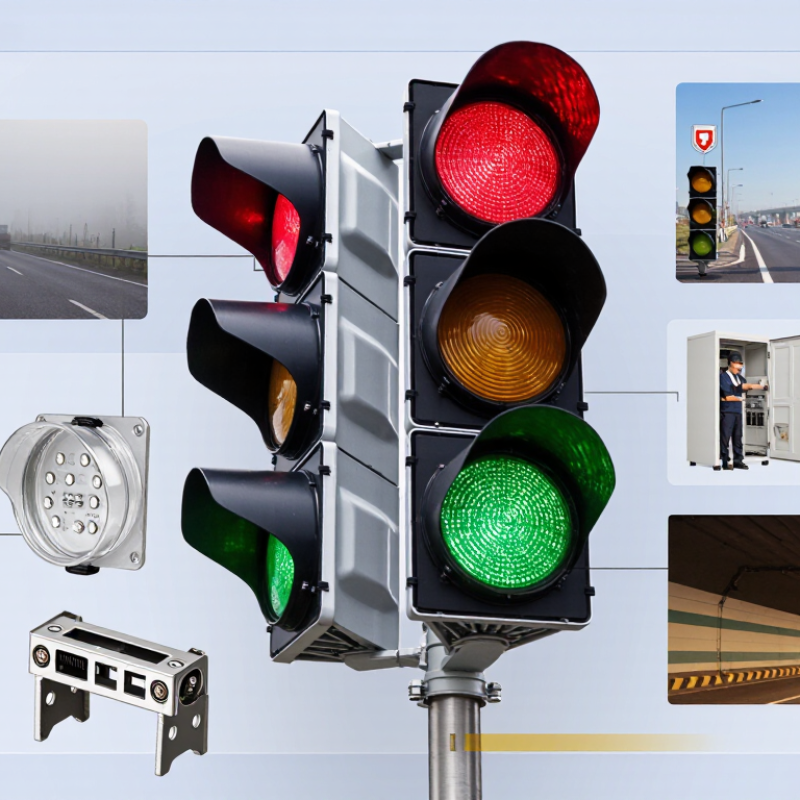
A 300mm highway traffic signal is a large signal head with a nominal 300mm lens diameter. It typically displays red, amber, and green indications for drivers and other road users. Its main role is to provide clear guidance at intersections, ramps, crossings, and high-speed approaches. The larger lens supports stronger visual recognition from longer distances. It also helps drivers react when traffic is dense or visibility changes.
For global buyers, signal performance depends on more than lens size. Optical design, LED intensity, viewing angle, weather resistance, and heat control all affect reliability. A durable housing can protect internal parts from rain, dust, vibration, and temperature changes. However, a larger signal does not solve every visibility problem. Poor installation height, glare, or blocked sightlines can still reduce safety. Field experience shows that maintenance access is often overlooked during purchasing. Buyers should check local technical requirements, mounting conditions, electrical compatibility, and replacement procedures before ordering.
Tips: Compare measured visibility data, not only product images. Ask for test records covering temperature, moisture, vibration, and LED aging. Confirm whether the signal remains readable through haze or strong sunlight. Leave room for inspection and cleaning. Small details matter.
Selecting a 300mm highway traffic signal requires more than checking its diameter. Field experience shows that visibility, durability, and compatibility often determine real performance.
Choose high-output LED modules with uniform light distribution and a clear viewing angle. Check the signal’s operating voltage, power consumption, and surge protection before installation. A wide temperature range matters in both desert heat and freezing conditions. Look for sealed housings with suitable IP protection against rain, dust, and road spray. Polycarbonate lenses can reduce impact damage, but their optical clarity must remain stable over time.
Mounting hardware should match local poles, brackets, and wind conditions. Confirm cable entries, terminal access, and controller compatibility during the design stage. Small wiring differences can delay an entire intersection project. Verify photometric data at the intended viewing distance, not only in laboratory conditions. Independent testing and recognized safety certifications add useful evidence for global procurement.
Maintenance access also affects total operating cost. Front access may save hours when replacing a module beside a busy highway. However, some specifications look excellent on paper and disappoint after repeated cleaning or vibration. A night inspection is still necessary. Weather, dirt, and driver sightlines can change the result. Leave room for adjustment, because traffic environments are rarely as predictable as drawings suggest.
Choosing a 300mm highway signal starts with road conditions, not a product catalogue. Urban junctions need clear red, amber, and green indications through glare, dust, and heavy traffic. High-speed rural roads demand stronger visibility and faster recognition. The World Health Organization’s Global Status Report on Road Safety 2023 records about 1.19 million annual road deaths worldwide. Signal legibility therefore remains a practical safety requirement.
LED modules suit corridors requiring long service life and stable brightness. However, lens quality, beam distribution, and thermal control still matter. FHWA’s Traffic Signal Timing Manual highlights detection, coordination, and regular performance checks. For congested intersections, adaptive control can adjust phases from live traffic data. Fixed-time control may remain suitable where traffic patterns are predictable. It is cheaper, but not always wiser.
Pedestrian-heavy streets need countdown displays, accessible audible signals, and longer crossing intervals.
Rain, fog, snow, and sand require different protection levels. Buyers should verify ingress protection, operating temperature, surge resistance, and mounting compatibility. NCHRP Report 812 recommends measuring delay, queues, and reliability rather than judging signals visually. That advice is often overlooked. A perfect catalogue choice is a myth. Local trials, night inspections, and maintenance records reveal weaknesses before large-scale deployment. Procurement teams should also confirm photometric performance against applicable national standards and ensure replacement modules remain available for the planned service period.
2026 Top 300mm Highway Traffic Signals for Global Buyers
Safety Standards, Installation, and Maintenance Requirements
A 300mm highway signal must provide clear visibility in rain, dust, glare, and darkness. Global buyers should verify local road authority rules before selecting equipment. Requirements vary by jurisdiction, especially for color, flashing behavior, mounting height, and electrical protection. Look for documented photometric testing, impact-resistant housing, sealed connections, and temperature ratings suited to the installation area. Compliance paperwork matters, but field performance matters more.
Mount each signal head firmly, with the lens facing the approaching traffic lane. Even a small angle can reduce recognition distance. Use corrosion-resistant brackets, properly sized conductors, and weatherproof cable entries. The foundation must resist vibration from heavy vehicles and strong wind. Installers should confirm sight distance from the driver’s position, not only from the roadside. That practical check is often missed.
Maintenance should follow a written schedule. Inspect lenses for fading, cracks, condensation, and dirt. Check signal alignment after storms or road work. Test lamps, drivers, backup power, grounding, and cabinet connections with approved instruments. Record faults, repair dates, measured voltage, and visibility observations. A clean lens can restore useful brightness, but cleaning cannot fix a failing optical system. Field experience suggests monthly visual checks and deeper electrical inspections at planned intervals are sensible, though traffic volume may demand more. No schedule is perfect. Local evidence should refine it.
Safety Standards, Installation, and Maintenance Requirements
A 300mm signal face is a recognized nominal size in international traffic-signal equipment practice, including EN 12368 and the U.S. MUTCD 12-inch signal-face category. Final optical, electrical, environmental, and EMC requirements must follow the destination market.
The chart shows reference dimensions from the U.S. MUTCD for preliminary planning. Local road authorities may require different mounting heights, visibility zones, clearance limits, backplates, or pedestrian provisions.
Maintenance programs should include routine nighttime visibility checks, lens and backplate cleaning, LED-module and wiring inspection, gasket and housing checks, terminal tightening, water-ingress testing, and replacement of damaged components. Inspection intervals are set by the responsible road authority.
Reference basis: FHWA Manual on Uniform Traffic Control Devices, 11th Edition, signal visibility and clearance provisions; EN 12368 traffic control equipment requirements. Metric values are rounded conversions for procurement planning.
The 2026 market for 300mm highway traffic signals demands more than a low unit price. The WHO Global Status Report on Road Safety 2023 records about 1.19 million annual road deaths. Reliable signal performance therefore deserves serious procurement attention.
Published market research estimates the global traffic signal market will grow strongly through 2028. Supplier quotations often range from roughly USD 120 to USD 450 per 300mm LED signal head, excluding controllers, freight, duties, and installation. Prices change with lens technology, housing material, surge protection, and environmental ratings. Request factory test reports, photometric data, LED lifetime evidence, and conformity documents. Check whether the supplier can maintain color consistency between batches. A clean sample may hide weak production control. That risk is easy to underestimate.
Tips: Order one sample before volume purchasing. Measure visibility at dawn, noon, rain, and sharp viewing angles. Confirm the signal remains readable after voltage variation and thermal cycling. Inspect seals, terminals, mounting hardware, and cable entries physically. Compare the delivered specification with the quotation line by line. FHWA traffic-control guidance emphasizes standardized visibility, placement, and operational reliability, but local highway standards may differ. A supplier with a responsive engineer is useful, yet responsiveness alone is not proof of quality. Build a small acceptance checklist, then revise it after field testing. Mistakes are still possible.
It is a large signal head with a nominal 300mm lens diameter. It commonly displays red, amber, and green indications. The larger lens can improve recognition from longer distances. Size alone is not enough.
They are used at intersections, ramps, crossings, and high-speed approaches. They can help drivers respond in dense traffic. They are also useful when visibility changes quickly. Sightlines still matter.
LED intensity, optical design, viewing angle, and installation height affect visibility. Glare, haze, sunlight, and blocked sightlines can reduce recognition. A large lens cannot correct poor positioning. Night checks reveal problems.
Confirm operating voltage, power consumption, surge protection, and controller compatibility. Check cable entries and terminal access before installation. Small wiring differences can delay an intersection project. Compatibility needs early review.
Choose sealed housing with suitable protection against rain, dust, and road spray. The signal should tolerate temperature changes, vibration, and moisture. A wide operating temperature range supports desert heat and freezing conditions. No housing is perfect.
Polycarbonate can reduce damage from impacts and roadside debris. Its optical clarity should remain stable after repeated exposure. Cleaning chemicals, sunlight, and weather may affect long-term performance. Test records are valuable.
Mounting hardware must match local poles, brackets, and wind conditions. The design should provide stable alignment during vibration and strong weather. Cable routes should remain accessible for inspection. Loose mounting creates trouble.
Request measured visibility data at the intended viewing distance. Ask for testing covering temperature, moisture, vibration, and LED aging. Check readability through haze and strong sunlight. Product images can mislead.
Easy front access can reduce replacement time beside a busy highway. Leave room for inspection, cleaning, and module replacement. Poor access can increase labor and traffic-management costs. This detail is often missed.
Confirm local technical requirements, electrical compatibility, mounting conditions, and replacement procedures. Inspect the signal at night and during daytime glare. Compare drawings with actual traffic conditions. Plans can be wrong.
This guide explains the role of 300mm highway traffic signals in managing vehicle movement, improving intersection visibility, and supporting safer operation on high-speed roads. It outlines the key specifications global buyers should evaluate, including signal brightness, viewing distance, LED efficiency, housing durability, weather resistance, power requirements, mounting options, and control compatibility. It also compares signal types and technologies suited to urban highways, rural routes, tunnels, temporary work zones, and challenging weather conditions.
The article further highlights essential safety standards, correct installation practices, routine inspection, cleaning, component replacement, and long-term maintenance planning. For international purchasing, it provides a practical framework for comparing suppliers, estimating total costs, checking product quality, reviewing testing documentation, confirming delivery capabilities, and assessing after-sales support. By combining technical performance, environmental adaptability, safety considerations, and procurement controls, buyers can select reliable 300mm highway traffic signals that meet project requirements and support consistent traffic management.